The protests spread to other cities in Italy
Most of the demonstrations pass without serious incidents, but 371 people have been taken to the police station, of which 110 are minors
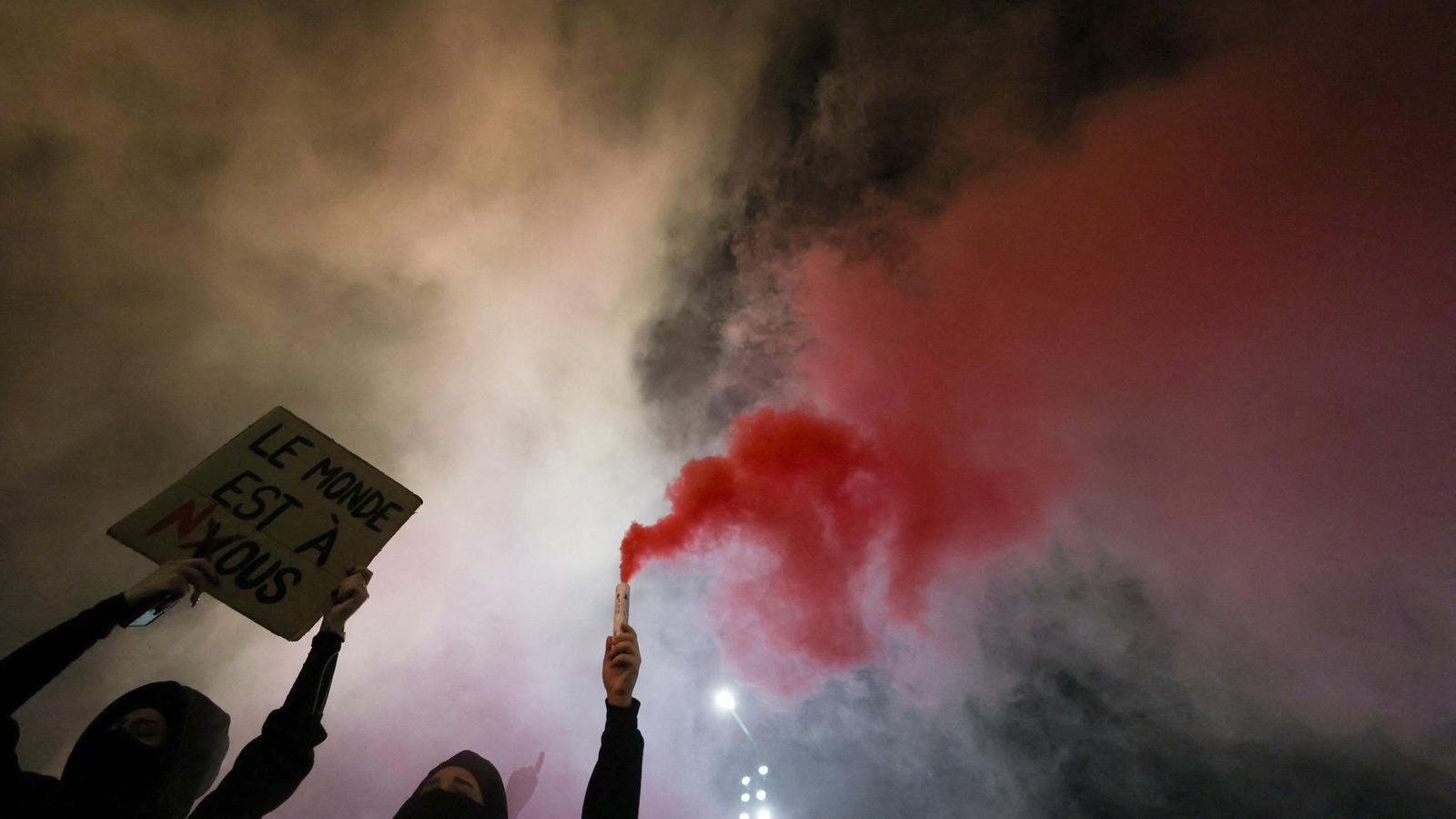

RomeProtests have spread this Saturday to the main cities of Italy, after a protest last weekend against the rising cost of living and the deterioration of purchasing power degenerated into serious riots and looting in Milan, in the north of the country, and ended with 200 people arrested. On this occasion, there has been a new demonstration in Milan, but also in Rome, Turin, Florence, Naples, and Bologna. All have taken place without serious incidents, but there have been moments of tension. The police have arrested a total of nine people across the country, identified 4,292, and taken 371 to the police station, 110 of whom are minors.
In Rome, clashes between protesters and law enforcement took place in the Colosseum area. In Turin, the police charged against people carrying banners against rearmament and high gasoline prices in Piazza Castello. The most critical situation was experienced, however, in Bologna, where officers used water cannons to disperse protesters who were throwing bottles at the police.
Police and military
Milan is the city where the most security forces have been deployed; it has woken up completely armored due to the fear that the called demonstrations would degenerate into riots and looting like those carried out by some young people last weekend in the vicinity of the central Piazza del Duomo. Agents have been deployed across the main squares and avenues. In the city, there were two marches called –one against the high cost of living and the other in favor of Palestine–, which started from two different points and proceeded without incidents until they met on Corso Venezia street, a little over a kilometer from the cathedral. There, several thousand demonstrators, mostly university students chanting slogans like “Meloni vaffanculo” (Meloni, go f*** yourself) or “we are all anti-fascists”, clashed with the police.
To guarantee public order, the government headed by Prime Minister Giorgia Meloni had sent 500 soldiers to Milan as part of the so-called Safe Streets operation, which since 2008 has kept army soldiers deployed at critical points in Italian territory to prevent criminal acts. This measure is part of a new decree approved by the council of ministers this week that classifies violent participation in demonstrations as a crime, imposes the obligation to compensate for damages caused, and expands preventive detention for minors in certain circumstances.
Intelligence services, together with security forces, had also been monitoring social media for days to track potential protest calls and identify those responsible. From Friday night to Saturday, more than 150 searches were carried out in Milan, Monza, and twenty other cities as part of the investigation into the serious riots of last weekend.
This Saturday, the Minister of the Interior, Matteo Piantedosi, confirmed the arrest of the alleged mastermind of the so-called October 17 Movement, which was created on social media following the incidents of last Saturday. Italian authorities suspect that Youssef Siher, a 30-year-old Italian of Moroccan descent, a graduate in political science and communication, a journalist specializing in the Middle East, and a collaborator with the prestigious Italian Institute for International Political Studies (ISPI), encouraged the protests and "organized violent actions" in Italy from Instagram, where he has more than 40,000 followers. He is accused of inciting crime for terrorist purposes through information technology.
"The State's response will be immediate against anyone who believes they can organize attacks and riots thinking they will manage to hide behind a balaclava or the anonymity of social media," warned the Minister of the Interior. For his part, the Minister of Defense, Guido Crosetto, stressed that the detainee "was not an outcast," but rather possessed a "wide network of contacts" and "had a relationship with the Italian intellectual elite."
