Who were these young people and why have they done it: the answers to the disturbances in Barcelona
The Mossos were surprised by the magnitude of the protest and there are already accounts calling to return on October 31st

-
CAT -
CAST
BarcelonaDid they expect it? The answer is yes. The Mossos d'Esquadra were expecting protests this Saturday in Barcelona. They had been monitoring social media for days and had detected calls to emulate the riots in Paris. They knew there were Telegram groups with 700 youths. Since 4 p.m., more than 300 youths were identified and hammers and other metal tools were seized that they intended to use to loot businesses. But were they surprised? Very much so. Initially, about 300 people were expected, and there were more than 500.
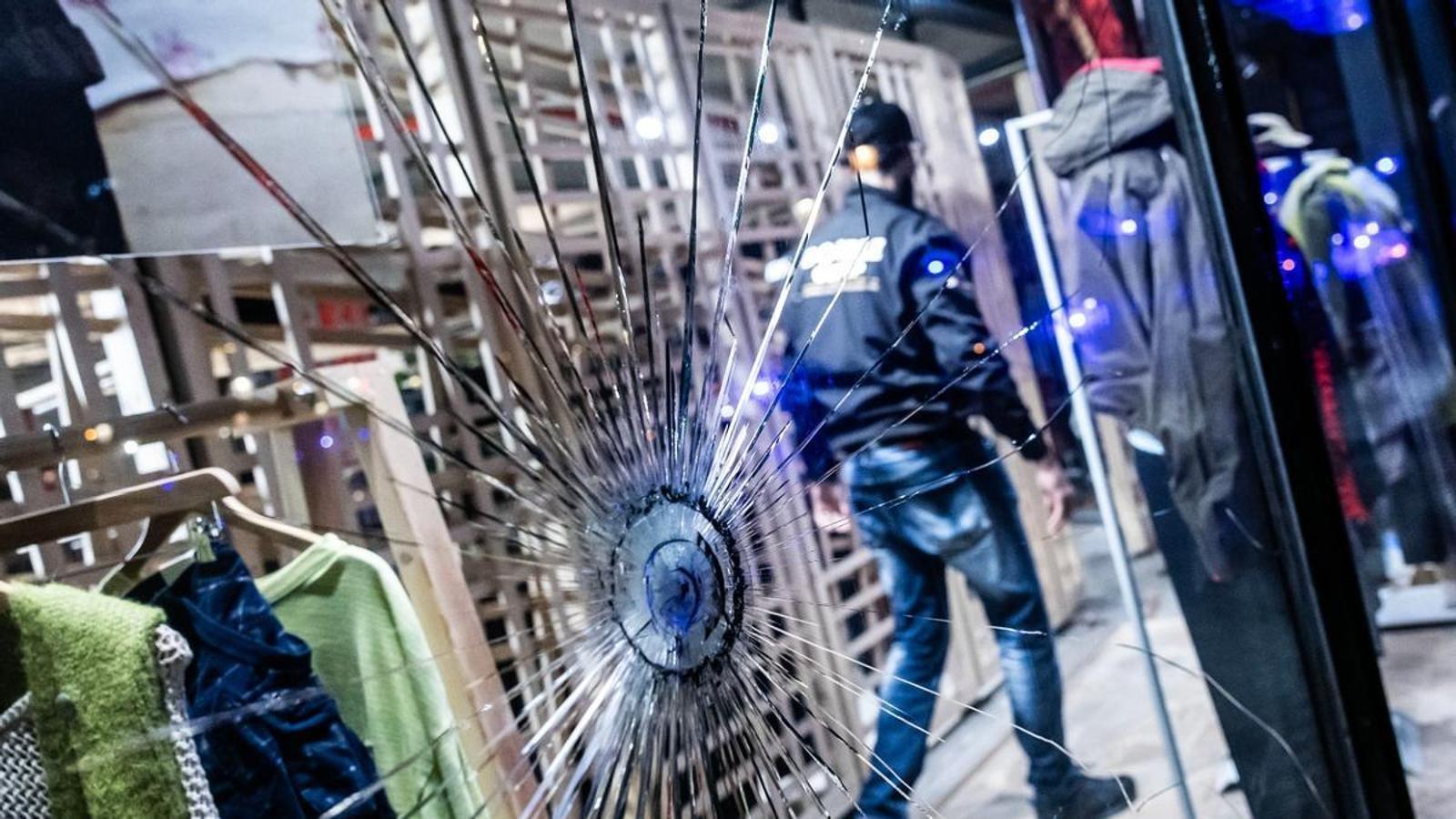
They did not expect there to be so much organization or so much violence; some small groups of twenty or thirty youths divided up the businesses they wanted to destroy—they looted 23 of them—, they assaulted police officers –15 were injured– and security guards of stores like Decathlon, where 200 customers were left locked inside. The Mossos are already aware of new calls to create disturbances next Saturday, October 31, in Barcelona. At the same time, this Sunday there was one in Granollers and no one showed up. At 7 p.m. there is another one in Girona that seems to be heading the same way, according to police sources.
There are more questions about the riots in the Catalan capital. One of the main ones is who these youths were. According to various sources consulted by ARA, it is still difficult to have a complete map of their profile. Of the 128 arrested –an exceptional figure rarely seen until now in riots–, some conclusions can already be drawn. The first is that they are very young, since more than half –72– were minors. And not minors who are on the verge of reaching the age of majority, but many 14, 15, and 16-year-olds, according to police sources. In fact, several non-imputable minors, under 14 years old, were also identified. It can also be concluded that it was an eminently male protest, since only six girls were arrested, and that they were riots of a multicultural character, according to initial approximations, and without a very clear ideological motivation behind them. In fact, for many, if not practically for all, this Saturday's protest was a debut. Only two of the 128 arrested youths have a record for public disorder in other mobilizations. There are indeed 18 adults and seven minors who had records for other crimes not linked to protests.
The motivations
Surely, the most difficult question is why. The calls to action spoke of fighting against the system and improving high schools, even though the Mossos do not detect, for now, that there was a truly protest-oriented will. Some police sources comment that the young people took it as a party, without setting aside the personal gain of stealing valuables –a computer store was left totally destroyed–. According to the chief commissioner of the Mossos, Sílvia Catà, "these are not groups of young people with the intention of demonstrating to claim rights," but rather "totally disorganized people" who gather in small groups to carry out acts of vandalism and "gratuitous violence." Catà has explained that they are "monitoring" who is behind it and are investigating the profile of those arrested to uncover "the underlying problem."
What police sources specialized in street conflict comment is that movements like these or the one of the therian last February open a new paradigm: protests have long been called through social networks, but now, as is being seen, it is no longer so important who calls them or the strength they have. The domino effect of sympathizers can grow in an unpredictable way. And another key element they highlight: social reality should surely no longer be analyzed from the frameworks of the extreme left or extreme right, and the effects of these new movements must be well quantified. "It is quite inexplicable; it is not a demonstration like the ones we are used to protecting," the chief commissioner of the Mossos explained this Sunday in an interview on Catalunya Ràdio.
Sociologist Jordi Mir reflects that young people, rather than connecting with the specific demands of the French, connect with their unrest and also with the police repression they have suffered. In young people, points out Mir, "the feeling of injustice tends to be more extreme, and it is more likely to be channeled through violence." The riots this Saturday were born a few days ago in various recycled TikTok accounts that went viral among videos of riots and violence in Paris. In fact, police sources always insist that the constant consumption of violence on social media is one of the factors that can lead young people to be violent.
The first call
Be that as it may, Marcelino Madrigal, an analyst and social media expert, began detecting these posts on October 17th. From TikTok accounts, WhatsApp and Telegram groups were opened—now most are already closed—that had dozens of members, about 700 in Barcelona and about 900 in Madrid. It is in these groups where instructions are given on how to loot, which businesses are targets, and how one should be dressed. According to Madrigal, these groups are going viral in high schools near Barcelona—one is mentioned in Granollers—and the oil slick is spreading more and more, especially in working-class areas. In these groups, meetings prior to this Saturday's demonstration are also being detected. All in all, there were young people of all kinds, without a predominant profile, nor of origin, according to Madrigal.

Now, Madrigal warns that there are increasingly more accounts in more cities talking about doing the same thing that was done in Barcelona. In Madrid they tried it but they did not exceed twenty people. Everything, he believes, leads us to a scenario that is currently unpredictable. "This is not over," he warns, while new TikTok profiles are being opened in Algeciras or Malaga, and those involved in the Barcelona mobilization are being closed. Even so, new accounts have appeared, especially on TikTok, which are calling for mobilization, again in Barcelona, this coming Sunday, October 31st. The Mossos are already monitoring these accounts.
In this context, Mir also speaks of the group effect that is created in these riots, of boys looting, emboldened because there are many of them, even if they had not planned it. He exemplifies that, in France, some young people who study in schools that do not have problems end up joining the protests out of this solidarity with the other young people. In the same cocktail there is the debate that has been open for some time about a possible loss of the conception of authority by young people. "Authority is not gained with authoritarianism," concludes Mir.
