High voltage to close the Ibercamera season
Magnificent concert by the Gürzenich Orchestra of Cologne under the direction of Andrés Orozco-Estrada at L'Auditori
-
CAT -
CAST
- Ibercamera. L’Auditori. May 18, 2026
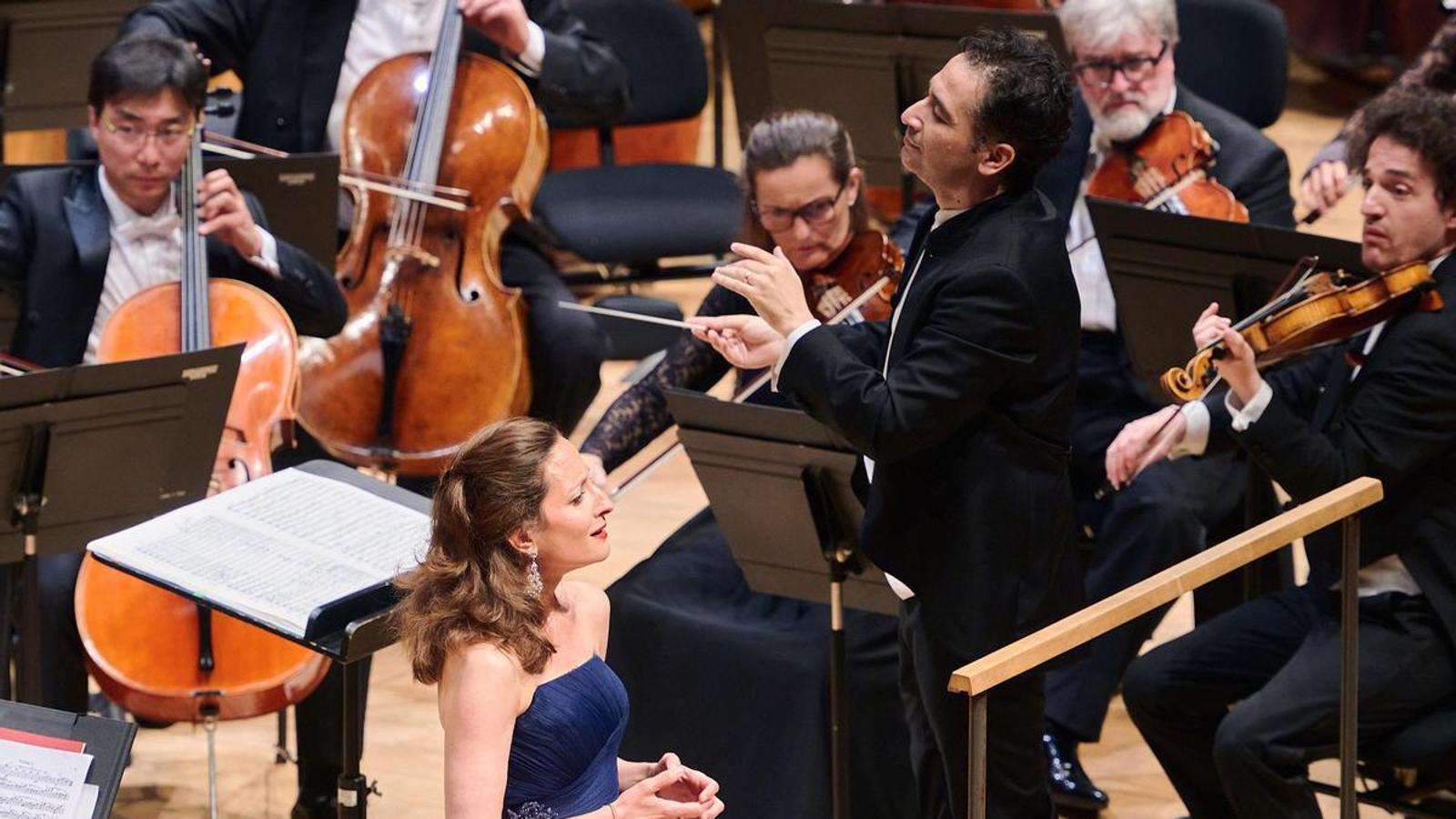
Golden clasp for the 42nd season of Ibercamera, with an absolute full house at L'Auditori to hear the almost centenarian (in 2027 it will celebrate a century of life) Gürzenich Orchestra of Cologne, conducted by the Colombian Andrés Orozco-Estrada.
Uniting Wagner, Richard Strauss, and Mahler in a single evening always makes one's mouth water, although one must be careful with indigestion, because the three musicians offer complex works that contain a lot of information for a single evening.However, opting for the overture to The Wandering Dutchman means tackling a Wagner that is already programmatic but less dense than his more metaphysical works. And you can shine and come out looking like a gentleman. Orozco-Estrada did not always measure the sound planes well enough, and the beginning of the piece sounded excessively monolithic, as if a sound check had not been done at L'Auditori. The nuances and care in the discourse, on the other hand, took hold in the conclusive scene of Capriccio (Strauss's last opera in his catalogue), in which soprano Christiane Karg displayed a beautiful timbre and purity in her vocal line. It was a more lieder-like version than theatrical for obvious reasons, given the concert context. But the bar had been set high for tackling the second part.Neither orchestra nor conductor disappointed with a high-voltage First Symphony by Mahler. The Colombian maestro clarified after the second movement that it was permissible to applaud, even though he "threatened" to encore what was applauded. A true lesson in savoir faire, in no way incompatible with his good work with the baton, with anticipated, clear, precise, and enthusiastic gestures. All this in front of an orchestral ensemble of over ninety musicians in well-oiled sections and with extraordinary results throughout the four movements, culminating in an electrifying finale, one that leaves a mark.If we are to find fault, I would have preferred more transparency in the strings in the last movement, always called for by brass and percussion on that journey Mahler makes from hell to paradise and with that final burst of proto-cinematic resonances. Nothing to say, however, for an impeccable joint work and in front of formidable musicians.The temperature rose to scorching levels. A fragment of Elgar's Enigma Variations was needed to return to room temperature.
