Carminho offers a great night of emotional contrasts at the Liceu
The Portuguese singer covered 'Abril 74', by Lluís Llach, and performed 'Memória', the fado that Rosalía included in 'Lux'

-
CAT -
CAST
- Gran Teatre del Liceu
- November 9, 2026
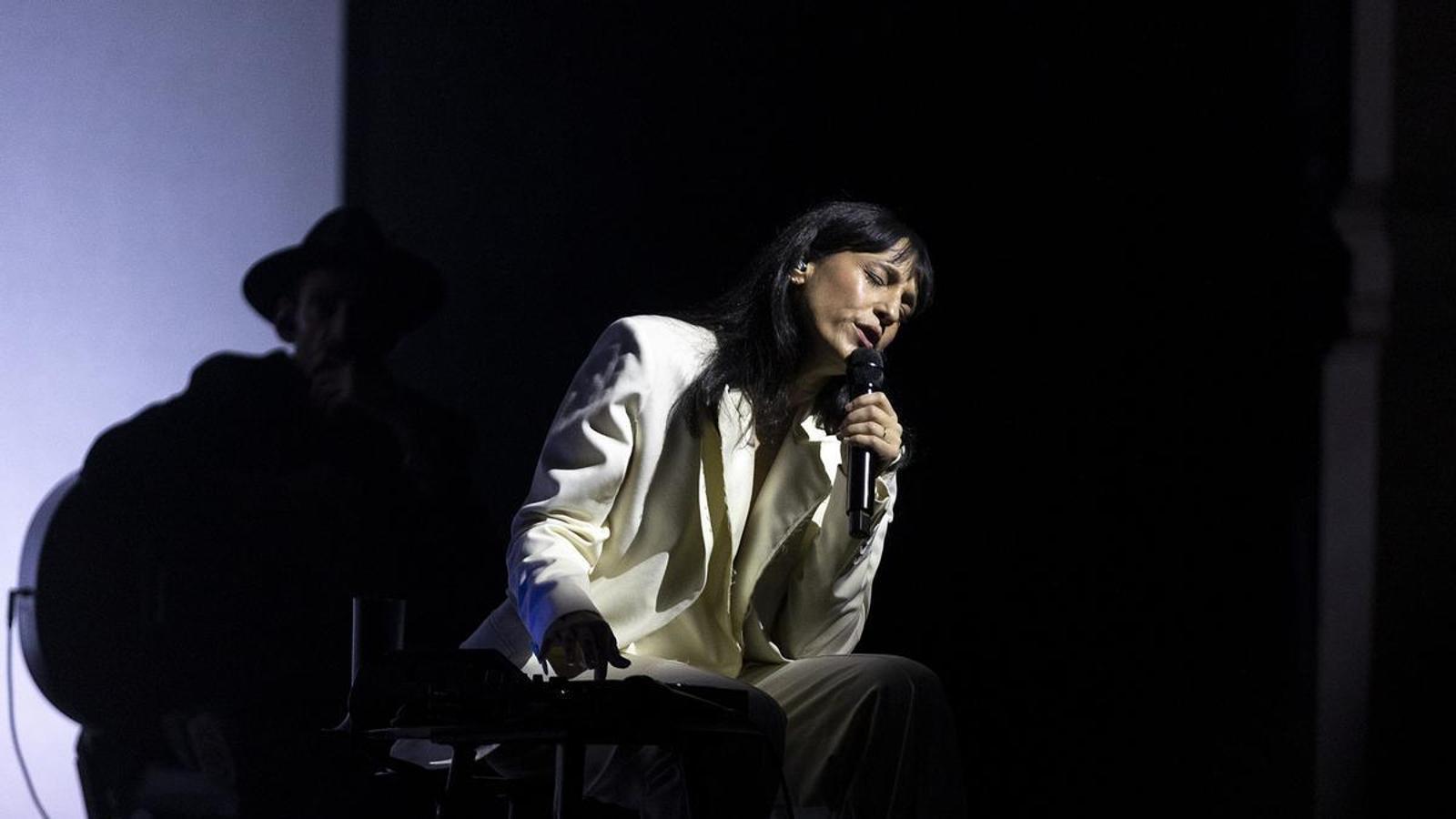
More than one cold and one hot, one of intense emotion and another of joy to lower the fatalistic burden of fado. The Portuguese singer Carminho dispensed drama and sympathy on a night of contrasts and great artistic stature at the Liceu, within the Suite festival, which ended with the audience standing, rewarding a wonderful version of Abril 74 by Lluís Llach sung in Catalan. It was during the encores, which had begun with a minimalist interpretation of Memória, the song she shared on the album Lux by Rosalía. Memória, she explained, is an ancient fado updated by Carminho, just as happens with a good part of a repertoire that connects tradition and present, sometimes with changes in perspective to dispel the sexism of some lyrics, as she does in Pedra solta.
Fado, the lament that is sung with closed eyes and listened to with eyes moist from melancholy, smoke, and alcohol, is a demanding genre for the performer, who must live in the heart of the emotional turmoil while the song lasts. Carminho takes on the challenge with the wisdom inherited from her mother, the fadista Teresa Siqueira, and from a tradition that includes names like Amália Rodrigues and Beatriz da Conceição. Friendly and didactic, Carminho used Spanish (and occasionally Portuguese) to contextualize the repertoire and to reinforce precisely her belonging to two DNA strands. "This album is inspired by many women's voices, starting with my mother, Amália Rodrigues, and the voices that listened to other voices. Fado is a DNA of vocal and timbral transmission," she said before adding that it is also a chain of women from other artistic and social spheres, "brave women who opened paths," like the American Laurie Anderson, who collaborates on Saber, one of the songs on the album.
And like Sílvia Pérez Cruz, the Portuguese singer also creates based on respect for the popular legacy and, above all, works starting from the voice and an eminently acoustic sonority (Portuguese guitar, fado viola, and acoustic bass), but with small windows open to a subtle experimentation associated with instruments like the mellotron and the Ondes Martenot. All this with a minimalist staging: she dressed in white, the five instrumentalists in black; as a background, a white screen, and the lighting playing successfully with shadows, twilight, backlighting, and zenithal light.
The musical performance was also impeccable, except for a small hitch in the song Eu vou morrer de amor ou resistir, which the singer interrupted because, she said, a drawing by the guitarist made her lose the thread of the lyrics. She explained it with sympathy, but pointing out that the responsibility was not hers...
Fatalism and humor
Surely, the most striking thing about a Carminho concert is the naturalness with which she enters and leaves emotional depths. For example, she lives in the sadness of Canção à ausente, which she indeed sings with her eyes closed, masterfully mastering the dynamics, and which she finishes by gripping the microphone with both hands with the strength of desperation. And then she smiles and turns the atmosphere around to sing the festive march Lá vai Lisboa by Amália Rodrigues. The keystone is the title of the album she released in 2025: Eu vou morrer de amor ou resistir, between fatalism and a moderately optimistic stoicism.
The audience gladly accepted this ambiguity that Carminho claims. They rewarded with a cathartic ovation pieces like Trazes-me tanta saudade and got involved by clapping along to the joy of Marcha de Alcántara de 1969 they applauded the magical tenderness of the peculiar lullaby À sombra do teu cabelo dedicated to her son, they maintained a solemn silence while she disappeared into O quarto and overflowed with enthusiasm at the end of the concert, when Carminho sang a cappella As minhas penas, benefited, of course, by the acoustics of the Liceu.
