Volkswagen backs down and brings back diesel engines in the Golf
The Lower Saxony brand resurrects diesel engines in its star vehicle eleven years after Dieselgate
-
CAT -
CAST
Eleven years after the outbreak of the diesel engine emissions fraud scandal, or Dieselgate, which fully implicated the Volkswagen group, one might think that bringing back a diesel engine in the second half of 2026 for the Golf – the German brand's star car – is an extraordinary and out-of-place measure. This is because the German industrial group wanted to accelerate fully on the path of electrification to leave the ghost of emissions behind, with an ambitious roadmap that planned to fully electrify the Volkswagen brand before 2030, with the arrival of the ambitious ID product range, technological and fully electric vehicles.
In fact, Volkswagen developed a disruptive model called ID.3 which was to be the successor to the Golf and the brand's third major milestone (hence its nomenclature) after the Beetle and the aforementioned Golf. But the Volkswagen ID.3, on the market since 2020, has never managed to achieve the brand's ambitious objectives, and European buyers have continued to overwhelmingly show their preference for the Golf.
A Golf increasingly electrified
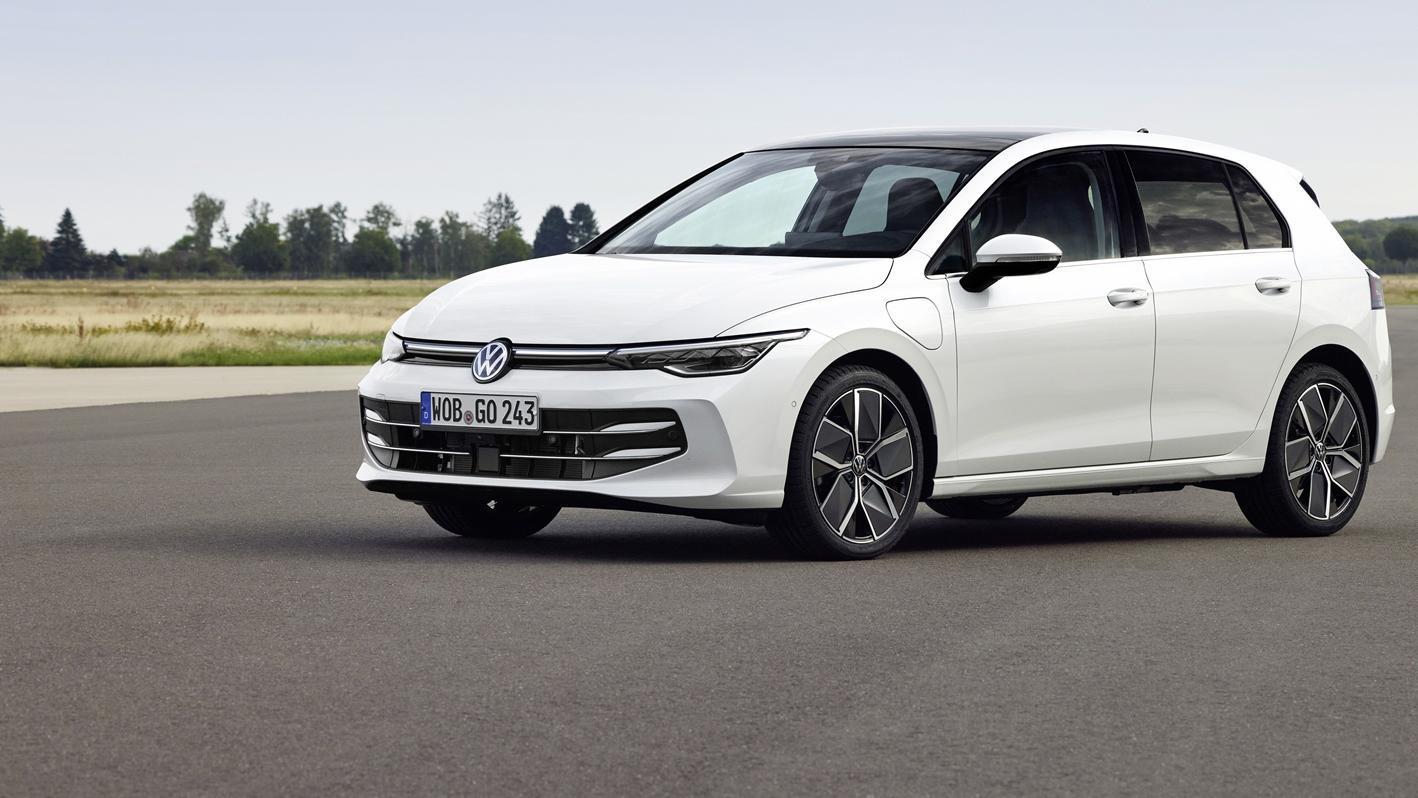
The current generation of the Volkswagen Golf has been in force on the market since 2024, just as the 50th anniversary of the launch of the first Volkswagen Golf, in 1974, was being celebrated. This is a model that evolves the original eighth-generation or MK.8 model, in the brand's internal nomenclature, with slight aesthetic tweaks to the optical units and larger, more connected screens in the interior.
The most interesting element was that initially Volkswagen kept the 2.0 TDI (diesel) engine with 115 or 150 HP of power, but always in a secondary commercial role, as the model's main focus was on mild hybrid versions or mild hybrid, which grants it the ECO label (eTSI).
Last April, Volkswagen decided to withdraw the diesel engines from the Golf range, in anticipation of the launch (also by surprise) of the Golf Hybrid or self-charging hybrid with 170 HP, which shares mechanics with the T-Roc and which does not yet have a price in the Spanish market. By the end of the year, sources from the brand indicate that this version will be accompanied by an access version, also a conventional hybrid with 136 HP of power, which will be positioned one step below the first conventional hybrid Golf.
A surprising movement
Marked by a roadmap shared with the rest of the group's brands, increasingly focused on electrification, and with the sword of Damocles hanging over the heads of major manufacturers due to EU regulations on combustion vehicle emissions and the threat of millionaire fines, the return of diesel engines in the Golf is a very surprising and, to some extent, disruptive move.
The return of diesel engines to the Golf range responds to the specificities and preferences of the Spanish market, where there is still a demand (of only 2.75% of the total market) that continues to buy diesel engines. The 2.0 TDI engine is a reliable and refined powertrain that maintains very low approved fuel consumption (4.5 liters per 100 km and a real range of over 1,000 kilometers without refueling) with a 380-liter trunk. For comparison, the new conventional hybrid version of the Golf limits its trunk to 273 liters to accommodate the lithium batteries, in addition to the increase in weight and fuel consumption it may entail.
Finally, it is worth remembering that Spain is a very particular market, different from the rest of Europe, which in some cases favors diesel mechanics. Firstly, the terrain of the Iberian Peninsula is very rugged, and the distances between major Spanish cities are quite significant. To this physical factor, we must add the fact that the Spanish railway network is, by no means, comparable to the German or British one, to cite two markets where Volkswagen has indeed withdrawn diesel engines from the Golf, and this factor favors road transport of people. Therefore, Volkswagen's decision to bring back diesel engines to our market can be explained, without this implying that the future generation of the Golf, which must be a reality before 2029, will have to forgo the practically total electrification of the model.
