Seny, the Catalan AI that monitors the agents
Alinia AI launches its base model specialized in regulatory alignment to "keep artificial intelligences within the law"

-
CAT -
CAST
BarcelonaSince the launch of the first ChatGPT models, Catalan companies have looked at artificial intelligence with curiosity. Adoption has been, according to several studies, rapid but lacking order: according to a report prepared by OpenAI itself, creator of the famous chatbot, 96% of small and medium-sized Catalan companies already use AI in some area of their business. However, nearly 40% declare that they still do not have a formal policy for using it.
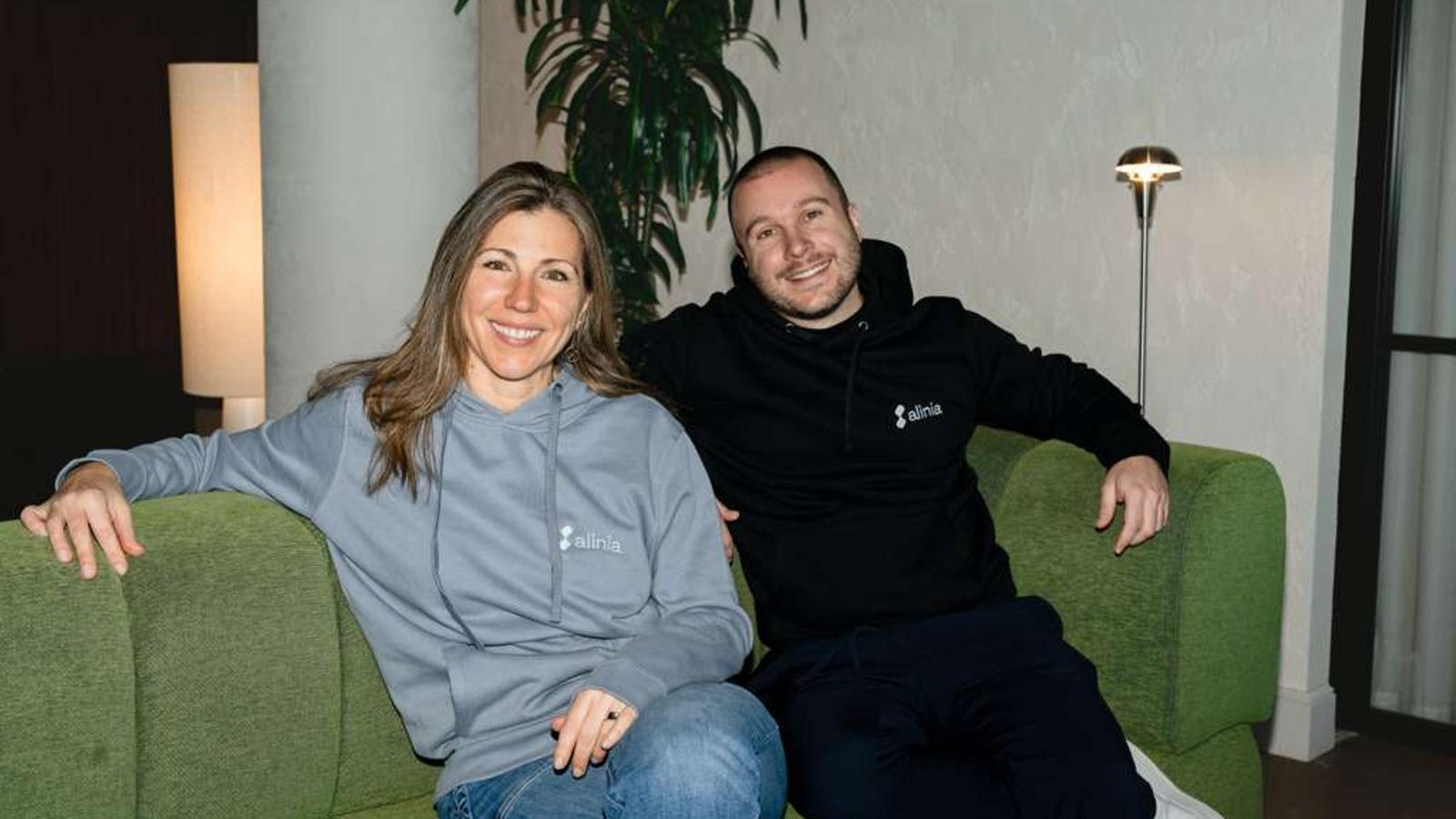
The full integration of AI into business processes is still, in fact, a puzzle to be solved. This is confirmed by Ariadna Font, executive director of the emerging Alinia AI, specialized in the legal alignment of artificial intelligence agents. "When we started, many European and American companies told us that they wanted to jump into the AI pool, but they didn't dare," she explains to Companies. The start-up, based in New York and with offices in Barcelona and Valencia, has launched this month what may be the definitive springboard to make this leap: Seny, a base AI dedicated to "keeping agents within the law".
Alinia AI's new AI is rooted in Barcelona: it has done all its training on the Mare Nostrum 5 supercomputer at the Barcelona Supercomputing Center, with a European grant under the EuroHPC AI Factory program. Based on one of Google DeepMind's open-source models, known as Gemma, the company applies two training layers to its model: a mid-level one (mid training), which provides all the data and processes related to regulatory compliance in general terms, and a high-level one (fine tuning) which serves to launch specialized artificial intelligence "judges" for each regulation. "On top of Seny we build these judges, smaller and much more refined models for a specific regulation," details Font.
According to the company, this level of training, which trains the model on all the details of a specific regulation, is necessary to ensure reliable results. "A model that is safe in a laboratory may offer inadequate recommendations under the MiFID II regulation, or deny a loan that a North American credit institution cannot explain under US regulation. Generic AI guardrails cannot identify these failures," they say. Seny, and the specific judges that are based on it, serves to close a "gap" that companies, especially those in regulated sectors such as banking and telecommunications, had not been able to address: real-time supervision of AI agents in the area of legal compliance. "Judges based on Seny offer a new workflow in AI governance," assure the emerging company.
Competing with the giants
They are capable of working at this speed because, despite having the precision level of frontier models, they are much smaller and more specific. As Font recalls, "there is often a trade-off between effectiveness and speed." That is, a faster model may have more room for error, while a more accurate one may take more time to analyze and produce correct responses. In this type of agent monitoring, however, companies cannot afford to compromise on either parameter. And, in this sense, Seny and its judges deliver more than enough: compared to other specialized models, the AI from Alinia AI "did not increase times, and in many cases, it improves effectiveness."
In many of the most requested areas of regulatory compliance, Seny is "just as good" as frontier models, such as GPT 6 Astra or Claude Opus 5. As detailed by the company, the models trained in credit analysis by Alinia AI exceed the two products from OpenAI and Anthropic in effectiveness and speed in monitoring agents dedicated to credit analysis, and they compete in efficiency and outperform in pace both competitors in security analysis and legal advice. "Wherever they are trained, the judges can compete with a frontier model. Furthermore, Seny, on its own, without the fine tuning, is also very powerful," adds Font.
The capabilities of Seny, in Font's view, are good news for the AI sector in Europe, as they demonstrate that smaller, yet well-trained models can compete with the absolute leaders of the market. Looking OpenAI and Anthropic in the face "is not impossible, but it is not easy either." "We have worked on this for many months; we have very good people, and access to computing at the BSC's AI Factory." "Alinia AI has built an entire ecosystem that is very difficult for a company that is not dedicated to it to reproduce internally," concludes the executive director.
