The Generalitat premieres the first biogas plant in a public research center
The infrastructure will generate energy and will reduce greenhouse gas emissions

-
CAT -
CAST
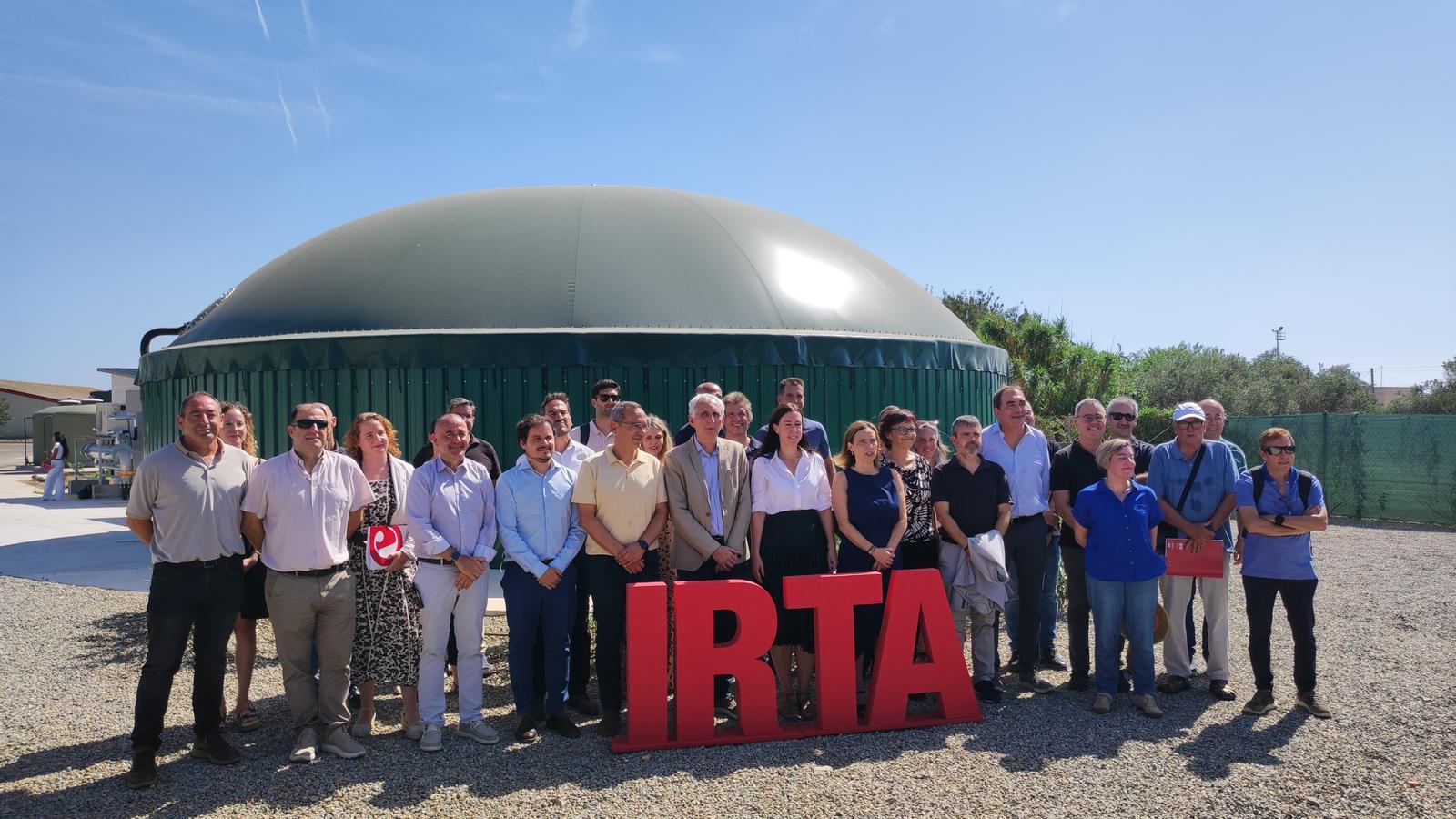
ConstantineReducing emissions, generating energy, and obtaining fertilizers, and above all, continuing to research. These are the three functions of the new biogas plant that the Director General of Agriculture and Livestock, Rosa Altisent, presented this Monday at the facilities of the Institute of Agrifood Research and Technology (IRTA) in Constantí (Tarragonès), Mas Bové. It is the first biogas plant in the entire State at a public research center, and this characteristic should foster knowledge about this energy generation system, which, although it has been used for a long time, has gained more interest in recent years, partly due to the price hikes caused by the war in the Middle East, one of the areas where the most fertilizers in the whole world are produced.
Biogas is a renewable energy source obtained from the decomposition of organic matter, whether animal or vegetable. These residues (in this case, pig and chicken manure) decompose thanks to microorganisms that work without oxygen and transform this organic matter into a mixture of gases, mainly methane and carbon dioxide, which we know as biogas. Biogas can be used to generate thermal or electrical energy.
The Mas Bové plant will be fed by the 5,200 tons of organic matter generated each year by the excrement of the pigs and chickens at the facilities, and will generate a flow of 96,697 normal cubic meters (Nm3) of biogas, equivalent to 58,000 liters of diesel or the annual energy consumed by 165 families. For the moment, all this energy will serve to operate the Mas Bové facilities themselves. In addition to biogas, the process will also generate fertilizers, which can be used to fertilize the land, and water, which can be used for irrigation.
Plan to boost biogas
Altisent recalled that the Government approved a plan in 2024 that provides for a significant deployment of biogas plants throughout Catalonia (for the moment, one more is planned in Monells, in Baix Empordà), and the goal is to ensure that by 2030 almost a third of the organic matter that powers the plants will be animal manure. It must be taken into account that 12% of the greenhouse gases generated by Catalonia come from agriculture and livestock, and half of which corresponds to the management of manure. This means that, in addition to generating renewable energy, the emission of gases that cause the greenhouse effect will be reduced.
"This project goes much further than producing renewable energy. Everything we obtain from it connects with our strategic scientific objectives and with the great local and global food challenges," explained Belén Fernández, scientific objectives coordinator at IRTA.

