Unlike other travelers, Sara does not remember any figure who was her reference when she was a child. She didn't want to be like someone and follow in their footsteps, as happens to many people. “I was clear that I wanted to go to the jungle. When I was young, I read a book by Isabel Allende set in the Amazon and I remember thinking that I had to go there by all means”. Since she decided to study primates, a figure she does remember with affection is the British Jane Goodall, considered the leading expert on chimpanzees after more than sixty years studying them.
Sara Campanales: leaving the city to go live in the jungle
After living in big cities, this biologist took a leap forward by moving to live in the Ecuadorian jungle
24/08/2026 - 21:11 h

-
CAT -
CAST
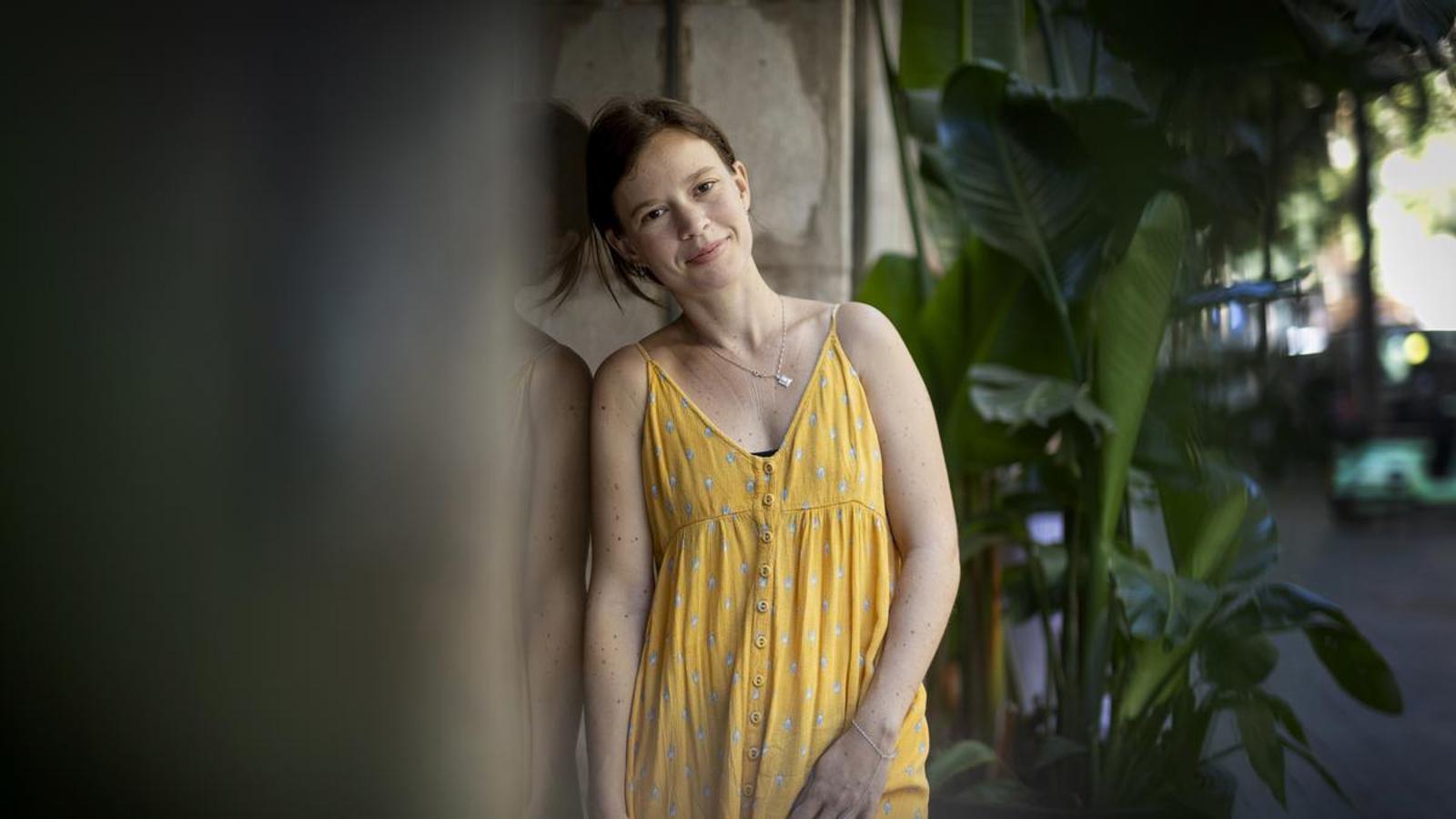
BarcelonaWhen she returns to Sitges, her hometown, Sara Campanales misses many things. “Lifelong businesses have disappeared, we have fewer neighbors than before,” she explains while having coffee in Barcelona. “I miss the sense of community, we’ve lost it,” she adds. Where she lives now, she has found that community. “I live very far away. In a small town called Cristóbal Colón in the department of Esmeraldas, in Ecuador,” she explains. Almost 10 years ago, destiny brought her to this jungle region on the Ecuadorian coast. She arrived there without much planning, now she lives there and is the godmother of a little girl.

Sara studied biology in Brighton, on the south coast of England. “I really liked art, as it’s the world my mother works in. But biology too. In fact, I started art studies, but I realised it might be better to study biology, as you can always do art a bit more your own way. Biology is fascinating. You can study cells and diseases. But also the issue of environmental conservation. In biology, they separate you by saying you’re either a lab coat person or a boot person. That is, from the laboratory or fieldwork. I liked a bit of everything. So when I finished my degree, I wasn’t sure what to do. I discovered that there was a master’s degree in primate studies, a world that interested me. And I went towards conservation in situ. That is to say, to apply policies and work with communities to conserve species and their habitats. That's how I ended up in Ecuador, to do my thesis on a spider monkey endemic to the Choco region, a tropical area on the Pacific coast that stretches from Panama to Ecuador, passing through Colombia. An area of great environmental diversity,” she explains. After an initial period in the Ecuadorian Amazon, she arrived in the Esmeraldas department, in northern Ecuador, after contacting a local foundation. But she had a scare: “I had to change my thesis on the fly, as I had an idea that required a lot of walking. But when I was in Quito, the capital, I suffered an injury, a bad sprain. Quito is at almost three thousand meters and the altitude sickness made me dizzy and I fell. I don't handle the cold and the altitude well,” she says jokingly. “I'm from tropical climates, I like the jungle, as a child I dreamed of going there,” she says. Now she lives there. “With that injury, I couldn't do the thesis as I would have liked. So I changed the idea: my thesis was to identify where people's farms were and see how a biological corridor could affect them,” she says.
A different way of living
Changing jobs allowed her to get to know the communities in the area where she lives. “A region very rich culturally. On the coast there is an Afro-Ecuadorian community. We have the Chachi people, the indigenous people of the area who live a bit more isolated. And communities from all over Ecuador, people looking for land for plantations, to work, and they found it here,” says Sara, who began visiting these communities to learn how they work, to understand a rich and complex territory, and to see how environmental corridors could be created to guarantee the survival of local fauna. “Depending on the price of products, people change what they grow. Before they had coffee and palm. Now they have all planted cocoa because it gives them more benefits. They also have livestock, fruit trees... and a lot of forest. I used to go see the farmers and they would tell me what animals they had seen, how they saw things,” she points out.
The foundation she collaborated with gave her a home with a local family. “People who welcomed me. With a daughter who is now my goddaughter and a son I have seen grow up. They are hardworking people with that community spirit of giving food to whoever arrives, of opening doors... A very different way of life where I felt welcomed,” she says. That experience marked her. And the desire to return to the jungle was still inside her when she had to return to Europe to look for work once her job was finished. It was a very abrupt change of reality, as she found work in a company that worked on sustainability issues. First she lived in London, then in Paris, and finally in Barcelona. She would have to visit the headquarters of large companies to talk about conservation and environmentalism, a “kind of different urban jungle,” she says jokingly.
But the desire to return to the jungle was still very much alive. The desire to be able to live more on her own terms. Finally, she decided to change her life by taking a sabbatical year where she went, of course, to Latin America. And on that trip, thanks to a contact, she managed to start working for a company that organizes tourist trips through Latin America. A business based in Peru. “Now I organize responsible trips, working with local communities. This has allowed me to return to live in Ecuador after a period living in Cusco, a place too cold and high for me.” Sara has been able to live how and where she wants, although not everything is easy. “We can help consolidate tourism in a beautiful country that has everything. I would tell people to try not to fall into prejudices. Of course, there are dangerous places in Latin America, but if you go with local people, everything will be fine,” she concludes.
From Isabel Allende to Jane Goodall

