"We have discovered that existing is more important than winning"
Lleida is going through its worst footballing moment

BarcelonaWith more than 450,000 inhabitants, Lleida will not have any football team playing in the top four categories of football next season. Smaller towns enjoy professional football and Lleida does not. Atlètic Lleida, the recently created club that has not yet managed to win over fans, will hardly avoid relegation to Tercera RFEF. With four games left, they are eight points from the relegation zone. And Lleida CF, the team that defends the long football tradition of the former Unió Esportiva Lleida, is precisely last in Tercera RFEF. Surely, they will also go down. In a city where basketball thrives, football suffers. But in the stands of the Tercera RFEF grounds, in the darkest moment, many fans have discovered many things. They have found beauty, despite the pain.
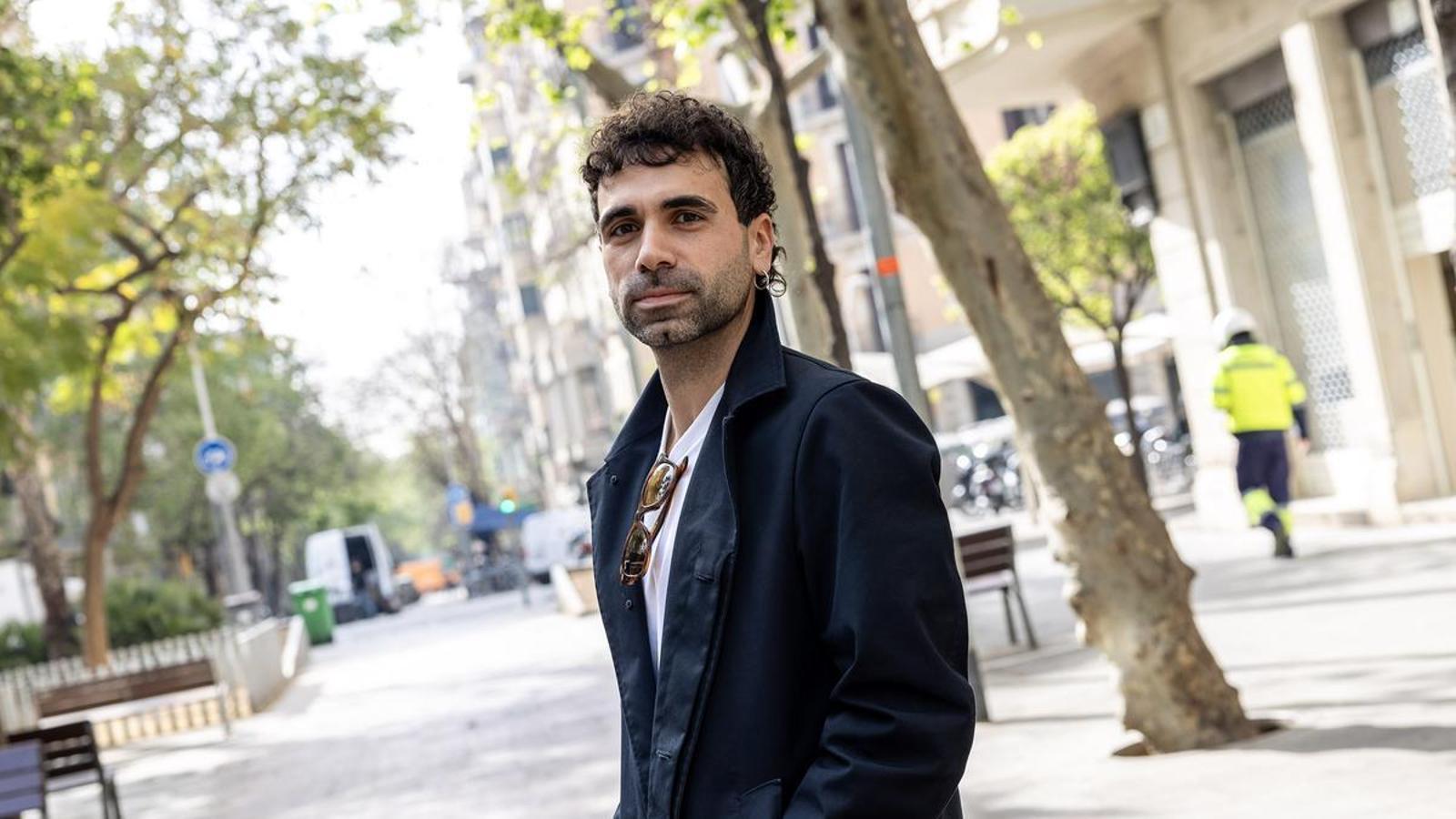
This Friday, the presidential box of the Camp d'Esports will be packed to the rafters with nearly 200 people who have already confirmed their attendance at the presentation of the book 'Banderas azules' (Pagès Editors) by journalist Juanjo Lecumberri. The event will be hosted by journalist Oriol Jové, author of the prologue, and will consist of a conversation between the author and historian Ramon Usall, in charge of the epilogue; Òscar Sarramia, illustrator of the cover; and Marc Torres, club representative. All the profits the book makes, by the way, the author will donate to the club, as Lleida CF is going through a complicated economic moment. "Many people have understood that the important thing in football is to exist, rather than to win. We have to exist and have an identity. And then see how we can build. If we go down even further, but we guarantee the future of the entity, we will not be sad. It will be a new beginning if we manage to clean up the economy," explains the journalist.

In recent decades, debts have drowned Lleida, causing economic bankruptcies, a rebranding, name changes, and owner turnovers. The team that reached the First Division thirty years ago now lives far from professional football after years of crisis that still endanger the entity's survival. In the summer of 2025 it seemed the team would disappear just as some businessmen boosted the Atlético Lleida project, with the City Council's help, but without social support. With empty stands, Atlético Lleida will be relegated. And Lleida CF, with more people, too. The idea of merging the two entities, however, appeals to few. "No way," says Lecumberri.
"The key is for a new owner to arrive and for the debts to be paid. People are nervous because this new buyer isn't coming," explains Lecumberri. The idea for the book, in fact, was born when the team was heading for hell in 2025. "This season, Lleida is forced to play in Tercera RFEF. A team that not so long ago was fighting to be in Segunda, debuted on the first matchday at the Can Vidalet field. It's a team from Esplugues that does things very well, but for the people of Lleida, going from playing on big fields to playing here was tough. But the stands filled with people with blue flags and scarves. And I thought something had to be done," he says. When a team is going through a tougher time, that's when you see if the fans are loyal. And Lleida has fans who never give up and have continued to accompany the team despite the bad results, as the entity is run by volunteers and it hasn't been possible to sign good players. Lleida is fighting to survive.
Lecumberri explains how difficult it has been to follow Lleida in recent years with 22 chapters, uniting the club's history with his life, to "have a bigger picture of what Lleida means to people". During this year, he has interviewed workers, fans, and people from the world of football to be able to trace a path that unites memories with the present. To explain how people's lives change, with the changes, joys, and disappointments, both within and outside of football. Because people who love a club always keep it in mind even when other things happen around them. "When 15 M happened, for example, I am clear that it was the last match of Unión Deportiva Lleida with this name, at the Hospitalet stadium," explains the journalist, now living in Barcelona for work.
Following Lleida in Australia
In fact, like many people from Lérida, Lecumberri has made his way far from his city. "For many years I haven't lived in Lérida, but the club has always been a link to my roots," says a man who, with this surname, was destined to be a Lérida fan. "It's not a very common surname in Lérida, so everyone immediately knows who my father was," he says, referring to Juan José Lecumberri, a Navarrese player trained at Osasuna who, in the early 80s, signed for Lérida. And he stayed so long that "he is the third player with the most matches in the club's history, surpassed only by Rubio and Palau." "People remember his era with fondness, with Jordi Gonzalvo on the bench, the current anthem... My father met my mother, who is from Lérida, and he stayed. Now he works as a teacher and still goes to the stadium all the time. We have always gone to the stadium, to the north goal," says the son.
"I claim this shared ritual of going to the stadium, to keep it alive. I studied in 2007 in Madrid and there it was easier for me to go see Osasuna, the team we also follow by family tradition, like Lérida. I returned home and worked at SER the year Idiakez was on the bench, when we were one step away from being promoted to Segunda, losing on penalties against Sevilla's reserve team. But then I went to live in Australia, where I worked as a football coach. And following the club was a way of feeling at home," says a journalist whose first family memory is playing a vinyl record with the club's anthem over and over again at his grandparents' house. "I try to give voice to a generation, to a way of doing things in which perhaps fans of other Catalan clubs can feel reflected," assures the author, who believes that fans of other "suffering" Catalan clubs can also enjoy the book, as it ultimately speaks of universal ideas like the feeling of being part of a community.

