From the selection to the nation?

-
CAT -
CAST
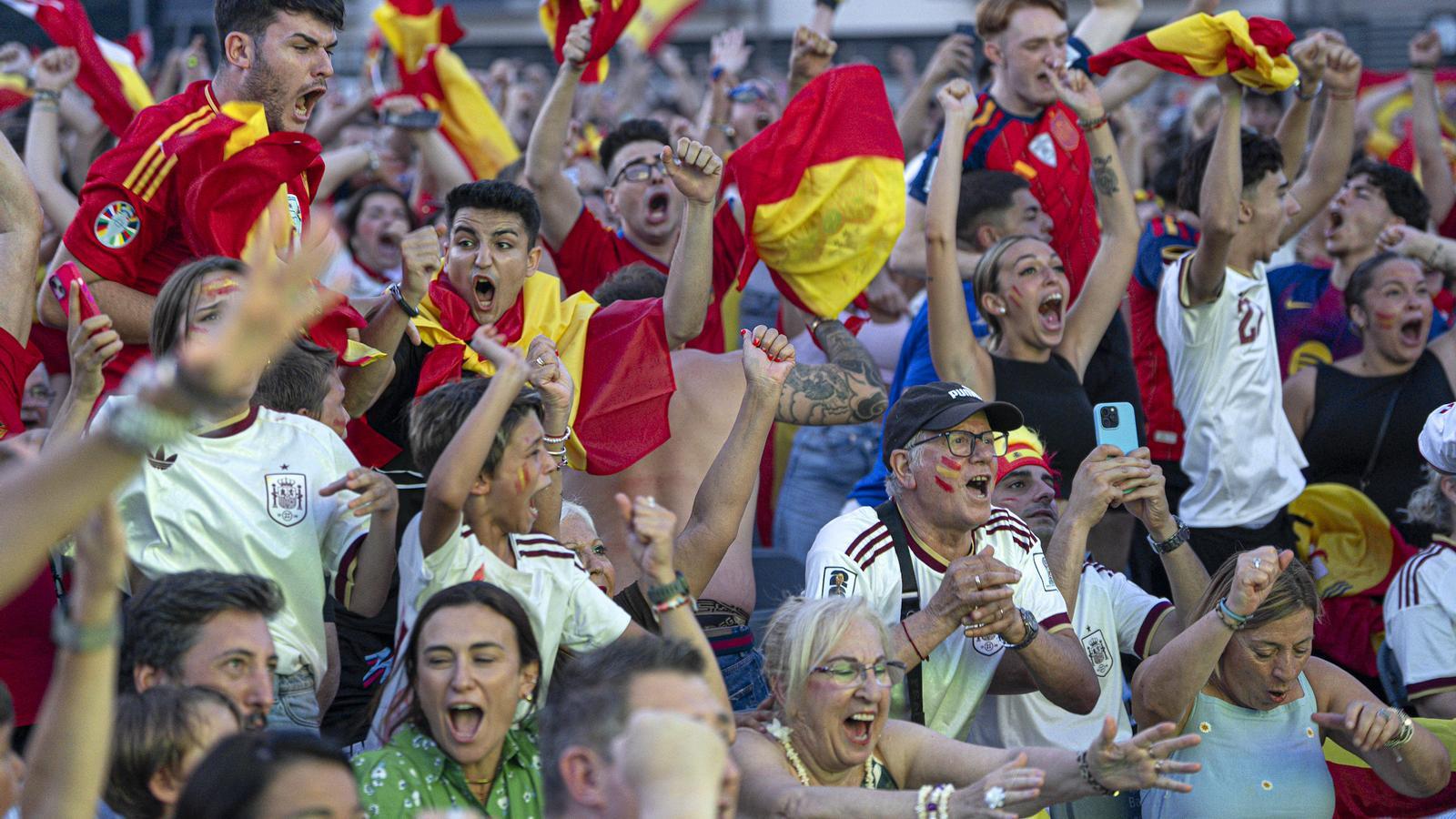
Every time Spain competes successfully in a World Cup or a European Championship, symbolism and spontaneous expressions of support for the Spanish team proliferate in the streets of Catalonia, especially among young people. The phenomenon has intensified since the Spanish team is projected more as an extension of Barça and La Masia than of old Spain. It plays attractive football, accumulates successes, and projects a modern and seductive image, far from the old "gallard manliness" that smelled of Terry and stale.
All this generates understandable concern among Catalanism. Contrary to those who insist on the worn-out cliché of separating sport and politics, it is evident that sport has an extraordinary political and symbolic dimension. And especially football. Its capacity to generate emotions and adhesions, its character as a mass spectacle, and its global impact have no comparison with any other social phenomenon.
States, of course, are fully aware of this and use it deliberately. Football is a first-rate political and symbolic tool in contemporary nation-building processes. A large part of football's effectiveness as a tool for nationalization comes precisely from its apparent banality: it allows state nationalism to be socialized by freeing it, at least in appearance, from the often burdensome historical and ideological baggage. And this is especially relevant for a state like Spain, which has historically faced significant national integration problems, especially in Catalonia and the Basque Country. It is no coincidence that the demand for Catalan national teams has hit an impregnable wall. And, for this reason too, the few Catalan or Basque players who have refused to play for the Spanish team have been pressured or stigmatized.
However, the scientific research that has attempted to study the effects of sports on national identities is more nuanced. One of the most influential studies was published in 2020 by UPF economist Ruben Durante and his co-authors, and it concludes that the successes of African national teams have often acted as a strong factor for internal cohesion and reduction of inter-ethnic conflicts. Other studies have linked the successes (or defeats) of national teams with less benign forms of nationalism: increases in xenophobia, rejection of refugees, or aggressiveness towards neighboring states. However, a recent review of all this research concludes that, while sporting victories can generate occasional increases in national pride, these effects tend to be small, ephemeral, and limited. In most cases, national identities are more stable and are rooted in much deeper historical, cultural, and political factors.
And in the case at hand? Although there are no studies that have looked into it in depth, we can explore what the data tells us about the recent successes of the Spanish national team. What happened to national identities in Catalonia when Spain won the 2010 World Cup, the 2012 European Championship, or the 2024 one?
If we study the CEO barometers conducted just before and just after each of these tournaments, as the graph shows, we do not see any appreciable movements in national identity in Catalonia. No significant changes are observed in any age group, neither during the tournament nor after the final. In fact, the only remarkable deviations are in the direction of greater Catalan identification, and they coincide with other relevant political events in Catalonia, such as the 2010 Statute ruling or the 2012 Diada. 2024 shows no detectable effect.
Although it is an exploratory analysis, the data suggest that displays of effusive support for the national team, rather than creating new Spanish identities, probably reflect identities that already existed previously in Catalonia. The Spanish national team's ability to generate new national adhesions has been more limited than often assumed.
The connection between supporting the Spanish national team and adhering to the State or Spanish nationalism is, perhaps, weaker than it might seem at first glance. Despite sharing symbols, name, anthem, and flag, the Spanish nation and la roja are not exactly the same. Semiotics specialists insist that the meaning of symbols is contextual. A Spanish flag painted on the face or tied around the waist during a World Cup final does not express the same thing as the same flag displayed during an October 12th demonstration, for example. Between supporting the Spanish national team and political Spanish nationalism, there is a leap that some people might make, but most do not.
From what we have been able to see so far, the victories of the Spanish national team have not caused significant changes in national loyalties in Catalonia. Obviously, contexts change and the past, although it can be informative, does not predetermine the future. But it is worth considering precedents and nuances before drawing hasty conclusions.

