"The Catalan pharmacies have been present in all the misfortunes of recent years"
The Federation of Pharmacy Associations of Catalonia (FEFAC) receives the Macià Presidential Work Medal 2025

-
CAT -
CAST
BarcelonaDuring the darkest moments of the covid-19 pandemic, when healthcare centers were on the verge of collapse and new spaces were hastily set up to care for all the people falling ill from an unknown virus, pharmacies became the most accessible community health agents in the country. To alleviate the care burden, they took on diagnostic testing: they trained and prepared teams to perform tests and thus relieve hospitals and primary care centers, which were overwhelmed with caring for the most seriously ill. Likewise, those responsible for pharmacy offices in Catalonia claim that this is just another example of their social commitment.
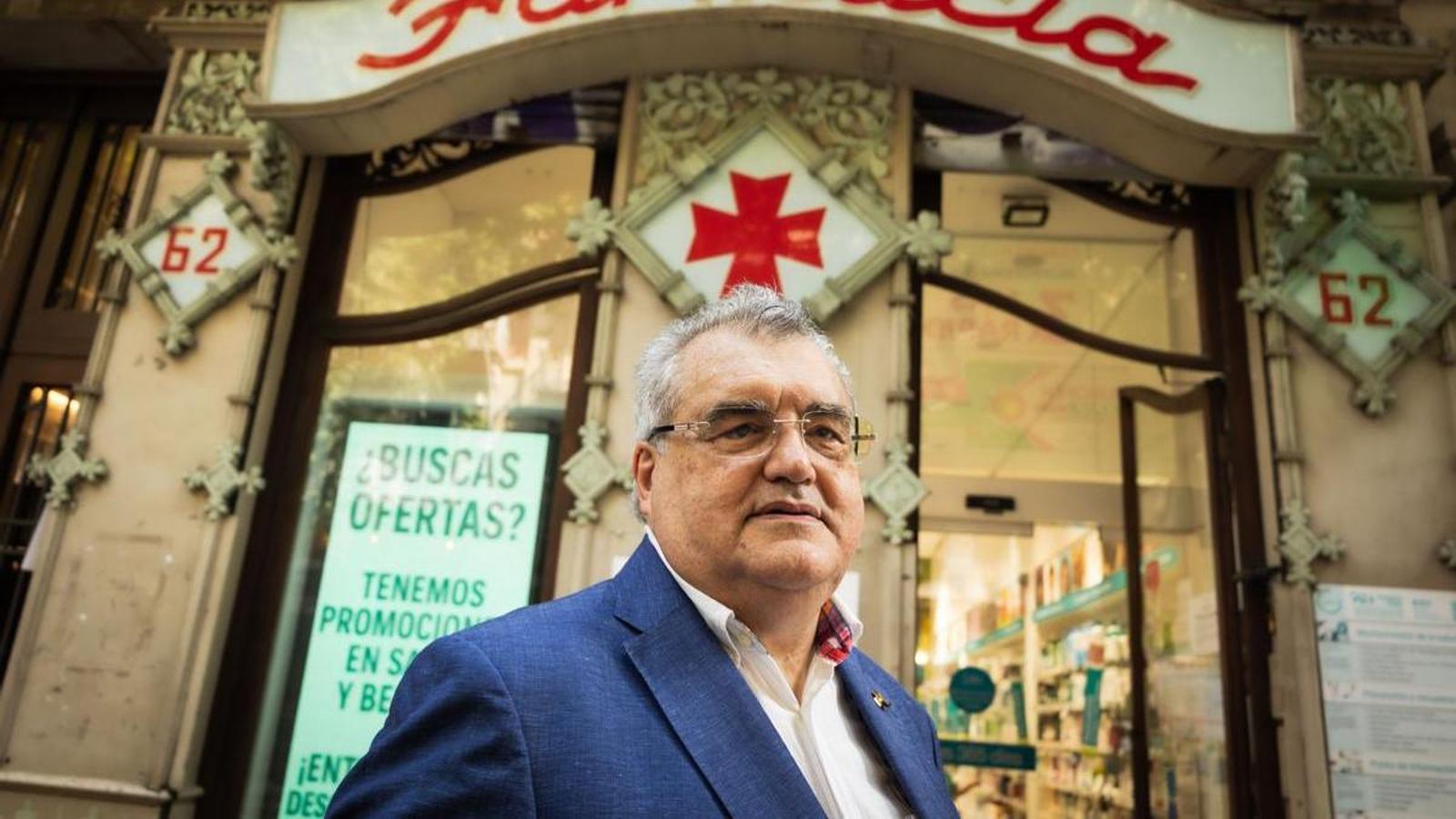
"In all the catastrophes of recent years, pharmacies have been there," states Antoni Torres in a conversation with ARA, who has been president of the Federation of Pharmacy Associations of Catalonia (FEFAC) for the last 12 years. Torres believes that during this time, and precisely because they have always offered their help when things went wrong, pharmacies have consolidated themselves as full-fledged community health agents. "Whenever we have met with the Department of Health, we have offered to help with whatever is needed. One time, in a meeting, they told me: you are the only ones who come here and ask for nothing, you only offer yourselves," Torres recounts.
Surely for this reason, the Government has also wanted to recognize the federation's trajectory and has awarded it the Placa al Treball President Macià 2025. The award recognizes entities that stand out for their trajectory, their merits, and their contribution to the world of work and the general interest. Carme Rigall, who has been the current president of FEFAC since last March, believes it is the "recognition of the commitment, professionalism, and daily contribution of community pharmacy to the health of citizens".
Past and future challenges
This is because, apart from the pandemic, in the last decade Catalan pharmacies have seen it all, according to Torres. He recalls that in 2012 Catalonia experienced the first total closure of pharmacies in history in protest against the unpaid bills from the Generalitat and the lack of guarantees for the payment of future invoices. The Government, then presided over by Artur Mas, began to continuously breach the payment deadlines agreed with the pharmacies. The accumulation of delays led to a historic debt that brought the sector to the brink of collapse, and pharmacists went on strike because the situation was unsustainable.
Torres claims that at all times during the strike, citizens were guaranteed access to medication. "We were clear that the pharmacy could not make the citizen pay for its demand. Protests continued, and this injustice was reversed," explains the former president of FEFAC. He explains that he is satisfied with his time at the federation and that the new board is prepared to take on current and future challenges: "The administration has been able to count on us, we have benefited the pharmacy, and citizens value us. You leave behind a prepared, experienced team that will face the situations that come."
One of these new challenges is the bill on medicines and health products that the Spanish government has promoted to prevent shortages, facilitate access to innovative medicines, and adapt prescription and dispensing to the new needs of the national health system. Torres recalls that it still has to be debated in the Congress of Deputies, but he positively values the text approved by Pedro Sánchez's executive. Nevertheless, he believes that there are some ambiguities and legally imprecise aspects that will need to be polished before its approval. "The law is not for celebrating, but we can be reasonably satisfied," he concludes.
