"In which other sport do you start at 8 years old and at 75 you still practice it?"
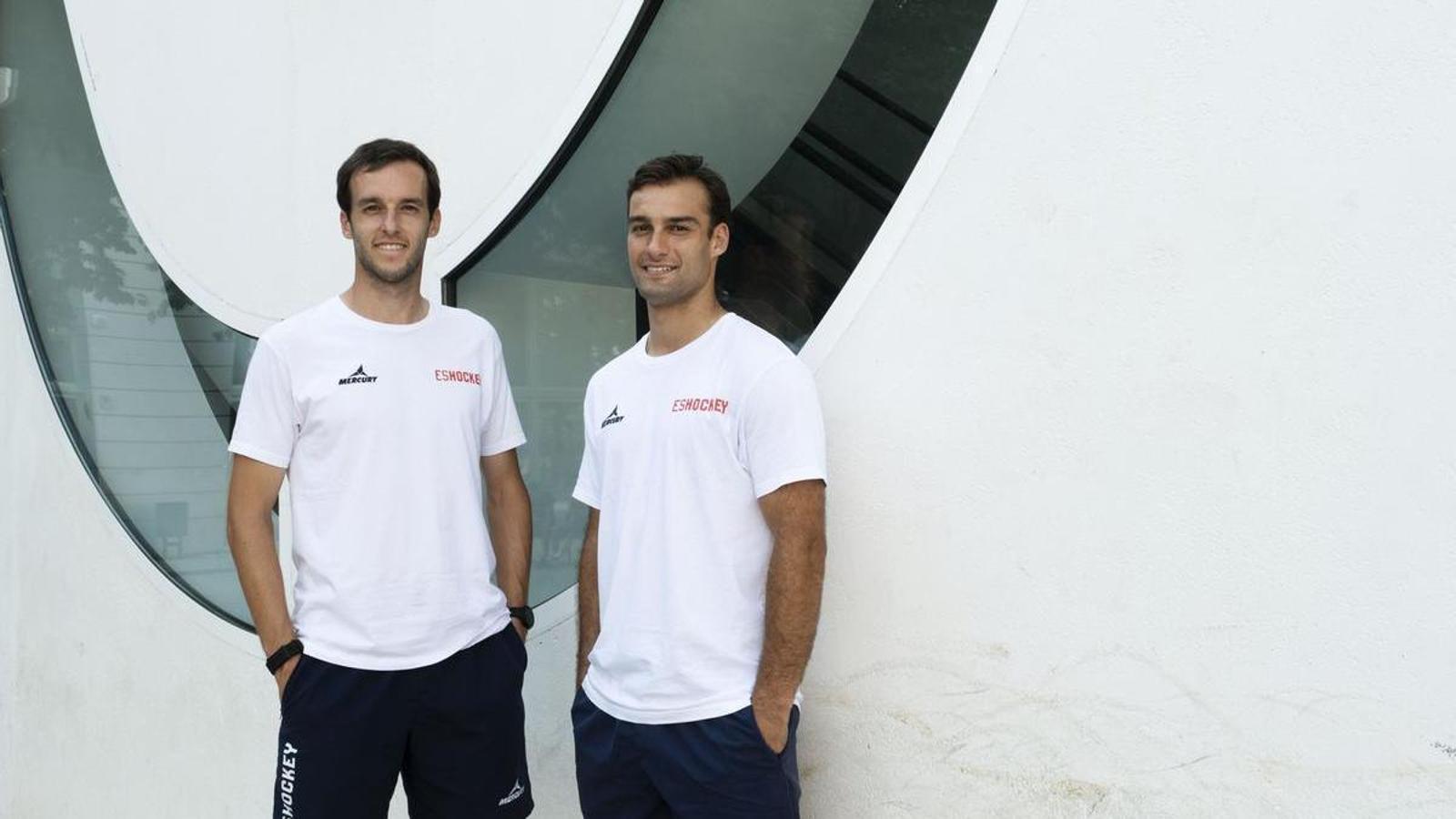
The Spanish field hockey team, led by Marc Miralles and Álex Alonso, arrives at the World Cup dreaming of the podium
-
CAT -
CAST
BarcelonaMarc Miralles (Terrassa, 1997) and Álex Alonso (Santander, 1999) make a good team. One is more reflective and the other has more flair. They may seem different but they share many things. Under 30 years old, both are the captains of the Spanish field hockey team. A responsibility in a sport where, often, the captains are part of established hockey dynasties. Catalan families like the Tubau, Amat, or Freixa have produced three or four generations of international players. This is not the case for these two players. Marc's father played water polo in Terrassa. And the Alonsos used the facilities of a sports club in Santander without wanting to compete. Nevertheless, their sons fell in love with field hockey.
"Perhaps it's true that it's still a sport that lives in certain bubbles – admits Alonso–. But the Federation is making a great effort to reach more people every time." The epicenter of field hockey continues to be in Terrassa, with clubs like Atlètic, Egara, and CD Terrassa. It was at the latter that Marc started years ago. And then there's Polo in Barcelona, Club de Campo in Madrid, Santander, and San Sebastián. It's very difficult to find players who don't come from these clubs. And, despite everything, the team competes head-to-head with countries where hockey is more popular, with more registered players and more following; places like the Netherlands, for example, one of the venues for the next World Cup. Specifically, the World Cup will be held in the cities of Wavre (Belgium) and Amstelveen (Netherlands) from August 14 to 30. The challenge? To reach the podium.
In the World Cups, Spain has reached the podium twice. A silver in 1971 and another in 1998, when a golden generation led by Xavi Arnau came closer to gold than ever before. In 2008, a bronze arrived. After that, nothing. "Now we can do great things. I think expectations are high due to the recent tournaments we've played, like the Games and last summer's European Championship. We know we have a great responsibility. A realistic goal would be the semifinals – says Alonso–. Winning medals depends on many factors; we need to overcome these challenges. We can keep talking about processes and such, which is fine, but at some point, you have to start demanding results from yourself and achieving them," adds Miralles. These players have been in a growth process for years. And now it's time for the fruits to arrive.
The current process began when Argentine Max Caldas joined the national team in 2021. "Since Max arrived, we've undergone a generational change after the Tokyo Games, with the introduction of young players and the creation of a stable foundation. We've managed to return to the top international level. It seemed like it had been somewhat lost before, and now, on the other hand, we are back among the best," states Alonso, recalling the Paris Olympic Games, when Spain managed to defeat the Belgians, one of the best teams at the time, in the quarterfinals. "It seemed like we could never beat them, and then we saw that we could," he remembers. But the medals slipped away by a narrow margin, with a very cruel ending against India. The medal did arrive in the last European Championship: a bronze. "The Paris Games and the European Championship helped us understand that the process was good. We are on the right track," both say.
Hockey is a sport that, once you get into it, it's hard to get out of. A sport that has been exemplary for how it has been rethought to be more dynamic and attractive, with changes as significant as the fact of switching to playing on blue synthetic turf. Grandparents played on natural grass and now the surface is blue with television in mind, to better see the ball. A sport that is far ahead in the use of VAR to help referees. A sport that, for players like Marc and Álex, offers incredible moments like the one they experienced at the last World Cup. "The Olympic Games are incredible. Everyone pays more attention to what you do. We are a sport that is not used to being followed so much, and with the Games, for a few days, you seem like a footballer. All this work is worth it to experience moments like this or like the one at the last World Cup, in India. The first match was against the hosts. A stadium with over 22,000 people, they turned off the lights to create atmosphere, they did a light show... in India this sport is very popular. When you experience matches like this, it's special," says Álex.
To grow and improve, both have gone abroad. Álex plays for the Belgian Royal Léopold and Marc played for two years in the Netherlands, at Bloemendal, one of the biggest clubs in Europe. "It helps a lot to leave home, your comfort zone. Beyond the sporting part, there is personal growth, an experience that you take with you for life – says the Cantabrian–. I always have a bit of a dilemma with this... I got a lot of positive things from playing there: learning a new language, facing a competitive league... but not everyone is the same. Many stay at home and can continue competing the same way their whole lives. Sometimes we tend to underestimate what we have at home; the Spanish League is very good," defends the current player of the Real Club de Polo.
Now both are captains under 30 years old before a World Cup. "I like it. At my club, I've been used since I was very young to having responsibility over certain people and taking on a bit of a leadership role," says Álex, remembering his years at the Real Sociedad de Tenis de La Magdalena, in Santander. Marc thinks about it more. "I am much more serious and I like to be more focused on the work, understanding processes, seeing how everyone can improve," he says. The Vallesà states that he does not like speaking in public but that he has a calm and firm discourse. He notes down ideas, doubts on his phone to keep growing. He is methodical and perfectionist. "Everyone exercises leadership differently. Some in front of the coaches, others with their teammates. Some by playing; others by talking. And if you add it all up, you have a strong team," he adds. Despite the notes he takes to analyze how to defend or attack, for now Marc does not see himself as a coach. "I think many coaches fall a bit out of love with the job when they have to start doing other management tasks that have nothing to do with field work or training. Being a coach is very difficult; you have to manage people," he admits.
But what they know is that they will never stop playing hockey. "The best thing about this sport is loyalty. In what other sport do you start at 8 years old and at 75 you are still playing it? One weekend you can meet someone 60 years old who was an Olympian and still plays with the veterans. This sport builds community and gives you a discipline that later helps you in your day-to-day life," concludes Miralles. This summer they aspire to a medal. And in a few decades, they will still have a stick in their hands, remembering the 2026 World Cup. And maybe they will talk about a medal. Who knows.
