Farage's far-right triumphs in the United Kingdom and Labour sinks
The separatists achieve a historic victory in Wales and the Scottish National Party renews a fifth term, although without an absolute majority

-
CAT -
CAST
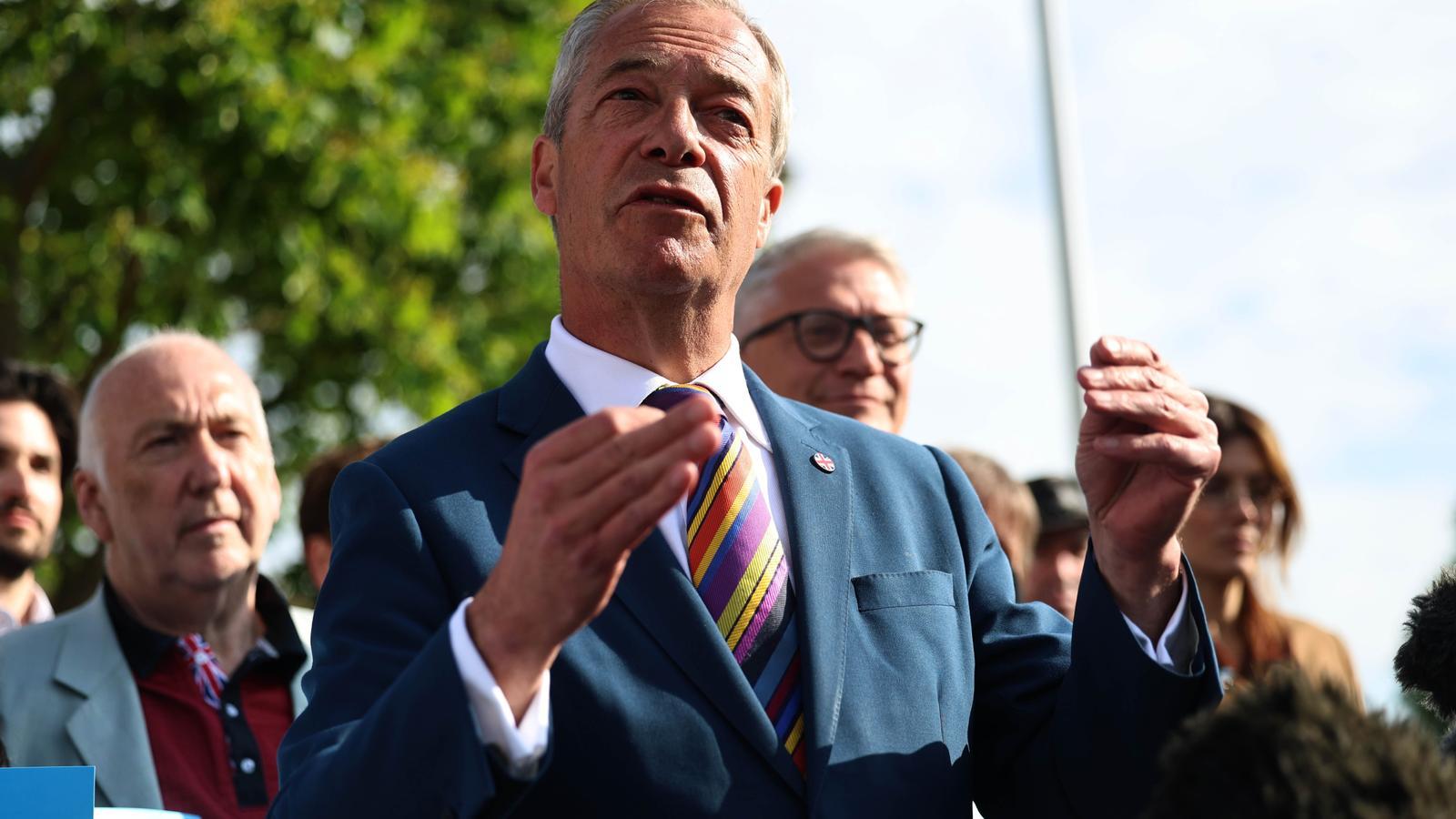
LondonA decade after the Brexit earthquake, the British far-right leader Nigel Farage has once again shaken the politics of the islands and has toppled the pillars of traditional Westminster bipartisanship. The Reform Party led by Farage, the man who unleashed the United Kingdom's divorce from the European Union (EU), has been the big winner of the English local elections held this Thursday in 136 municipal authorities. The government has suffered a humiliating defeat, losing more than 1,400 councillors out of the 5,000 in dispute. The defeat has been aggravated from its left by the rise of the Green Party, which has gained just over 300.
The projection of the local results to a national level disseminated by the British media indicates that the Reform Party would have obtained 27% of the votes, the Conservatives 20%, Labour 15%, the Greens 14% and the Liberal Democrats 14%.
The super electoral Thursday has also renewed the national parliaments of Wales and Scotland, where the Labour Party has also fared very poorly. The combination of results from the 136 municipal authorities in England out of the 307 existing, and the two devolved governments puts Prime Minister Keir Starmer in the hot seat. And the voices calling for an orderly handover to Downing Street have multiplied throughout this Friday, although, above all, from the most left-wing sectors of the party.
Preventively, early this Friday morning, and in the face of what was already a collapse of historic proportions that could only get worse as the results became known, Starmer assured: "I do not intend to resign and plunge the country into chaos." Despite his determination, it will be in the coming days, once the true magnitude of the disaster emerges, that Starmer's resilience and the support he has among MPs in the Commons and government members will be tested. For now, however, one of the most well-regarded potential successors, Andy Burnham, the mayor of Manchester, is not even an MP, a condition sine qua non to be prime minister.A month and a half ago, and given his growing popularity, the National Executive Committee, which Starmer controls, vetoed him from standing in a by-election in the north of England that could have given him the seat he would now need if he wants to challenge the premier.
The magnitude of the
Labour defeat in England has symbolic indicators in territories linked to very prominent figures in its government. In Tameside, a metropolitan borough of Greater Manchester, in the northwest of England, within the area associated with former Deputy Prime Minister Angela Rayner, the party has lost 16 of the 17 municipal seats it defended to Nigel Farage. In Wigan, in Greater Manchester, the Westminster constituency of Culture Minister Lisa Nandy, Labour has ceded all 22 municipal seats at stake, also to the populists of the Reform Party. In Southampton, Labour has lost control of the municipal council and even local leader Alex Winning has been ousted. The same has happened in Sunderland, held by Labour since 1974, which Farage has won.

Total defeat in Wales
The total defeat of Labourism, consummated less than two years after the triumph in the general elections, has been even more brutal in the elections to the Senedd, the assembly of Wales. The party has not only lost the government it held since 1999, when devolution began, but has come in third place, behind Plaid Cymru, the Welsh separatists, who triumphed, narrowly missing an absolute majority (43 seats out of 48), and the Reform Party, which obtained second place with 34.
The Welsh First Minister until now, Eluned Morgan, has lost her seat, a particularly devastating moment in one of the cradles of the Labour movement. She is the first head of government in the United Kingdom not to renew her seat. Morgan has resigned as party leader in a gesture to "take responsibility" for the results, and has demanded that "Labourism change course." Starmer, who also considers himself responsible for the failure, is clinging to his post for now.
In Scotland, as the polls predicted, the Scottish National Party has secured a new mandate, its fifth consecutive one, although it has not reached an absolute majority in the chamber of Holyrood, which stands at 65 deputies. John Swinney, the leader of the SNP and First Minister of Scotland, has ruled out a coalition government. In turn, the leader of Scottish Labour, Anas Sarwar, has again called for Keir Starmer's resignation, as he did a couple of months ago. In Scotland, the final results will not be known until this Saturday.
Euphoria for Nigel Farage
Fortified by undeniable results, Nigel Farage has wanted to highlight the significance of the moment. The country, he said, is facing "a truly historic change". "We were very accustomed to thinking about politics in terms of left and right –he continued–, and what we have been able to do is win in areas that have always been conservative. But, equally, we are demonstrating very clearly that we can win in areas that had been frankly dominated by Labour since the end of the First World War. It is a very, very important day for a complete reshaping of British politics".
The results, especially in England, confirm an idea that many in Westminster were still reluctant to accept: Brexit was not a one-off episode, but the political expression of a cultural, identity and territorial fracture that continues to define British politics ten years after the referendum. The verdict of the ballot boxes cannot be explained solely by economic discontent or disappointment with Conservative and Labour governments, and the usual punishment for the ruling party in local elections held, more or less, halfway through the parliamentary term. Discontent is the engine that drives many voters to abandon traditional parties, but what attracts them to the Reform Party is a socially conservative agenda, hostile to immigration, critical of equality policies, and deeply English nationalist. In general terms, in those areas where Brexit triumphed in 2016 by a percentage of 60% or more, 40% of the votes cast this Thursday have gone into the reformers' bag.
The crumbling of the English political landscape, comparable to what is already happening in Wales, Scotland, and also Northern Ireland, has established Nigel Farage as an increasingly serious candidate to reach Downing Street in 2029. Controversy, however, accompanies him. Because at this point, Farage faces an investigation by the Parliament's Ethics Committee for having accepted a donation of five million pounds in cryptocurrencies without declaring it. The leader of the Reformists, a party that is a one-man band, has promised total deregulation of cryptocurrencies if he comes to power.
