The invisible talent that companies still don't see
Two Eurofirms Foundation programs work to break down labor barriers with technological training and to make visible disabilities that many women continue to hide
-
CAT -
CAST
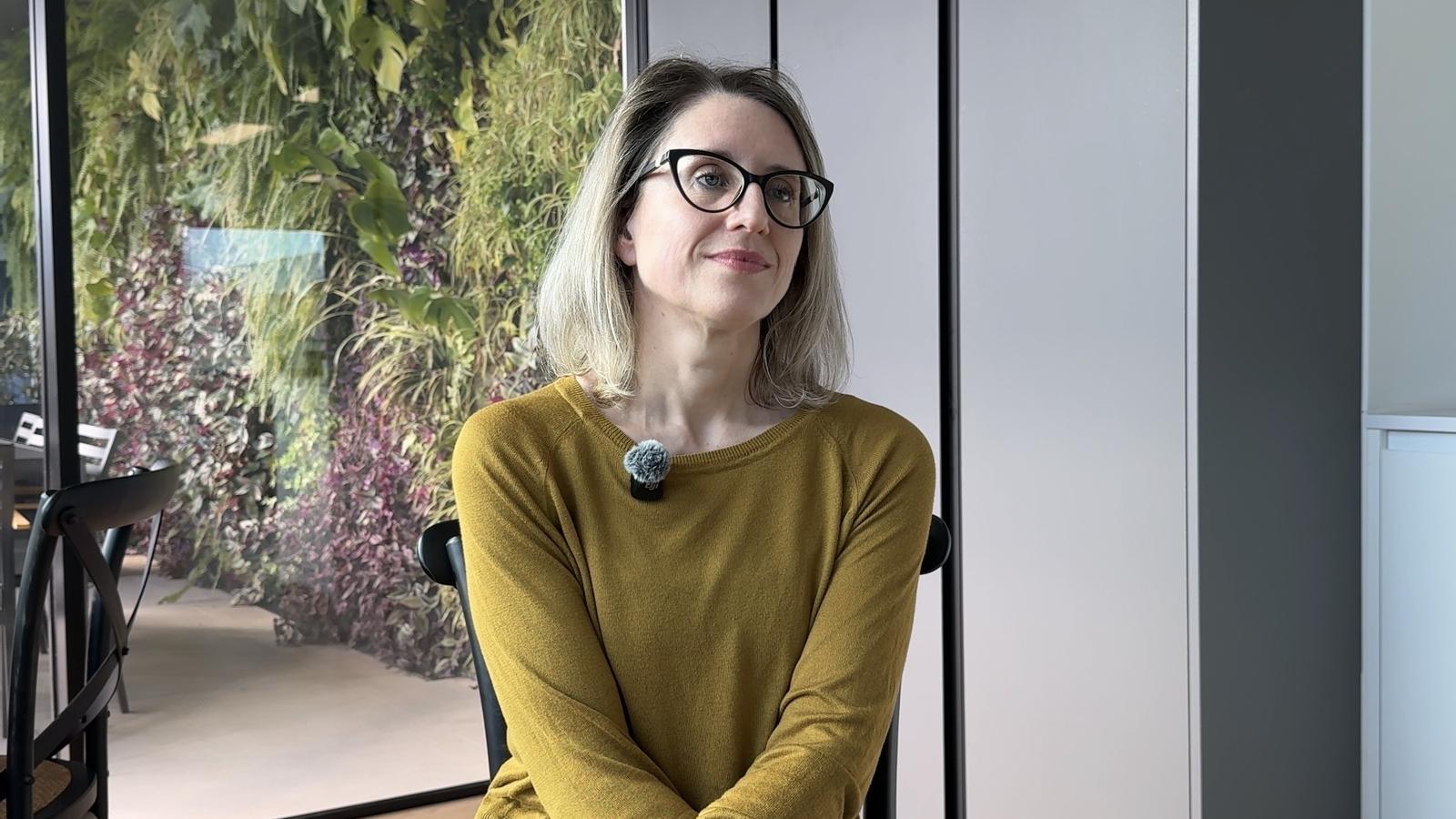
GironaWhen Noemí Selfín felt strong enough to return to the labor market after 16 years away from work, she knew she had to reinvent herself. At 52, with a disability resulting from an aggressive cancer and a career interrupted for over a decade by treatment, she sensed her resume would hardly compete on equal terms. “So many years out of the labor market made my profile unattractive. I needed to retrain,” she explains. During the pandemic, she began to orient herself towards tech profiles and enrolled in one of the tech bootcamps – intensive training courses – driven by Eurofirms Foundation.
The training, intensive and online, lasted four months. Selfín finished her workday at five in the afternoon and connected to class every day from six to nine-thirty in the evening. “The bootcamp is very complete and I highly recommend it,” she says. Today she works as a consultant at Salesforce. But beyond the tech training, the process has also helped her change her relationship with her disability: “I remember that at the SOC, the person who helped me with my resume told me to hide my disability. And I didn't mention it. It makes you feel that, in addition to your age and being a woman, you have another handicap.”
Her case connects with a growing problem in the labor market. The tech sector has been warning for years about the difficulties in finding qualified professionals, especially in areas like cybersecurity, web development, or specialized digital profiles. The bootcamps driven by Eurofirms Foundation aim to respond to this dual reality: the lack of ICT talent and the difficulties of access to the labor market for people with disabilities, especially women. During 2025, the foundation launched 12 tech cohorts with over 400 people trained and a labor insertion rate of 75%.
According to state law, companies with more than 50 employees are obliged to reserve at least 2% of their workforce for people with recognized disabilities. However, according to union estimates, nearly 43% of Catalan companies fail to meet this quota or the alternative measures provided for by the regulations. The employment rate of the population with disabilities aged 16 to 64 increased in 2025, by just over two percentage points to 32.8%, and the trend is upward. Nevertheless, it remains significantly lower than that of the population without disabilities, which closed last year at 74.1%.
Breaking the fear of stigma
But there is another reality that is even more difficult to quantify: invisible disability. Professionals who do not communicate their situation for fear of stigma or losing job opportunities. “Now, after doing the bootcamp, I feel that the stronger your resume is, the less important your disability is,” explains Selfin. Nevertheless, he acknowledges that the psychological burden is still there: “Where I'm working, I see a lot of people asking for sick leave every week. And I'm like a soldier: precisely so that I'm not defined by my disability. You're a bit marked.”
It is precisely here that initiatives such as the Iguales program of Eurofirms Foundation come into play, aimed at helping companies and workers to bring invisible disabilities to light within organizations. “Hidden disability can exist in any organization,” they argue from the foundation. The objective is not only to facilitate new hires, but also to create environments where professionals do not feel the need to hide. This is the path that large technology companies have begun to incorporate with the help of the Iguales program.
From NTT Data, Javier Rodríguez Molowny, partner and ambassador for the diversity, equity, and inclusion area, assures that the challenge involves “reinforcing an environment where people feel safe to show themselves as they are.” As he explains, many of the current barriers “are invisible” and have more to do with corporate culture than with physical adaptations. At Accenture, they also admit that they are working to achieve the legal quota of 2% of people with disabilities in all companies of the group. David Palomar, head of talent and selection, advocates for “self-declaration” policies and “barrier-free” environments to encourage workers to communicate situations related to disability or neurodiversity.
This debate was the focus of a large part of the third edition of La Bravíssima 2026, the meeting promoted by Eurofirms Foundation held this Friday in S’Agaró, which brought together more than 275 representatives from the business, social, and institutional world. The proceeds from the event will go to technology training programs for women with disabilities. “When we focus on abilities, limitations stop dictating the path,” stated Maria Jordà, director of Eurofirms Foundation, during the meeting.
Selfín coincides that time is a key factor in this process. “Fears are difficult to see: I think that with time they will disappear from my mind. Now I am on the path to having more security. If there is no opportunity, you will always be thinking about it and the fear will not go away”, he concludes.
