Euthanasia requests grow by 30% in the State
One out of every three applicants dies before receiving the benefit and the differences between communities are accentuated
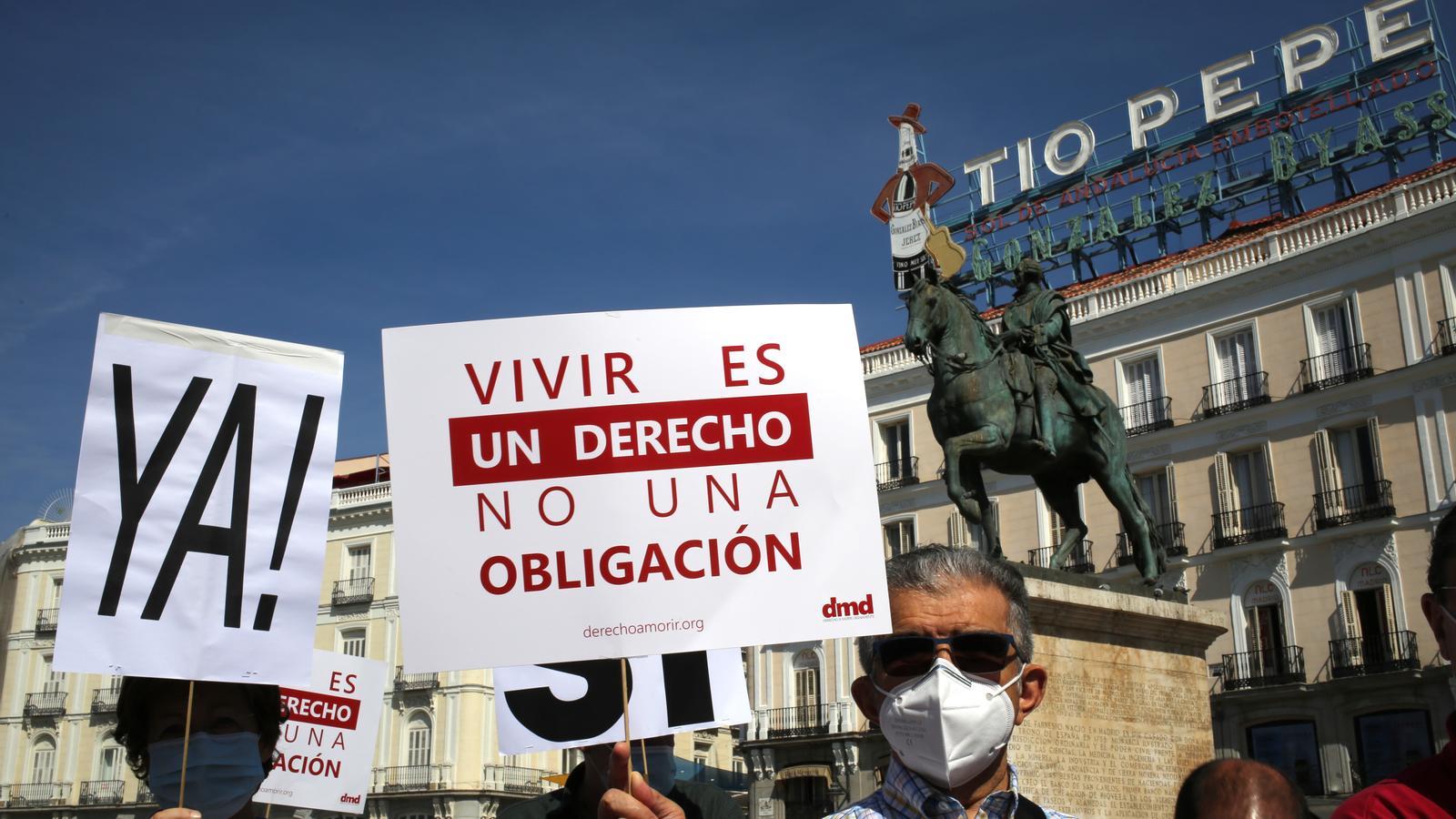

-
CAT -
CAST
BarcelonaDespite the campaign that right-wing and far-right parties have been waging for some time against euthanasia, this service is consolidating itself within the healthcare system. However, it is at an uneven pace depending on the autonomous community. The latest data from the Ministry of Health confirm that, overall, the number of applications or procedures ending in assisted dying has increased, but some communities have recorded a decrease compared to 2024. This is the case in the Canary Islands, where the services have gone from 25 to 16; in Castilla-La Mancha (from 8 to 6) and in the Balearic Islands (from 17 to 14). Conversely, the increase has been particularly significant in Catalonia, which has gone from 142 to 235 euthanasias, and in the Basque Country, from 49 to 78.
The report, published this Wednesday, confirms that, last year compared to 2024, applications for a dignified death increased by 30.6%, rising from 983 to 1,284, and the euthanasias performed increased by 35.7%, rising from 423 to 574 registered in 2025. Euthanasia allows adult residents in Spain with a serious, chronic, and intractable illness to request to die in a healthcare facility or at home to leave behind their incurable suffering. 75% of the beneficiaries had some oncological or neurological disease without treatment and an average age of seventy years.
If one looks at the data from these last five years, a total of 3,649 euthanasia procedures have already concluded across Spain, but only in 46% of cases (1,698) was the assisted dying actually carried out. Expert commissions have denied 15.2% of cases (a total of 555), 268 applicants have stopped the procedure (7.3%), and 1,128 people have died during the processing or with a favorable resolution that was not executed.
In fact, the document also points out that in the last year the percentage of applicants who die during the processing of euthanasia has decreased slightly, one of the main complaints from entities and associations in defense of this right. Nevertheless, it has remained over 380 people in a single year. In five years, then, almost one in every three people who have started the process since 2021 has not seen their right recognized or has died before receiving euthanasia.
Of these deaths, 281 (74%) occurred before the Guarantee and Evaluation Commission issued its resolution, and 101 (the remaining 26%) after obtaining a favorable resolution, but before the provision was carried out. The average time elapsed between the first request and the resolution is 46.5 days, and the average period between the first request and the effective performance of the provision is 72.4 days.
Differences between communities
Once again, and by a wide margin, Catalonia is the community that concentrates the highest number of processes related to the provision of aid to die. In 2025, it registered 470 files, almost 40% of the national total (1,219). Of these, 235 (half) ended with the effective provision of euthanasia. On the other hand, denials represent only 9.1% of cases, compared to 13.5% for the whole of the State.
But the most worrying figure continues to be that of people who die before receiving the service, which is 176; that is, 37.4% of the processes completed in Catalonia. This figure also accounts for 46% of all deaths registered during the processing of euthanasia in Spain. Deaths during this period are also particularly high in Extremadura, La Rioja, and Asturias, but in these cases, the absolute number of applicants is much lower.
The differences are also significant in the resolution of the files. The Basque Country and the Valencian Community stand out for the high proportion of procedures that end in euthanasia, with 71.6% and 68.8%, respectively. In the Valencian case, however, this data contrasts with the fact that it has the second-lowest rate of applications in the State, only behind Murcia.
At the other extreme is Extremadura, where only 12.5% of completed processes end with the provision of aid to die, and Castilla-La Mancha and Murcia, with 24% and 25%. All these differences may be related to various factors, such as the organization of health services, the agility of administrative procedures, and the level of knowledge and social normalization among health professionals regarding the right to euthanasia. Cultural and social factors may also play a role.
Denials and revocations
However, proportionally, more euthanasia services are not being authorized just because demand for them is increasing: less than half (47.1%) of the procedures that concluded in 2025 ended with euthanasia. Last year, the committees denied 165 requests and issued 188 unfavorable pronouncements, which led to 72 complaints. Of these, twenty ended up being favorable, that is, 28% of the total.
Furthermore, the law recognizes the possibility for applicants to withdraw their request at any time, and 98 people did so, 76 of whom opted to postpone the euthanasia after having obtained a favorable resolution. Thus, between denials and revocations, 21.5% of the files opened in 2025 did not close with euthanasia.
