Ours with ours: Cadaqués rallies to preserve its salty speech
The geographic isolation of the Empordà village has kept its particular dialectal variant alive, but today it is in danger of extinction

-
CAT -
CAST
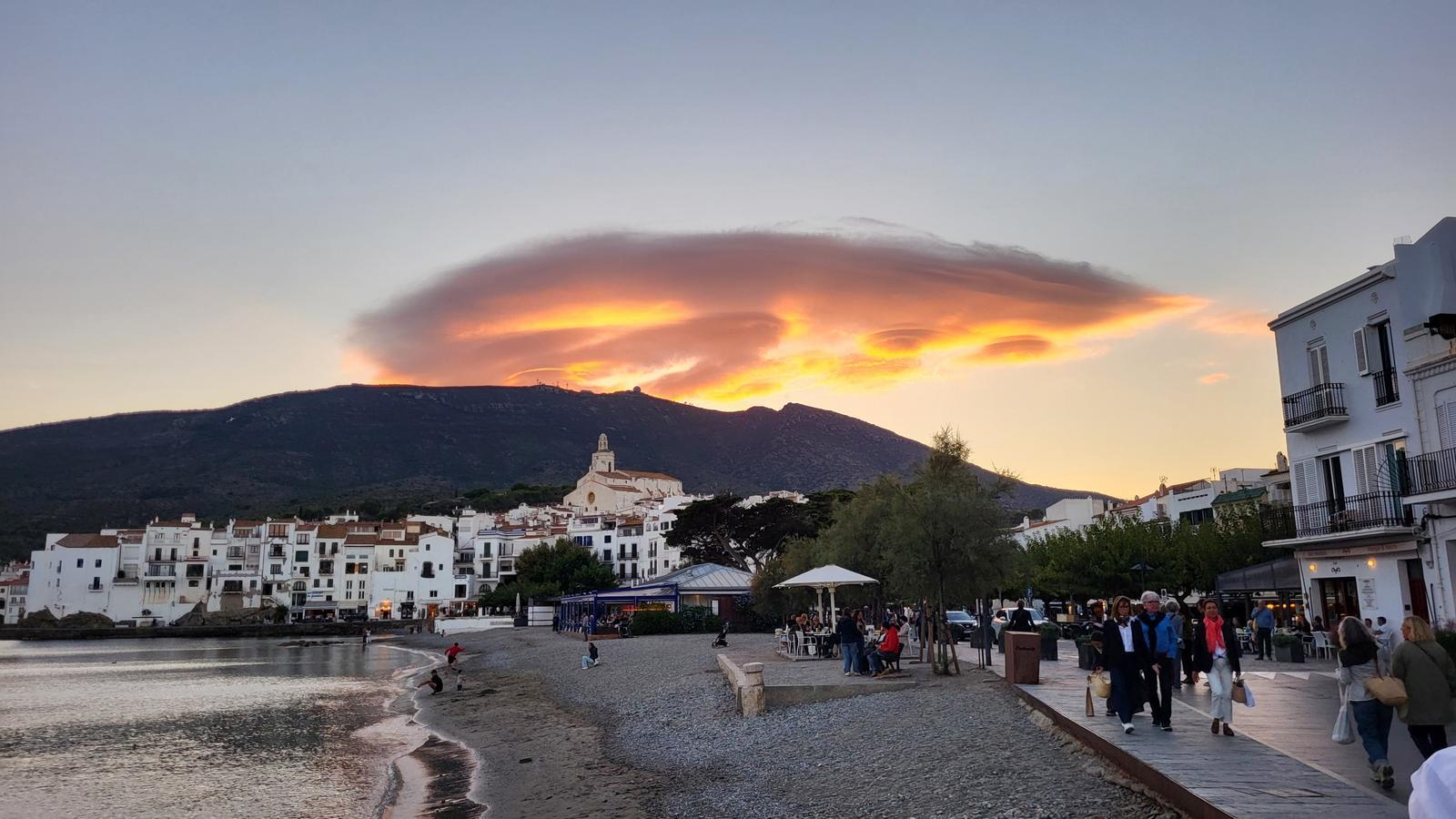
CadaquésAdmired for its singular beauty, the town of Cadaqués resists losing one of the most cherished distinctive features by its neighbours and that makes them feel most proud: its particular "salty talk", with a vocabulary and expressions so genuine that it is considered a dialectal variety with its own name: Cadaquesenc. Although it is one of the fishing villages on the Girona coast where the "salty talk" has been best preserved, largely thanks to its geographical isolation, Cadaqués is finding it increasingly difficult to preserve its linguistic uniqueness due to the homogenizing power of social networks, the pressure of tourism, immigration, and demographic changes. "If Catalan is in danger, imagine Cadaquesenc!", warns philologist Pep Vila, author of the book Paraulari de Cadaqués.
Trying to save the Cadaqués dialect is a David against Goliath struggle, but, even knowing they are on the weaker side, the town's residents are not giving up the fight. For some years now, the town has been rallying to preserve the linguistic heritage they have inherited from parents and grandparents, reinforcing the age-old spirit of "us with us," which in this town of difficult access the residents have cultivated to help each other mutually in the face of dangers and adversities.
"I also speak Cadaqués"
With this spirit, the Facebook group "I also speak Cadaquesenc" was born, with more than 1,200 users, where the meaning of words like barrofar is debated or descriptions like this one, from Cadaquesenc Marga Duran, can be read: "At Daniela's, we once killed a chicken. My grandmother also lived on Unió street. We took a chicken from the yard and went to Daniela's. Once there, in the middle of the shop, she took out a harness, one held the chicken and the other cut its neck. They saved the blood to make omelets. I was very young and I was stunned". It is one of the valuable snippets of linguistic memory (and also of a way of life) in extinction that are collected on the social network of this group.

A stroll through the town, chatting with the owners of long-standing businesses, including the Casino L'Amistat, a gathering point for both locals and visitors, allows us to confirm that the Cadaquès dialect has not fallen silent, although it is common for speakers to substitute it with standard Catalan when addressing someone not from the town for fear of not being understood. This is not the case for residents who proudly and militantly identify as Cadaquesencs, such as cultural activist Pere Vehí, owner of the legendary Bar Boia, now closed, or the captain of the sailboat Sant Isidre, who shows Cap de Creus to tourists via a coastal route. "I am a born-and-bred Cadaquesenc and I will speak to you in 'salat'," he warns the participants of the crossing.

A competition to pass on Cadaqués dialect to children
That this pride of "being and speaking Cadaquès" is not lost among the younger population is the objective of initiatives such as Gent salada, the program of Ràdio Cap de Creus (the local radio station of Cadaqués) that for eleven years has been inviting the children of the town to a competition in which the team that knows the most about Cadaqués and its linguistic variant is awarded. In collaboration with the Caritat Serinyana School, the program achieves the participation of about fifty children from fourth to sixth grade each year, to whom, since last year, those from second and third grade have been added. "It was they who asked us, and they have taken it with such enthusiasm and drive that they have ended up ahead of some teams of older children," explains Lluís Gispert, who hosts the program together with Marga Duran and Lídia Kontos.

According to Gispert, among the participants there are children who already speak at home, but others who do not even know Catalan because they have just arrived from outside Catalonia, many of them from Bolivia, the origin of one of the fastest-growing immigrant communities in Cadaqués. "They all take the competition very seriously. They compete as if it were the Champions League and when some lose they cry their eyes out," admits Gispert. For him, the task of preserving the Cadaqués dialect through the program is important because it is aimed at the segment of the population that should take over from parents and grandparents and prevent the dialect of Cadaqués from having its days numbered. "We are winning a battle, but I fear we have lost the war. If Catalan is in danger, the Cadaqués dialect has even fewer chances of survival," he admits.
From the school, the teacher Ester Faixó, 50 years old, is not much more optimistic, but she does not give up and actively works to make present as much as she can, in the classroom and in the playground, what she calls "our way of speaking". Of the 16 students she has in class, only six speak Cadaqués dialect at school, because it is the dialectal variant they use at home with their families. "In class I speak to the students in Cadaqués dialect because it is my way of speaking and it comes out like that to me," she assures. While she tries to ensure that the Cadaqués dialect is present at school, Ester also strives to make all Catalan-speaking students aware that they should not switch to Spanish when addressing newly arrived children, "as this does not help them to learn the language of the host country".
The 'salat' is used at school for communications from teachers to parents, in the end-of-year magazine, at the "Jocs Florals" (Floral Games) or on posters to announce school activities such as the book exchange for Sant Jordi. It is a grain of sand, tiny but necessary, which is added to those contributed by initiatives such as the program Gent salada (Salty people) or the calls from the "Societat L'Amistat" (Friendship Society) for neighbors to suggest Cadaqués words, expressions or sayings to be printed on the sugar packets served with coffee in the town's establishments.
A very different situation is the one that the philologist Pep Vila, author of the
Duran also appeals to the pride of the people of Cadaqués when it comes to maintaining their way of speaking when addressing people from outside the town. "We must be aware that they will understand us equally if we don't switch to standard Catalan," says the councilor, who announces for autumn the creation of a Council of Sages for the preservation of the historical memory of the town, including its linguistic heritage.
The opinion of philologists
Studied and collected by the philologist Ernesta Sala in various volumes, including the one titled El parlar cadaquesenc, the Cadaqués way of speaking does not have grammatical rules and the same word can have several spoken or written variants depending on who uses it.
In her book, Ernesta Sala documented thousands of words and expressions from Cadaqués taken from oral expression. When the book was published, in 1983, Sala assured that she was convinced that the way of speaking in Cadaqués "is not about to disappear, but rather continues to be very much alive". "What happens is that when speakers address a stranger, they no longer use it or, rather, they assimilate it to Empordanès, due, as is known, to the often absurd reaction, most of the time mocking, of so many strangers who are surprised to hear a way of speaking different from their own," wrote Sala.
A very different situation is what the philologist Pep Vila, author of the Paraulari de Cadaqués, draws today, where he collects some 2,000 words gathered from written expression. For Pep Vila, who is already working on a second volume that will complement the first, the proper speech of this town is mortally wounded by the homogenizing force of technology, television and other media, by immigration and by the lack of regulations for the protection of Catalan and its dialectal variants. According to Vila, the Cadaqués dialect also suffers from the loss of vocabulary associated with fishing and agriculture, in clear regression in favour of tourism. Vila praises the initiatives that have arisen in the town to preserve its dialect, but assures that they are completely insufficient in a context where even Catalan is in danger. "The residents of Cadaqués want to live in Cadaqués dialect, and I want to live in Girona in Catalan, but unfortunately I can't," he laments.
