Train drivers maintain the strike at Renfe for this Thursday
The union Semaf had called the protest for "safety reasons" and has ratified it after the tragic accident in Toledo
-
CAT -
CAST
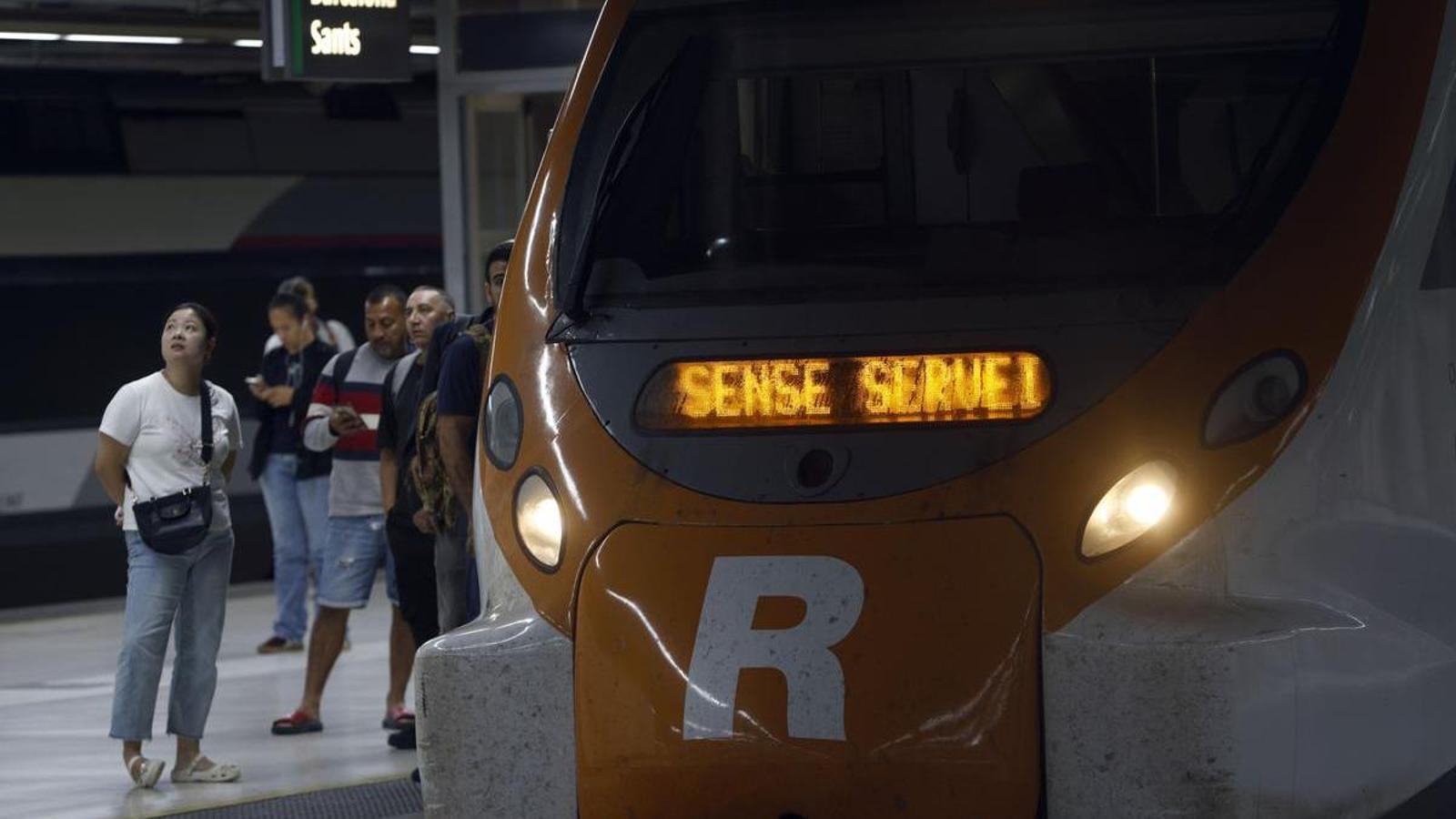
BarcelonaThe strike at Renfe scheduled for Thursday in defense of railway safety is going ahead. This was announced this Wednesday by the train drivers' union Semaf, which has called on the 6,000 drivers across the State to participate in the stoppage scheduled to begin at midnight tonight. The tragic accident in Urda, in Toledo –which has already left more than sixty people injured–, has not changed the plans of the union, which had called the strike to protest against the "administrative blockade" of the agreements signed regarding railway safety, protocols for meteorological emergencies, hiring of new train drivers, response to accidents involving pedestrians, and reliability of rolling stock. From the union, they have explained that "the entire organization is deeply dismayed" by the disaster, but for the moment they want to maintain prudence regarding the causes until they know in detail everything that really happened so as not to enter into speculation.
Semaf has warned that, apart from Thursday's call, it is studying new actions and measures in defense of railway safety and has urged the entire collective of train drivers "to extremize precautionary measures in the exercise of their duties". Semaf called the strike last October 16 after a meeting with the Ministry of Transport, Adif, the State Railway Safety Agency (AESF), and Renfe, in which it lamented that "everything remains just as paralyzed as it was in May" regarding the railway safety claims.
After the railway sector strike last February due to the Adamuz railway accident, working groups were created to carry out every commitment that had been set in the agreements reached with the Ministry of Transport and Sustainable Mobility and Renfe for its cancellation. According to Semaf, there were meetings from February to April in which the train drivers presented technical proposals, "but they stayed there" and, although "they say they are fulfilling everything", according to the union, "everything is as it was at the end of April".
On the other hand, Renfe asserts that Semaf's demands for carrying out this mobilization exceed its sphere of competence, which is why it considers it "incoherent to call a strike against its service for issues unrelated to the company," such as driving time regulations, or certain actions by the Labor Inspectorate, which are also outside its decision-making capacity. The issues that Semaf has raised for the strike call are also not included in the collective agreement signed by the union last July, according to Renfe.
Minimum services
The Ministry of Transport and Sustainable Mobility has established minimum services which, for Rodalies, have been set according to different time slots. During peak hours (from 06:00 to 09:00; from 13:30 to 15:30, and from 18:30 to 20:30), they are set at 75% of the usual service, and during the rest of the day, at 50%. For medium-distance trains, an average of 65% of usual services has been set, and for high-speed and long-distance trains, at 73%, while for freight, a percentage of 26% of the scheduled service has been established.
Semaf has also decided to maintain the call for six days of strikes at Ouigo starting next Friday in response to "the repeated breaches by the company's management of the provisions agreed upon and included in the current collective bargaining agreement".
