The situation is different in the Barcelona Metro. Sources from TMB explain that, since most of the network runs underground, temperatures are more regular and it has not been necessary to modify general construction criteria. In the open-air sections, however, heat can affect the tracks. TMB has 32 rail expansion joints, which absorb the movements of the steel caused by temperature changes, concentrated mainly on the Zona Franca viaduct of L10 Sud and in various outdoor sections of the conventional lines. The company assures that inspections and maintenance already take atmospheric variables into account and that this summer it has not been necessary to apply preventive speed reductions due to the heat.
"Tracks will need to be prepared for over 60 degrees": heat puts the European railway on the ropes
Heat waves already force services to stop in Europe and force the train to adapt to increasingly extreme temperatures
27/08/2026 - 07:00 h

-
CAT -
CAST
BarcelonaOn the train, extreme heat is no longer just a problem for passengers waiting in the sun or in poorly air-conditioned stations. Deformed tracks, melting materials, and interrupted services: this summer, high temperatures have directly tested European transport infrastructure. In Germany, France, Sweden, Austria, and the United Kingdom, incidents related to extreme heat episodes have been recorded, making it increasingly difficult to adapt networks built decades ago to climatic conditions different from those foreseen when they were designed.
In Leipzig (Germany), temperatures close to 40 degrees caused the material used to seal the joints between the rails and the asphalt to melt. The municipal transport company had to interrupt tram services and initiate a cleaning operation that affected a large part of the network. An investigation was also opened into the suitability of materials for current temperatures.
Railways are particularly sensitive to these variations. [Steel] rails expand with heat and, when the temperature increase compared to that at the time of installation is large enough, they generate stresses on the rail itself, the sleepers, and the anchoring elements. This can cause cracks, fractures, or lateral deformations. The overhead catenary is also subject to expansion and contraction: in the heat, cables can lose tension and alter their position with respect to the pantograph, the device that connects the train to the catenary.
The frequency of high temperatures
According to civil engineer, researcher, and professor at the Polytechnic University of Catalonia (UPC) Zacarías Grande Andrade, the problem is not only that networks are now reaching temperatures that were not previously contemplated, but also that "this peak temperature is being reached many more times than before".
The frequency is important because the succession of expansions and contractions can also degrade materials. "It causes the rail to crack until it fractures," explains the transport infrastructure specialist. Therefore, he anticipates that inspections will need to be increased to detect cracks, deformations, or other anomalies before they affect traffic.
The challenge is not only to repair existing networks but to design those being built today to function for a good part of the second half of the century. Currently, rails are laid considering a specific operating temperature, from which expansion and contraction margins are calculated.
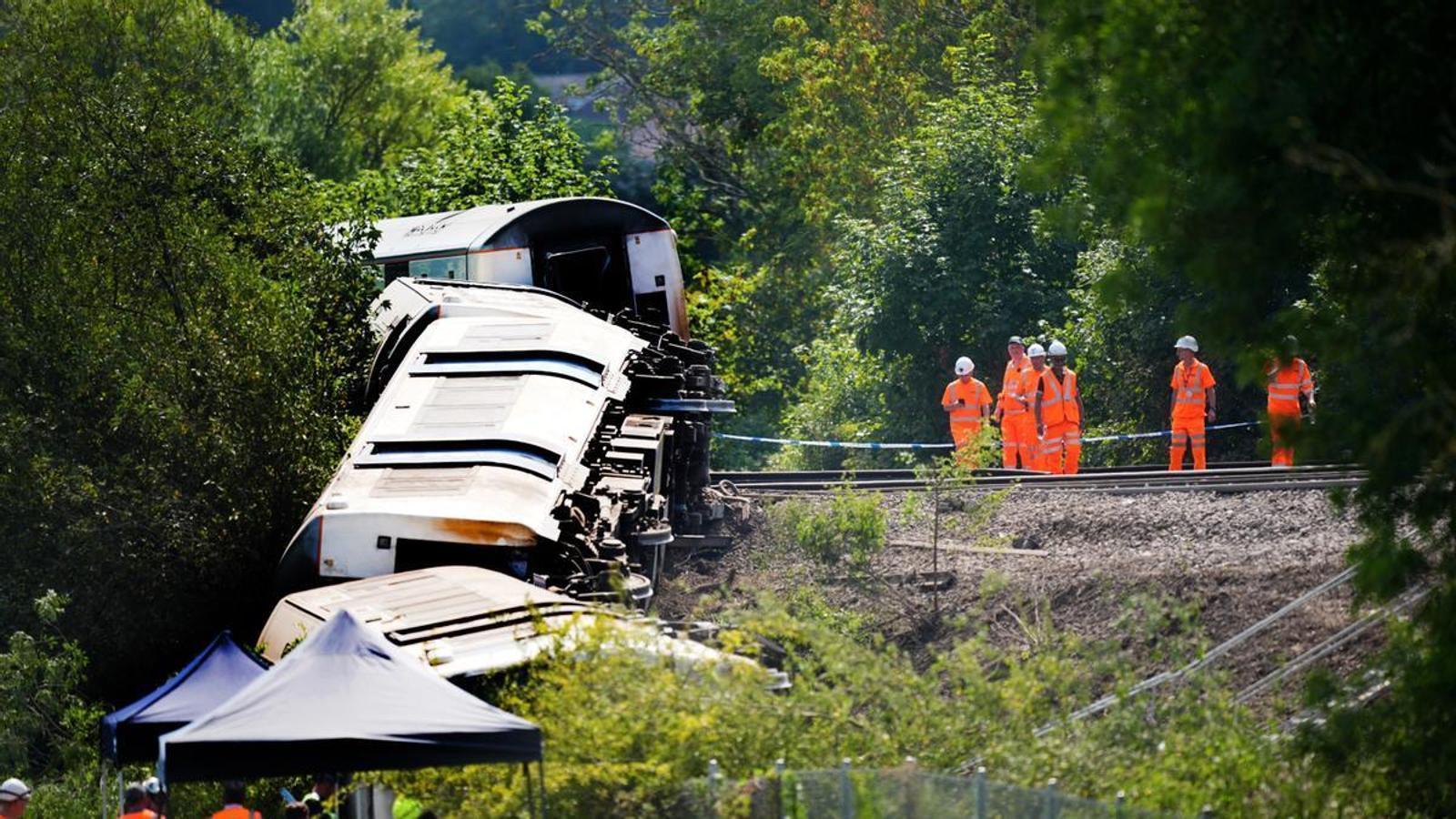
But, according to Grande, in some European countries the difference between the temperature at which the rails were installed and the temperature they can currently reach is increasing. In Sweden, for example, the railway administration attributed the derailment of a freight train in June to a deformation caused by heat. "Unfortunately, we do have to consider that it will be seen more," he predicts.
Grande believes that the railway infrastructure designed now will have to take into account that the rail may exceed 60 degrees in the next five decades. This does not necessarily imply changing the type of rail, but rather reviewing the conditions under which it is installed and fixed to better absorb expansions.
The same adaptation applies to rolling stock. Alstom manufactures trains for very different climates and adapts its specifications to the needs of operators. In the new Eurostar Celestia trains, it has modified the specifications so that the air conditioning systems can operate with temperatures of up to 55 degrees. The first trains are planned for 2031 and will have to operate for decades.
Catalonia already adapts its tracks
In Catalonia, sources from Ferrocarrils de la Generalitat de Catalunya (FGC) explain to ARA that the company has an Adaptation Plan to Climate Change for the Railway Infrastructure. One of the main actions has been carried out on the Llobregat-Anoia line, where conventional sleepers have been replaced by monobloc ones with a pad, heavier concrete pieces that hold the rail and reinforce the stability of the track. The objective is to prevent so-called "garrots", lateral deformations of the rail that can occur when expansion exceeds the track's containment capacity.
The catenary is also being adapted. FGC has replaced the mechanical compensation equipment of the conductors with double systems in various sections of the Barcelona-Vallès and Llobregat-Anoia lines, to increase their reliability in extreme temperatures. These systems keep the tension of the cables under control when they expand or contract.
The company also has external meteorological surveillance and, with information from the Centre de Coordinació Operativa de Catalunya (CECAT), identifies the most vulnerable sections in the face of extreme phenomena. Grande considers that the Catalan railway network is prepared in terms of design, but that maintenance and preventive surveillance will have to be increased as these episodes increase. Adaptation to climate change, therefore, does not only involve strengthening the tracks, but also reviewing how they are designed, installed, and maintained.
The metro, less exposed to heat
