Will the Spanish government go on strike? Sánchez and the ministers will have no agenda
Isabel Díaz Ayuso calls for an end to "union trash"

-
CAT -
CAST
MadridStarting this Tuesday evening, an unprecedented situation will be experienced in the State: a general strike called by the Tenants' Union and also the major unions UGT and Comisiones Obreras will begin against the increase in the cost of living and, above all, the price of housing. The event, however, is not free of controversy, as it comes after eight years of Pedro Sánchez's government and on the threshold of elections that could shift majorities in the State in favor of the PP and Vox. Is the strike against the Spanish government? Or, conversely, is it the mobilization lever that the executive is looking for to mobilize the left ahead of the polls?
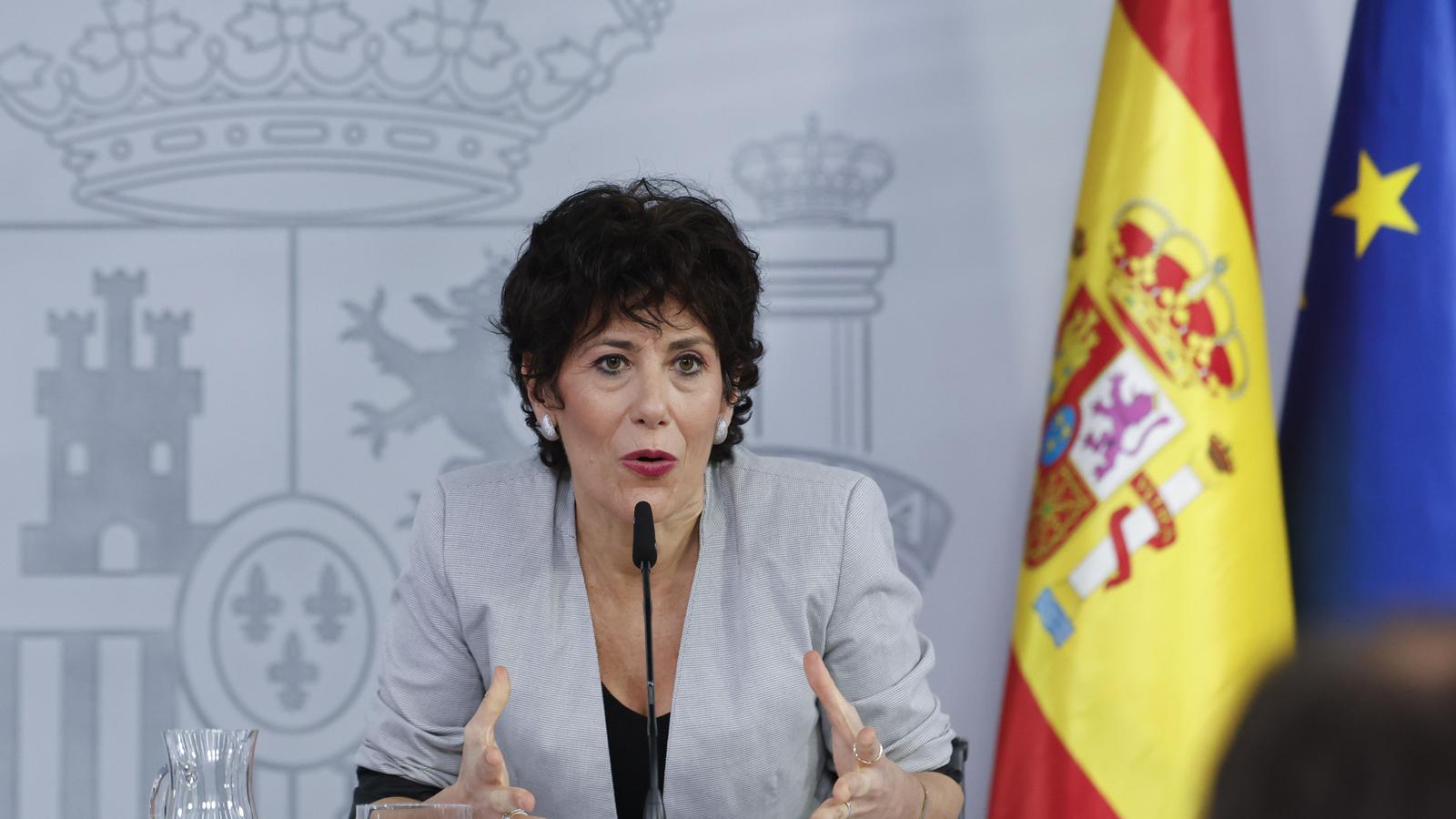
The spokesperson for the Spanish government, Elma Saiz, had to face these types of questions at the press conference following the council of ministers that took place this Tuesday at La Moncloa. Sources from La Moncloa have reported that neither the Spanish Prime Minister, Pedro Sánchez, nor the ministers will have an agenda this Wednesday, although they have clarified that this does not mean they are on strike. They will be in the office, added sources from the socialist flank of the executive.
In any case, at the press conference, it was evident that there are two different approaches within the Spanish executive when it comes to expressing themselves about this Wednesday's strike. The minister from Sumar and head of Social Rights, Pablo Bustinduy, who made a relevant announcement about new aid for single-parent families, did openly show himself in favor of the strike. "This (ministerial) work never ends, it never stops, but I will do everything possible to contribute to the strike being a success," he said at the press conference. In turn, Elma Saiz limited herself to asking for "respect" for the workers who want to exercise their right to strike and also for the unions, which in recent days have been attacked by the right. The last time there was a general strike was in 2012, in the middle of the PP's absolute majority. Unlike that time, however, the majority unions do not explicitly focus on the Spanish executive—they fix their message against the employers' associations—, unlike the Tenants' Union which does complain about the housing policies of recent years, which they believe have fallen short. In other words, in their opinion, the mobilization is against all administrations.
The PP and Vox consider that UGT and Comisiones Obreras are acting as the armed wing of the Spanish government. This was stated this Tuesday by the president of the Community of Madrid, Isabel Díaz Ayuso, who has been the PP leader who has shown herself to be the toughest against those calling for the strike. In an interview on Antena 3, she spoke of a "kidnapping" of citizens on the roads following the call and called for "sweeping away the trade union rubbish" ahead of November 29. "There are many other UGT and CCOO trade unionists who do not like what they are doing because their true colors are showing," she said. For his part, the PP's secretary of Autonomous and Local Policy, Elías Bendodo, considered that it is a strike "against the opposition," something unprecedented in democracy—he said—and predicted that it will be a failure for this reason.
Extraordinary Council of Ministers
Be that as it may, the general strike will mark the November 29th election campaign that will kick off on Thursday at dawn and which will also be marked, beyond the parties' events, by what the PSOE and Sumar do from the Moncloa. They will not stand still: from now until November 29, the Spanish government plans to hold up to four more councils of ministers to approve social measures. Two extraordinary ones, the two coming Fridays; and two ordinary ones, the two upcoming Tuesdays. Sources from the Moncloa dissociate this from the election campaign and argue that they continue to govern even though there is an election call.
In any case, the idea is to use the government to approve social measures and stage the left's election program with concrete decree-laws, such as for example this Tuesday with the boost to the social protection of single-parent families or the shortening of deadlines to obtain dependency status. Measures that, if the PP and Vox reach the Moncloa, argue from the PSOE and Sumar, are in danger of extinction.
