Recreating tumors and simulating births: 3D printing gains strength in Catalan healthcare
The Consorci de la Zona Franca and the hospitals del Mar and Clínic ally to promote innovative health tools

-
CAT -
CAST
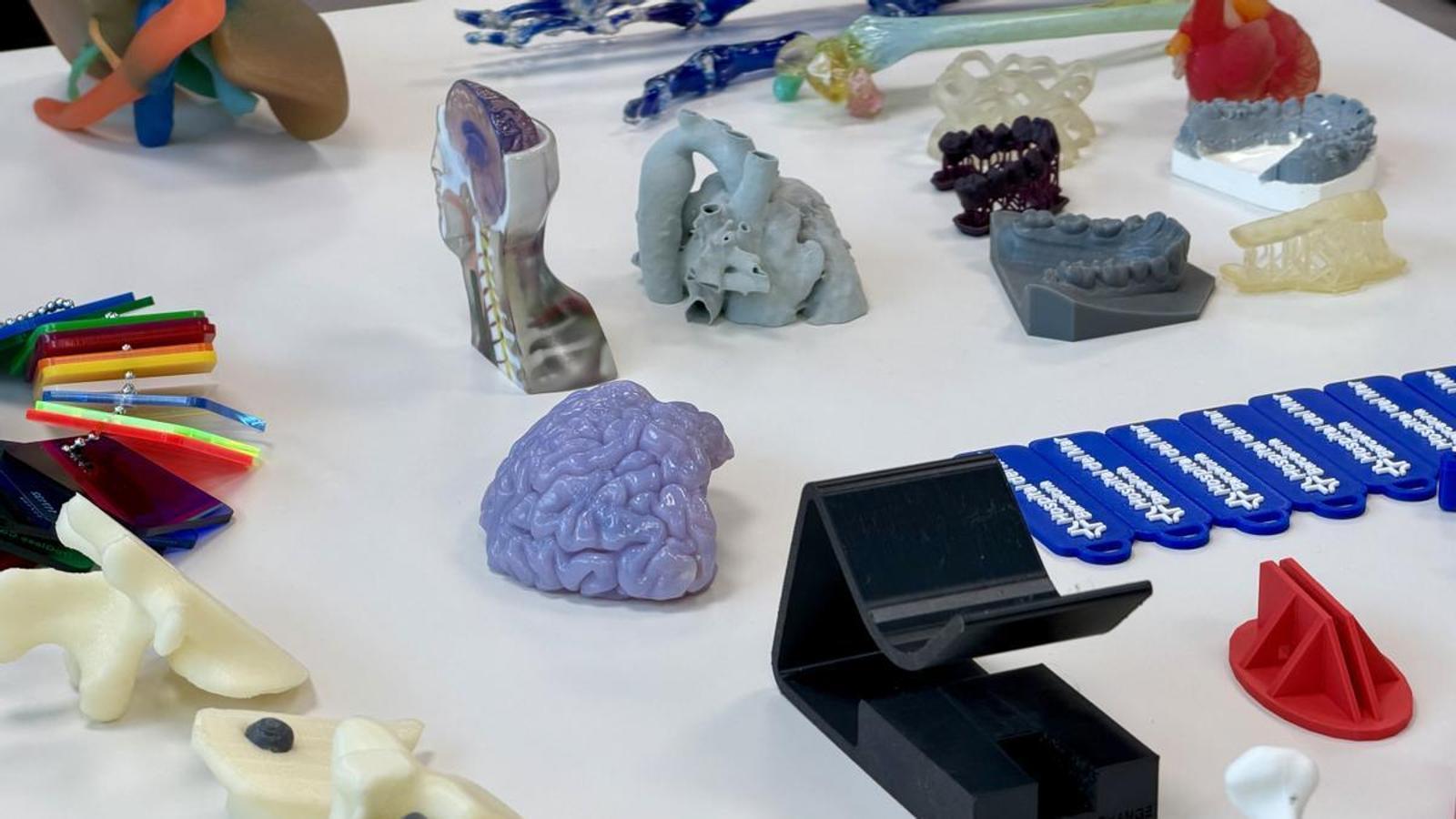
BarcelonaPrinting a hip prosthesis for a surgical intervention, recreating a tumor to rehearse an oncological operation before entering the operating room, or simulating a birth with a plastic baby are some of the possibilities offered by having 3D printing at the service of health professionals. Now, for the first time in Europe, this will be possible in Catalonia. The Consorci de la Zona Franca, the Hospital del Mar, and the Hospital Clínic signed a collaboration agreement this Friday to promote the use of this technology and develop 3D-printed elements that provide solutions both in patient care and in the field of training and research. "Patient care is in the hospitals and we will have the factory in the Zona Franca with high-tech machines," explained the Director of Innovation at the Clínic, Jorge Fernández.
It is a new 3D printing center named 3D Lab Clínic. It will work from three aspects: the care-related, especially in the surgical field, such as with new prostheses; the training-related, to create simulators that can serve as a guide for medical students; and the planning and design aspect through virtual reality and augmented reality. Thus, the 3D printing of useful elements for maxillofacial, ophthalmological, and traumatological surgery is foreseen, or that guides for custom implants are made. Currently, hospitals do it themselves or order the products from external companies, sometimes from outside Catalonia, so being able to manufacture at least a part in the new center can contribute to lowering costs, according to its promoters.
The Minister of Health, Olga Pané, presided over the signing ceremony of the agreement and highlighted that this new center "allows incorporating solutions into clinical practice to make the system more efficient, and in a collaborative way," which is beneficial not only for people's health but also for the economy. In fact, during the presentation, the promoters of the initiative showed they were convinced that the new center will have a "multiplier effect" once it begins to function.
Call to more hospitals
This Friday, some of these prototypes have already been seen, such as prostheses, splints, and simulated babies, but they cannot be moved to clinical use until they obtain European certification. For the moment, they expect to receive European certification to use the elements created in the Zona Franca starting from March 2027. That said, their promoters are convinced of their utility, since a 3D-printed reproduction of part of the abdominal area, a tumor, or a newborn allows specialists to recreate what the surgical intervention will be like. That is to say, as a form of training before applying it to the patient. The goal is to reduce complications.
The pieces can be very varied in size, utility, and price, but the cost of some can exceed a thousand euros. "Currently, the system is very compartmentalized, with 3D structures throughout the territory and in hospitals, so this collaboration is essential, given that they are expensive and complex machines," argued the manager of the Hospital Clínic, Josep Maria Campistol. Pané has assured that the agreement signed with the two hospitals "does not stop here," and has called on other health centers to join the initiative. A project "with a clear European vocation," in the words of the president of the Consorci de la Zona Franca, Pere Navarro.
