"Here we don't sell mobile phones": the strange announcer from Nou Barris where nineteen stolen phones were found
The police suspect that at this point they process stolen terminals following the complaint of a victim

-
CAT -
CAST
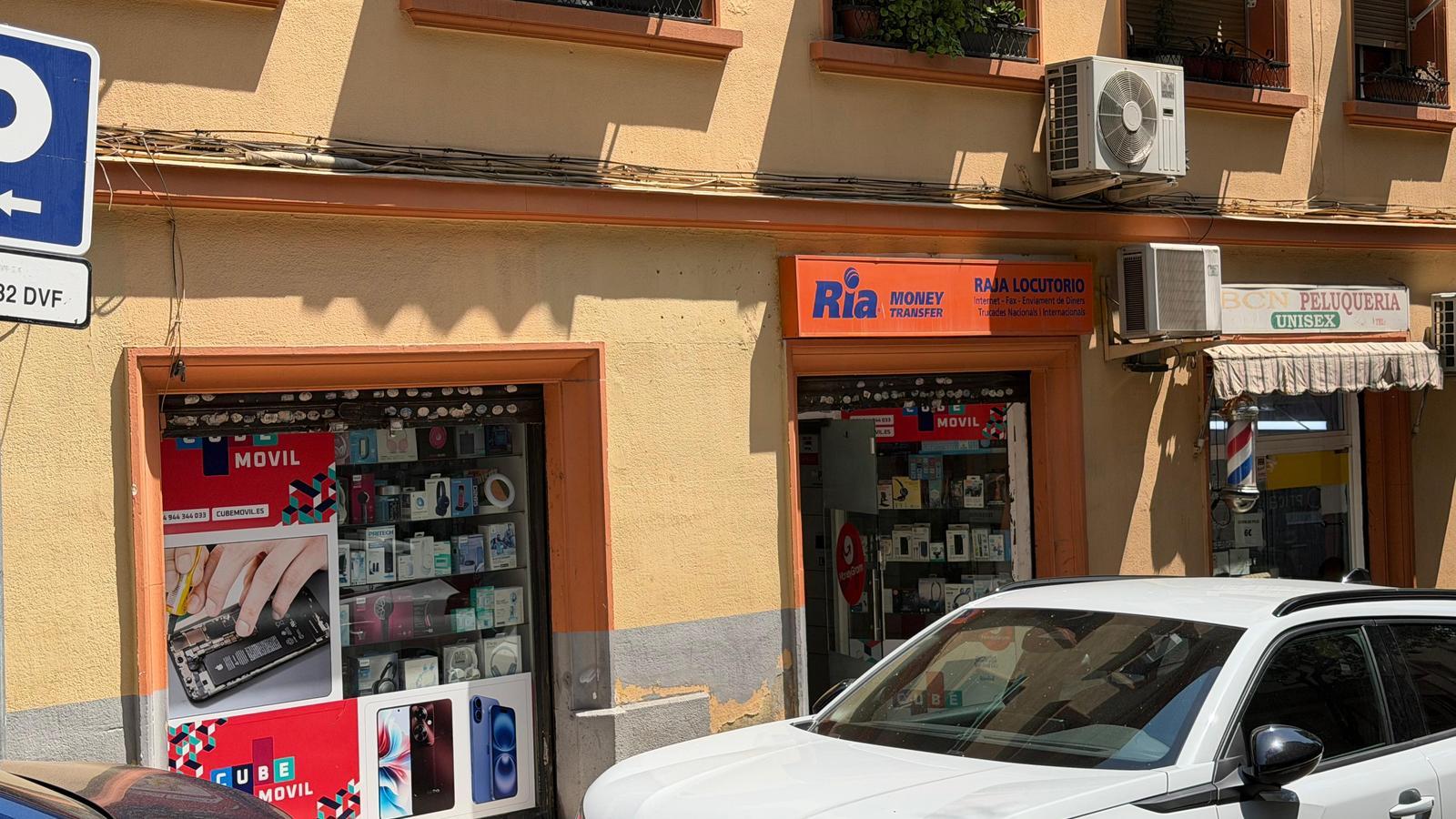
BarcelonaThe queue is four people long. The first comes to pick up a package and their turn passes quickly. The second wants to send money to family living abroad. They fill out a form and the employee makes the transfer effective. The third comes to pick up another package, which they also collect in a hurry. The business presents itself on its sign as a call center that also handles international fax and money transfers and calls abroad. Through the shop window, however, it looks like the typical phone shop, like many scattered around Barcelona. They display external batteries, headphones, mobile accessories, and also some mobile phones. In fact, a large sticker shows the new iPhone model. The exact request of the fourth customer is whether they have any second-hand mobile phones for sale. The employee replies unequivocally: "We don't sell phones here."
The answer surprises the customer precisely because they have mobile phones on display and advertise them in the shop window. Faced with his insistence, the employee replies that they only have a couple of mobile phones, but that they are very old and "you certainly won't be interested in them". Behind the counter, there are dozens of mobile phone cases and other accessories such as chargers and arms for selfies. The customer is interested in these accessories and the employee, again emphatically, says they are very old, from models that are no longer sold. "We deal with international transfers here, not with mobile phones," the worker states.
A few days earlier, on July 25, the Mossos d'Esquadra were called by a person who wanted to report that several personal items had been stolen from them, including their mobile phone. As is usual in these cases, the police checked the last geolocation of this device. Specifically, it gave a signal at Batllori street number 4 in Barcelona, near the Via Júlia metro station, in the Nou Barris district. At this location there was this phone booth where they also make international shipments and mobile phone advertising.
Nineteen mobile phones
According to police sources, the Mossos agents entered the premises and carried out a first superficial search. Behind the counter where the worker was serving, the agents found nineteen mobile phones. They had neither a box nor packaging and were of various brands and different colors. All were turned off. The police asked the store manager about the mobile phones and he could not provide any invoice or documentation to prove that he had legally purchased them.
The next step the agents took was to seize the phones and take them to the police station. There they saw that they had all been reset and restored to factory settings. That is to say, everything suggests that the nineteen mobile phones were stolen, although it is not yet entirely clear if the complainant's was one of them. Now, the Mossos are trying to find out who those mobile phones belong to in order to return them to their owners and have reported the store manager for a crime of misappropriation. In fact, this man had previously been linked to this type of crime. The business, however, remains open. Now, however, they deny selling mobile phones.
Attacking the fencing
One day, a regular thief from Barcelona's Raval explained that it is as important to steal as it is to know where the stolen goods will be bought. In fact, the Mossos (Catalan police) insist that in the fight against repeat offending – the phenomenon of thieves who steal for a living – it is very important to attack fencing, those establishments that buy stolen items without asking questions and then try to resell them or send them abroad.
The same police sources recall that the geolocation of a mobile phone once it has been stolen is fundamental evidence that they always check, but that they cannot always go to the place where the signal appears, even though this may generate frustration on the part of the victim. They explain, for example, that when the geolocation is in private apartments they cannot enter without a court order and often the mobile phone is only in that property for a few hours. However, when it comes to businesses, as demonstrated in this recent case, the police have more room to maneuver.
