"I had three months to live": the science that has transformed health in Catalonia
In 20 years the country has become one of the European bioregions of reference in biomedical research, innovation and clinical trials
-
CAT -
CAST
“They told me I had three months to live.” In 2016, Elena Madorell was 49 years old, full of desire to live, and had a dire diagnosis of metastatic cancer. A few months earlier, she had found a lump in her left groin, and a biopsy had revealed it was melanoma, even though she had no skin lesions. She underwent surgery to remove the affected lymph nodes, but half a year later, the cancer had spread to her lungs and liver.
“I thought they were wrong, that it couldn't be because I felt fine,” she recalls. However, her oncologist confirmed that the disease was in a very advanced stage and that the prognosis was very poor. She was resigned.
However, the genomic analysis of her tumor revealed that she had a characteristic that opened a glimmer of hope: a mutation in the BRAF gene. At that time, the Vall d'Hebron Institute of Oncology (VHIO) had launched a clinical trial to evaluate the effectiveness of combining two therapeutic strategies to fight tumors with this marker: one directed against the mutation and another of immunotherapy.
“The first thing I thought was that I would be a guinea pig,” admits Madorell. “But of course, I said yes. This was on a Friday at 2:00, Monday morning they were already calling me from Vall d'Hebron, and Tuesday I was at Eva Muñoz-Couselo's office. They saved my life.”
Madorell, a patient who in medical jargon is called a Lazarus, in allusion to the biblical character who returns from the dead, “had a spectacular response,” assesses her oncologist, Muñoz-Couselo, head of the melanoma and other skin tumors group at the VHIO. Six months after starting treatment, the metastases had remitted, and right now, a decade later, she continues in total remission, without taking any medication.
“It was hard, I had many serious side effects, like pancreatitis,” says Madorell, and adds: “If this had happened five years earlier, I wouldn't be here now.” And her oncologist nods. Like her, 70% of the patients who participated in that clinical trial had a good response and 25% also achieved a complete remission.
This woman's case helps to understand the vital importance of biomedical research reaching the clinic. And it is also an example that embodies how Catalonia has transformed in the last two decades and has become a leading region in Europe and the world in biomedicine and health.
“We have neither oil nor raw materials, but we do have talent and knowledge,” reflects Manel Balcells, Minister of Universities, Research and Information Society in the government of Pasqual Maragall in 2006 and subsequently Minister of Health in the government of Pere Aragonès.
Generate a powerful ecosystem
This transformation started to take shape 20 years ago. Back then, there was an intuition that hospitals, research centers, and companies could become a benchmark platform in Southern Europe. “It was necessary, however, for them to stop operating as isolated actors and for the country to present itself to the world with a voice of its own,” notes Balcells.
And with this objective, in 2006, the Generalitat and the Barcelona City Council promoted Biocat, a public-private entity that drives and coordinates the life sciences and health ecosystem in Catalonia.
Montserrat Vendrell, who was its general director, recalls that at the time it was necessary to build some of the basic pieces of the ecosystem, such as promoting entrepreneurship, facilitating access to funding, and connecting research with the business fabric. “Community also had to be created,” she affirms, “and the continuity of Biocat had to be safeguarded throughout different governments to consolidate biomedicine as a strategic commitment of the country.” And after a brief pause, she adds, with pride: “And we achieved it.”
The data allow us to measure the scale of this transformation: the number of companies linked to life sciences and health has gone from 856 to 1,650 –between 2006 and 2025, 1,234 have been created, almost one per week–, and the number of research institutions, from 67 to 94. Today, this sector represents 7.6% of the Catalan GDP and 7.3% of the employed population.
Research has also gained dimension, as demonstrated by the fact that Catalonia is the fourth European bioregion in attracting European Research Council (ERC) grants per capita in life sciences and health, with eight grants per million inhabitants between 2020 and 2024. And clinical research has taken an even more evident leap: clinical trials have multiplied by six and Catalonia is, furthermore, the sixth European region in the number of oncological clinical trials.
It is not just a matter of prestige: participating in trials can allow some patients to access innovative treatments before they are generally available.
“Everything we have today is thanks to the biomedical and clinical research we have done over the last 20 years, and to an effort to coordinate all the actors in the biomedical sector,” assesses Josep Tabernero, director of the VHIO and president of the scientific committee of the CaixaResearch Institute (CRI), the new research center specialized in immunology promoted by the La Caixa Foundation.
“Today Catalonia is an international benchmark in health,” he says, and highlights the deployment of research institutes linked to public hospitals, the commitment to the creation of new research centers –such as the Centre for Genomic Regulation, the Institute for Bioengineering of Catalonia and the Institute for Research in Biomedicine–, which have contributed, in Tabernero's opinion, to bringing the laboratory closer to the clinic.
“Translational research, which seeks to convert discoveries into new diagnostic and treatment tools, has consolidated itself as one of the system’s strengths,” points out this oncologist.
More entrepreneurship
For Ana Maiques, at the helm of Neuroelectrics, a 100% Catalan biotech company that manufactures neuromodulation devices to treat disorders such as depression and epilepsy, one of the most significant transformations in Catalonia in the 21st century has been the emergence of an entrepreneurial culture around science. “25 years ago, creating a company born from a laboratory was almost a rarity. When we started, they saw us as crazy; there were very few of us entrepreneurs in health,” she recalls.
Now, however, she says, entrepreneurs are more willing to take risks and “to think big,” and this change in mentality has been accompanied by a greater influx of capital funds, which for years was a bottleneck. “The journey to turn a scientific idea into a viable business is long and funding is needed in all phases of the project,” she recalls.
When Laura Soucek, an Icrea researcher at VHIO, launched Peptomyc to develop a molecule against an oncogene, “there were very few local venture capital funds,” she says. “Now, however, investors have learned to see the potential of health companies and investments are higher,” she adds. The data, once again, confirms this perception: the accumulated investment in Catalan start-ups reached nearly 3 billion euros between 2006 and 2026. In 2025 alone, 517 million were raised, a record figure.
“In Catalonia, we are a country of entrepreneurs and creators. We need to scale up, with values of the future and of a democratic society, and make a place for ourselves in the world where important decisions are made,” Maiques claims.
The challenge of taking the leap
However, the consolidation of the ecosystem does not mean that the work is done. The challenge now is to ensure that more companies overcome the early stages of development, grow, and can compete internationally. It is also necessary to retain and attract talent: salary conditions and career opportunities, especially in the public sector, continue to hinder the return of researchers trained abroad.
For Tabernero, the future also depends on maintaining public and private investment, strengthening prevention, and ensuring that advances reach patients with equity and sustainability.
Even so, Robert Fabregat, Director General of Biocat, highlights that "despite current difficulties, such as waiting lists, 25 years ago some treatments were only available in the United States, and today no one considers going to a foreign hospital for treatment, because they know they will receive the best care in the public system."
Elena Madorell does not need much theory to explain what this change means. When she entered the clinical trial, she did not know if the treatment would work or how long the effect would last. Ten years later, she remains in complete remission. Her story reminds us that behind the numbers, companies, and investments, there are people who can have a second chance. And that the challenge for the bioregion and Biocat, after twenty years of building the ecosystem, is to ensure that these opportunities reach more and more people.
Laura Soucek, the biologist who challenged the "untouchable" cancer protein
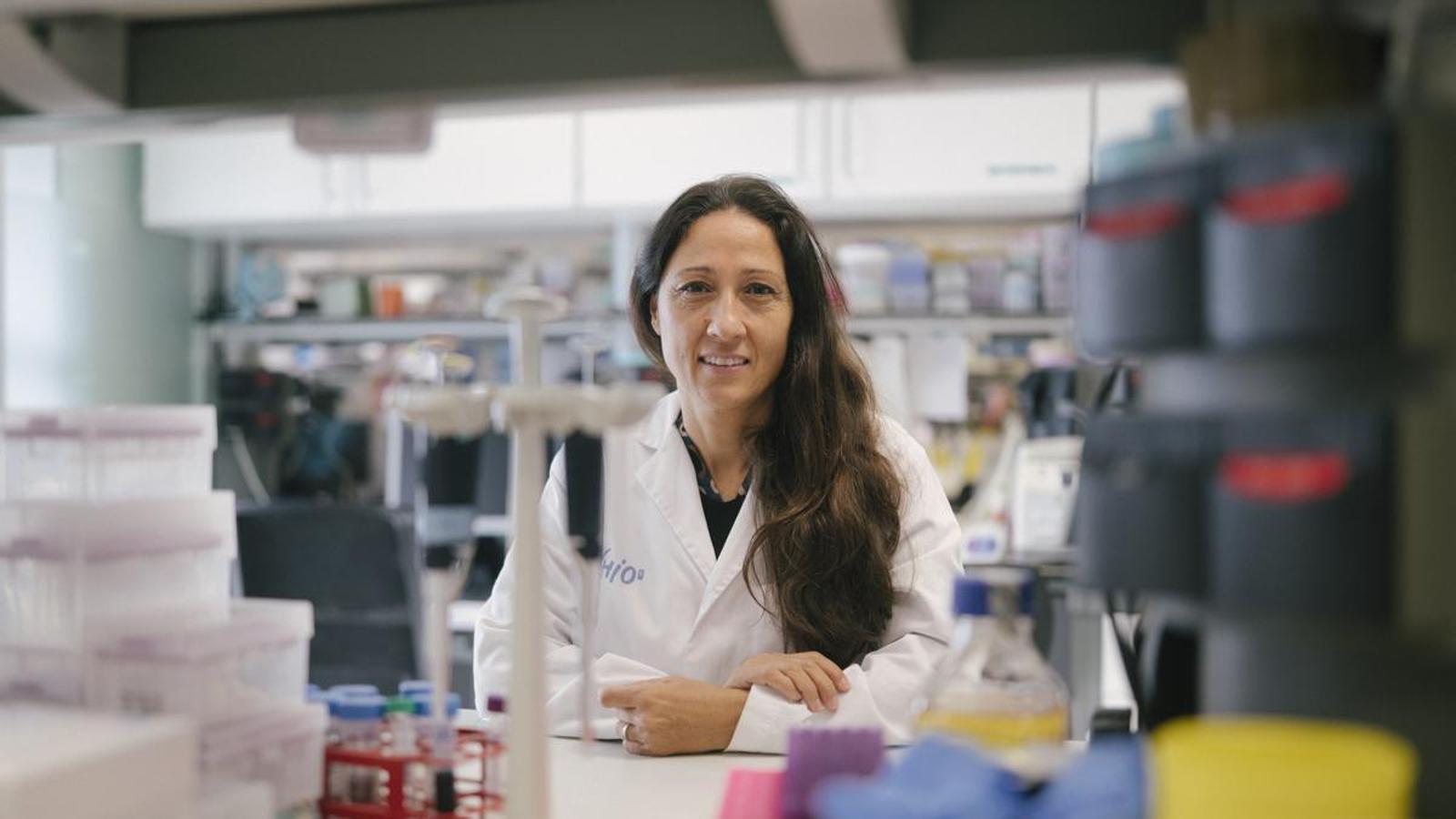
Icrea Research Professor at the Vall d’Hebron Institute of Oncology (VHIO) and scientific director of Peptomyc
If there is one thing that defines Laura Soucek, it is her persistence and the conviction that nothing is impossible. When she was a biology student in Italy, she decided to challenge a dogma of biology: the MYC protein, involved in the development of 70% of human cancers, was untouchable. Twenty-five years later, this Icrea researcher, leading a research group at the Vall d'Hebron Institute of Oncology (VHIO), has contributed decisively to opening the door to blocking its activity.
MYC is essential for cells to divide. In healthy ones, it is activated for about twenty minutes and then switches off. In tumor cells, however, the switch remains permanently on and the cells become addicted to it: it provides them with nutrients, helps them dodge the immune system, and makes them proliferate. The problem is that MYC is constantly changing shape, which makes it difficult to design drugs to act upon it. "As an Italian, I like to compare it to spaghetti, which folds differently every time you put it on a plate," explains Soucek.
That is why she opted for a different strategy. MYC needs a partner, the MAX protein, to form a structure that binds to DNA. What Soucek did was design a miniprotein, Omomyc, a fake Max that interferes with this union and prevents its activity. In 2008, a study published in Nature demonstrated in animals that inhibiting MYC in this way could make tumors disappear with minimal side effects.
The next step was to convert that finding into a treatment that would reach patients. Thus OMO-103 was born, a formulation of Omomyc to be administered intravenously. In a first phase 1 clinical trial, with results published in 2022, its safety was confirmed, and signs of antitumor activity were detected in patients with advanced solid tumors who had already exhausted standard therapies. In approximately half of them, the disease stabilized. In addition, an exceptional case, that of a patient with metastatic pancreatic cancer who experienced a 49% reduction in tumor burden, inspired her to conduct new studies.
In fact, three more clinical trials are currently being carried out with this drug: one against metastatic pancreatic cancer and another against osteosarcoma, a pediatric tumor. It is also being studied in the United States in patients with pancreatic cancer awaiting surgery.
To bring the discovery closer to patients, Soucek co-founded Peptomyc with Marie-Eve Beaulieu in 2014, a spin-off company from VHIO and Icrea, and served as its chief executive for a decade. Now, as scientific director, she is seeking alliances with large pharmaceutical companies to expand trials. "My dream is for this drug to reach more patients," she states hopefully.
Italian by birth, in 2011 she left the University of California, San Francisco to join VHIO, drawn by the translational research project led by oncologist Josep Baselga. The center was just beginning and had few laboratories. “They told me it was an irresponsible decision, that I was crazy because there was no woman leading a laboratory, nor any foreigner. But I saw an opportunity there: if someone doesn't start, it will never happen,” she concludes with conviction.
Ana Maiques, from processing space data to treating epilepsy and depression
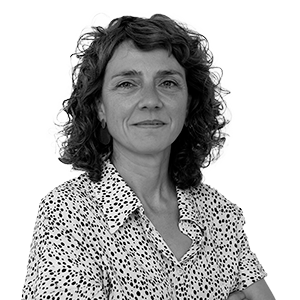
Economist and CEO of Neuroelectrics
“We had to choose between the red pill or the blue one: to become entrepreneurs or to go home, without a job,” recalls Ana Maiques with humor in an allusion to Matrix. They chose the red one and 26 years later Neuroelectrics is a pioneer and a global benchmark in neurotechnology.
It all started when Starlab went bankrupt, the Belgian company where Maiques, an economist; Giulio Ruffini, a physicist and mathematician, and Manel Adell as a partner, were developing space technology for the European Space Agency. Without entrepreneurial experience, they decided to continue with the subsidiary they had just opened in Barcelona with the moral support of the then-minister Andreu Mas-Colell. Their entry into neuroscience was casual: a researcher from the University of Barcelona asked them to process brain signals from people with and without alcoholism. “The skills required were the same as those to process satellite data and we jumped into it,” explains Maiques. In 2011 they created Neuroelectrics, a spin-off of Starlab dedicated entirely to neuroscience.
The company developed a wireless device to capture neuronal activity: it looks like a water polo cap and is manufactured entirely in the basement of the Barcelona headquarters, on Tibidabo. “Almost all materials are from local suppliers and we sell more than 600 of them every year to 75 countries,” explains Maiques. It already has the approval of the American drug agency (FDA) as a diagnostic tool and is used, for example, in hospital ICUs to monitor patients in comas, with epileptic seizures, or recovering from a stroke.
The next step was to try to modulate brain activity with non-invasive therapies. For now, they have focused on epilepsy – they have conducted a study with 150 patients and 15 Spanish hospitals – and deep depression. And, in order to personalize treatments, they have created Neurotwins, a technologythat incorporates artificial intelligence. Their models calculate where and how to apply electrical stimulation to excite or inhibit specific neurons for each patient. “With Neurotwins, in a few hours we know how much electricity needs to be applied to each area with the goal of stimulating specific circuits and neuronal networks, with how many electrodes, to excite the neurons – in the case of depression – or inhibit them – in the case of epilepsy,” explains Maiques.
But transforming a scientific idea into a technology that can reach patients requires much more than talent and knowledge. “One of the lessons we have learned from transferring science to deep tech technology is that it requires a lot of capital, time and capacity to take risks,” acknowledges Maiques.
Carolina Aguilar: “We compete with Elon Musk in neurotechnology”
Neuroscientist and CEO of Inbrain
One of the complications of operations to remove brain tumors is avoiding damage to areas linked to language, walking, and cognition. Inbrain Neuroelectronics, a spin-off from the Catalan Institute of Nanoscience and Nanotechnology (ICN2), develops graphene electrodes that allow listening to neurons to distinguish tumor tissue from healthy tissue and identify the areas that need to be preserved. “With our devices, we are competing with Elon Musk's company Neuralink, and others that have emerged from Neuralink,” she states with pride.
Graphene, a material formed by a single layer of atoms, allows for the manufacture of tiny, high-resolution sensors capable of reading neural signals and also modulating them. “We can read them with great precision and also write to them: modifying the patients' circuits to alleviate their symptoms in a personalized and, in the future, automatic way,” explains Carolina Aguilar, CEO and co-founder of Inbrain. It is what is called “autonomous medicine,” she points out.
The career of this neuroscientist bridges research and industry. After investigating the effect that pesticides have on neurodegenerative diseases like Parkinson's or Alzheimer's at Virginia Tech University (USA), she spent 13 years at Medtronic, the largest medical device company, based in Switzerland. That was when she met José Garrido, an ICREA researcher and deputy director of the ICN2, who had been studying materials like graphene for over 15 years, and they decided to found Inbrain.
The Catalan company is also working on an implantable device to treat Parkinson's, which aims to adapt brain stimulation to the symptoms of each patient. “With artificial intelligence, we will adjust it automatically, to reduce tremors, for example, without the patient having to visit the neurologist,” explains Aguilar. In the future, the device could be used to treat strokes, depression, and cognitive decline, among others. Additionally, they are developing a third device with the pharmaceutical company Merck to modulate vagus nerve activity and treat hypertension.
For Aguilar, “in Europe we have focused a lot on research, but we have not invested enough in development, commercialization, and the industrial fabric to bring advances to hospitals.” In this sense, Inbrain has contributed to promoting the quality certifications necessary to manufacture medical devices at the National Microelectronics Center, located in Cerdanyola del Vallès. They have also promoted the creation of a chip factory in Catalonia, InnoFab. “We are contributing competitive capacity to Catalonia and Europe, because the challenge is for these technologies to be developed and manufactured here, so as not to end up depending on the outside,” he concludes.
