From the taboo of jihadism in Ripoll to the recruitment of lone terrorists
Conflicts in Iran and Gaza speed up radicalization processes
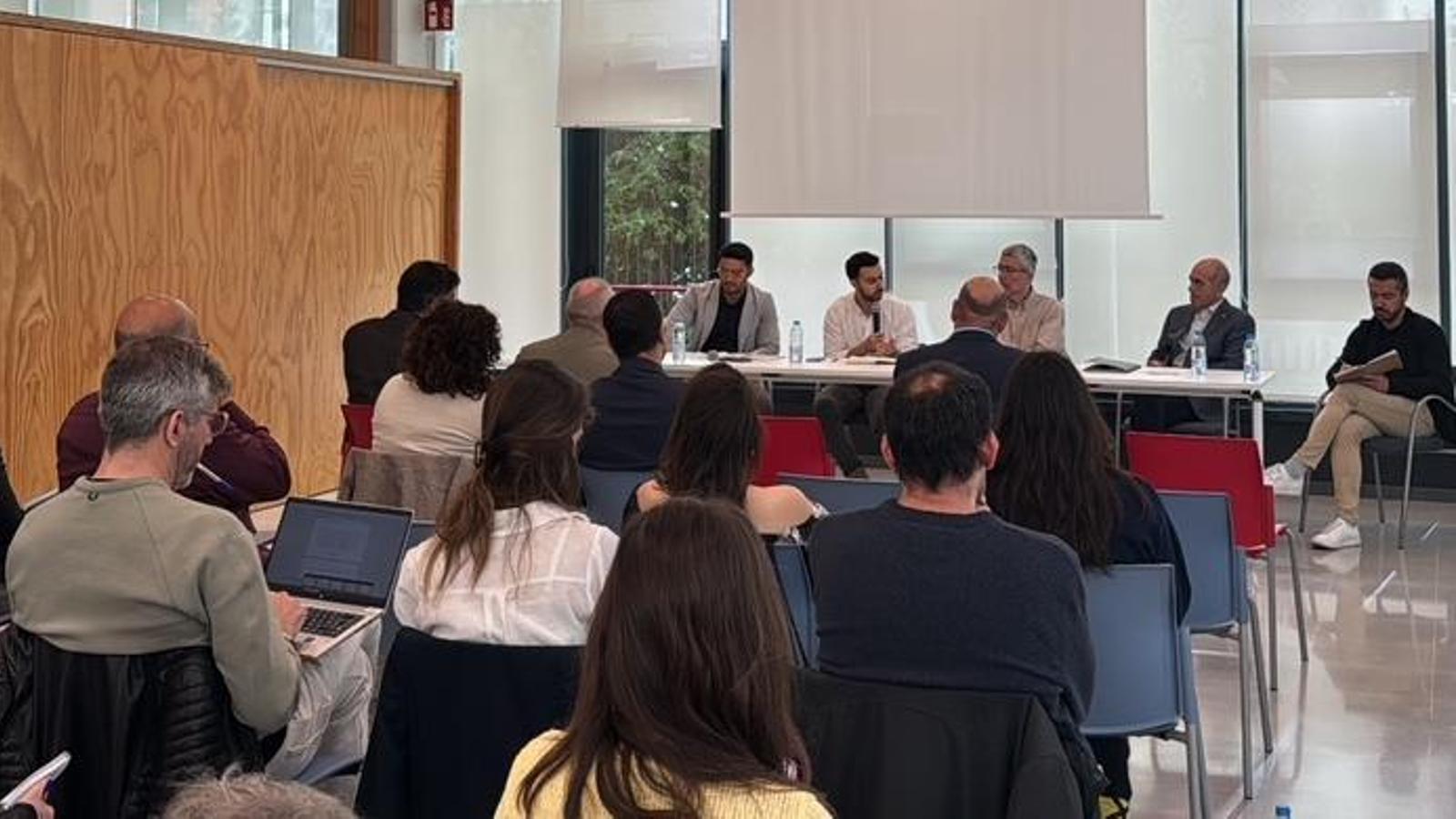

Barcelona"What does it do to a 13-year-old boy when the most powerful person in the world talks about Iranians as animals and talks about annihilating them? And if, moreover, you feel excluded, they call you a "monkey" or "Muslim, jump if you don't"?" This is the question posed by CIDOB researcher Moussa Bourekba within the framework of a conference in Barcelona on jihadism, organized by the Itran association. According to participants in the event, the conflict in Gaza or the United States' attack on Iran will not cause an increase in the number of jihadist terrorists, but it will lead to an "acceleration" of radicalization processes.
During the last year, about a hundred people connected to jihadism were arrested throughout the country. Of these, 27 were in Barcelona. A high figure that responds above all to a change in the way police forces operate. "I don't think radicalization has increased, but rather that we now detect it in the initial phase," argued a lieutenant from the Guardia Civil specializing in this field, who emphasized the change in terrorists' modus operandi after the fall of the Islamic State. "Now they are solitary, autonomous actors," he added.
It is no longer about large terrorist groups acting in a coordinated manner and having their members spread throughout the West. Now terrorist groups are "experts in algorithms" and run "dissemination" campaigns through networks to reach potential terrorists. This implies, according to a strategic analyst from the Mossos d'Esquadra, that there will not be "large attacks" but a "trickle of actions".
This radicalization affects young people above all: the profile of terrorists revolves around the age group of 20-22 years. The age has decreased because Islamic terrorist organizations have focused on these individuals, who are heavy consumers of online content, and in which they seek, especially during adolescence, their own identity. The Mossos have also detected a "simplification of discourse", "much more visual" to generate "fascination", explained the agent of the Catalan police, who gave a real-life example of the situations that can occur in any high school in Catalonia: 13-year-old teenagers creating a photomontage with a submachine gun and a map of the school created with an app. "How do you act?", the police officer wondered.

The host of the meeting, Itran's president, Mohammed Alami, was emphatic in his speech, in which he assured that nowadays there are more "ghettos, isolation and division" regarding the Muslim community than ever before, and that the centers that host many of the immigrants arriving in Catalonia from the Maghreb or other Muslim countries up to the age of 18 (aid is provided up to 21) are part of the problem because they lead young people to "prostitution", "drug trafficking" or jihadism: "They are so easy to recruit". The ombudswoman, Esther Giménez-Salinas, is also not in favor of these centers because "they were designed for children 10 or 12 years ago".
The 2017 attacks
The death of 16 people in Catalonia, in August 2017, at the hands of a group of young people from Ripoll has focused a good part of the day. Alami maintained that if there had been political will and the problem of the radicalization of these young people had been addressed from another perspective, the 2017 attacks on Las Ramblas "could have been avoided".
"In Ripoll, many things were done wrong, including after the attack," explained the UB professor and director of the master's degree in prevention of radicalization, Xavier Torrens. One of the main problems is that what happened became a "taboo" and was not openly discussed: "Since 2017, no action has been taken at the Institut Abat Oliba [in Ripoll], neither to address Islamophobia nor anti-Western racism. If it hasn't been done there, what will be done in the rest of the Catalan municipalities?", asked Torrens, who cited the example of a study of more than 100 pages by the Consell Comarcal del Ripollès in which the word jihadism only appeared once: "How do you want to solve it if we don't name it?"
An administrative and political silence "to avoid hurting sensitivities" that has been a mistake, according to Bourekba, who wanted to make it clear that the young people from Ripoll who committed the attacks were "manipulated," but some had already been radicalized before meeting the imam. The researcher stressed the importance of not having a "reductionist view of integration" as happened with these young people, who in the eyes of Catalan public opinion appeared as integrated people in Catalonia because "they spoke Catalan." We need to go further, talk to them, and get to know them.
The Civil Guard agent who participated in the day admitted that there is a problem in the way this issue is approached from the political sphere: "It is politicians who use hatred to gain votes, how can we ask them to run campaigns to combat hatred?". An idea that was reinforced by the speaker of the event, the professor at the University of Oviedo, Juan Ferreiro: "If public authorities exhibit hatred, it cannot be resolved".
