The TSJC asks the State and the CGPJ for urgent public examinations: "We will have chairs but not enough judges to fill them"
Mercè Caso warns that 15% of judicial positions in Catalonia are vacant and asks the Government for more civil servants
-
CAT -
CAST
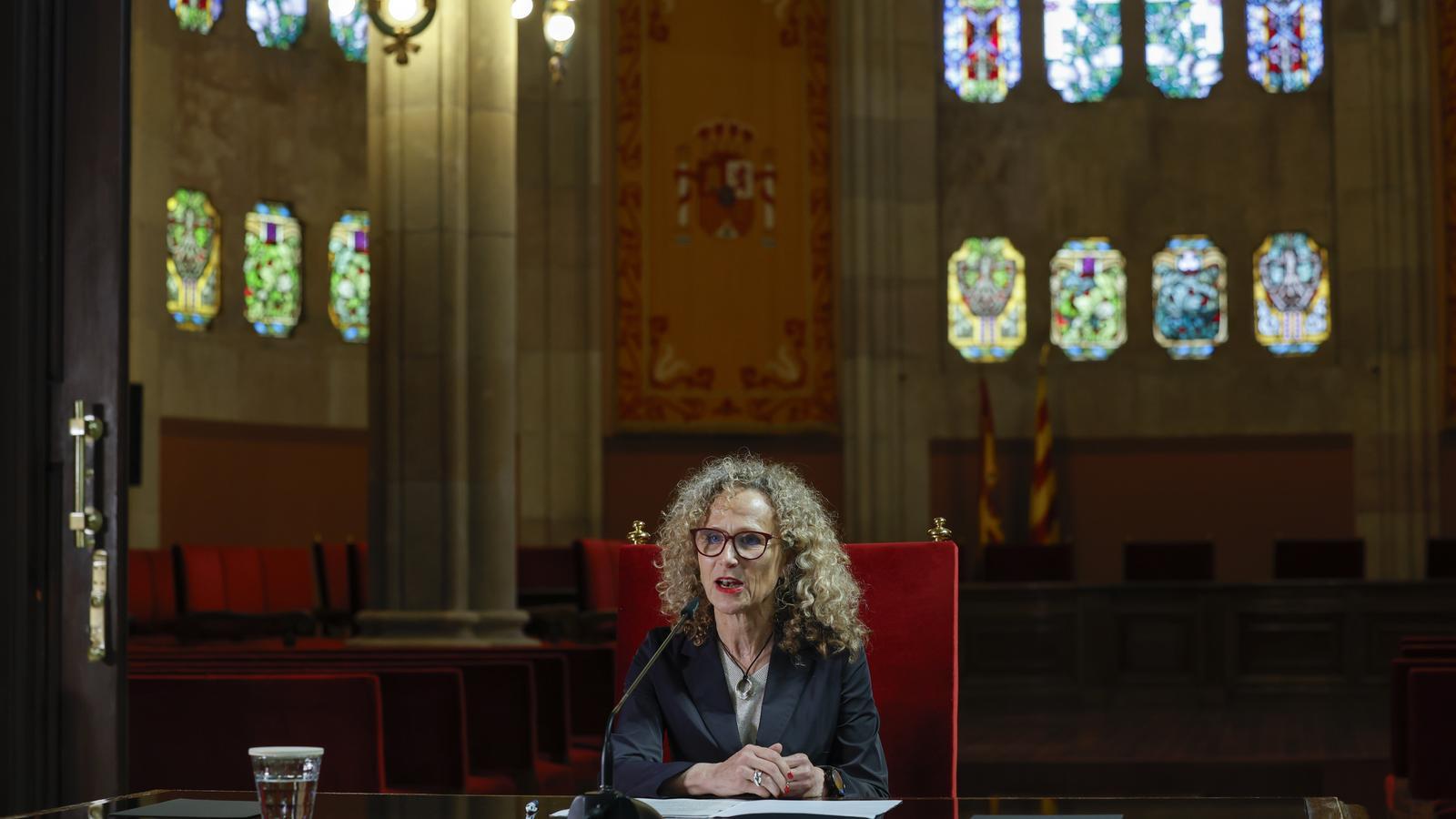
Barcelona15% of judge and magistrate positions in Catalonia are vacant. Of the 871 positions, 132 are unassigned, in addition to other circumstances such as medical leave or permits. Therefore, the Superior Court of Justice of Catalonia (TSJC) has requested this Wednesday that the Ministry of Justice and the General Council of the Judiciary (CGPJ) urgently convene extraordinary competitive examinations, beyond the average of 120 annual positions typically offered for the entire State. Given the political announcements to create more judicial positions –91 for Catalonia this year– the president of the TSJC, Mercè Caso, has demanded that what is needed is more judges to fill these posts: "Otherwise, we will have chairs, but not enough judges to fill them".
The president of the TSJC has thanked that her request to create new positions has been heardthe judicial reform of the law on efficiency or Bolaños lawIn addition to the shortage of judges, Caso has also pointed out the deficiencies in the staff of judicial officials. To the point that it is difficult to implement the judicial reform of the law on efficiency or Bolaños law, which has changed the organization of the courts. In this case, the TSJC has contacted the Department of Justice of the Generalitat –responsible for hiring these workers– and has admitted that "they threw their hands up in horror" when they learned the amount of staff missing.
A bottleneck of sentences for repeat offenders
Caso has reviewed his first year as president of the TSJC at a press conference where he presented his demands to the Ministry of Justice, which is the entity that can call for competitive examinations, and to the CGPJ, which has jurisdiction over the so-called fourth turn, allowing jurists with more than 10 years of experience to reach the rank of magistrate. He also expressed his commitment to improving the status of Catalan in the courts and encouraged people to "report any violation of linguistic rights." Regarding the legal debate surrounding euthanasia in light of the Noelia Castillo case, Caso has requested that the law specify which individuals can intervene judicially in assisted dying procedures to avoid "excessively long delays," as has occurred. On the legal debate surrounding euthanasia following the case of Noelia Castillo, Caso has asked that the law specify which persons can intervene judicially in an assisted death procedure to avoid "excessively long delays," as has happened.
The president of the TSJC also recalled the reinforcements that are underway to expedite fast-track trials which handle, among other matters, reoffending. As of today, approximately 200 fast-track trials are being conducted in Barcelona. "This puts the execution of all these sentences into crisis," warned Caso. Therefore, reinforcements have been added to the courts dedicated to applying these sentences: "To add the aggravating factor of reoffending, it is not enough to say that a person has been arrested many times. It can only be applied when there is a final judgment," Caso explained about the importance of shortening the deadlines for executing sentences.
