Cory Doctorow: "Trump is our great opportunity"
Writer, journalist, and digital rights activist

-
CAT -
CAST
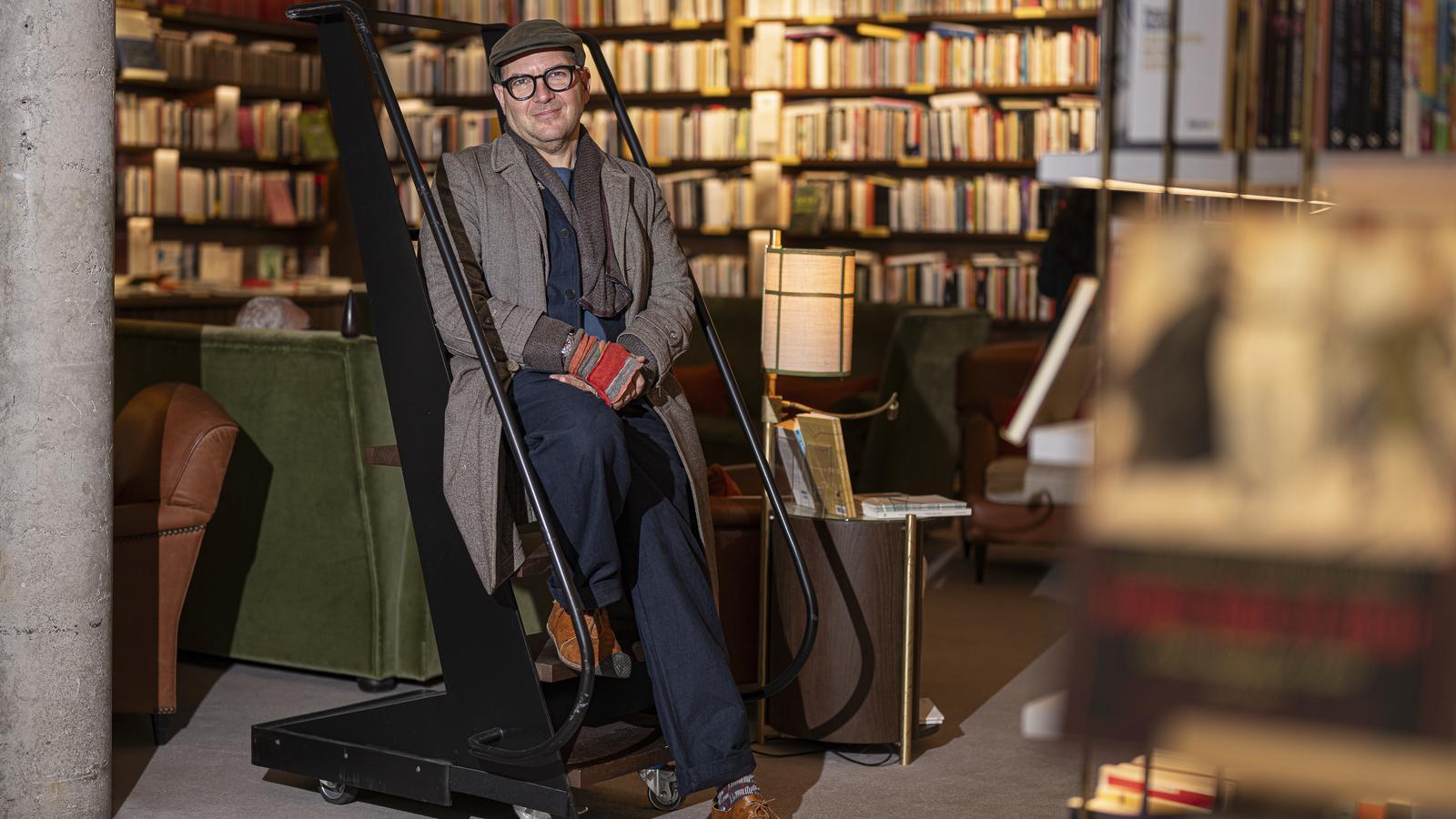
Cory Doctorow (Toronto, 1971) is one of the most lucid voices for discussing power and technology. Aware of the importance of words –he is a novelist and journalist–, he invented a concept at the end of 2022 to define, avoiding technicalities, the process that platforms were experiencing: emmerdification. A concept that has become popular and gives its name to his latest book, which has been translated into Spanish by Capitán Swing.
You have been an inspiration for Black mirror.
— In the first chapter of the new season, a person has a stroke and is implanted with a microchip that fixes it. But afterwards, this microchip makes them say advertisements, and they have to pay for not saying them. And the situation worsens to the point where in the end they have to pay just for being conscious.
It's your concept: emmerdification.
— First, platforms are good to users; then, they attract companies interested in this audience, and finally, they squeeze them all to maximize profits. This way they turn everything into a big pile of shit.
Give me an example.
— Uber received 31 billion dollars from the Saudi royal family through a venture capital firm. It lost the 31 billion in thirteen years. During this time, it ruined most taxi companies. And when it had market power, it raised prices. Amazon also raises costs; it now keeps between 50 and 60 cents of every euro it sells. And it has an incredible thing called most-favored-nation.
What is it?
— The lowest price must be on Amazon. If you decide to raise the price because Amazon takes a larger and larger percentage, you must do it also in Carrefour, in your own factory... If they find it is cheaper elsewhere, they send it to the very end where nobody sees it. Do you want more examples?
Let's see...
— Google. There are internal memos that admit that searches have worsened because, if people spend more time searching, they can show more ads.
The problem is that it's hard to leave the shit, to get out of the system.
— In neoliberal economics there is a theory called revealed preference. It holds that what is important is not what you say you want, but what you buy. So if you say you want privacy, but you use Facebook, you don't really want privacy. I think this can only be defended if you have a neurological injury that makes you unable to perceive power. Because, with this logic, someone who sells a kidney to pay rent, are they revealing that they want to live with one kidney?
I know a lot of people who hate Elon Musk and are on Twitter.
— They love themselves more than they hate the platform. Musk knows this. If you can't agree on where to have a beer, how are you going to agree to leave Twitter? This is how people are held hostage. It's a common pattern in both the real and virtual worlds. I see it in my family's history.
Explain…
— My grandmother was a child soldier in the Siege of Leningrad. When she was fifteen years old, the women and children were evacuated and she ended up in Siberia, in the army. She met my grandfather and became pregnant. They deserted. They went to Azerbaijan, where my father was born. And they did not return to Russia or Poland, they left for Canada. The rest of the family stayed in Russia, even though it was obvious that it was worse. Now, more than seventy years later, my family from Saint Petersburg is much worse off than the family in Canada. They have less money, they are worried about being recruited for the war, they have had more difficulty going to university. But since they could not all leave together, no one left.
How are we all doing together?
— There are many people who want a better platform and, in fact, they are working on alternatives like Bluesky or Mastodon. But it's like you built housing in West Berlin for people in East Berlin. It didn't matter if they were good, first you had to tear down the wall.
So let's talk about the wall... How is it torn down?
— When you switch from Telefónica to Vodafone, you do some paperwork and that's it, right? Nobody cares what company you're from because you don't need to know that to be able to talk. Well, technologically we could make it so that you could leave one platform and go to another, and that anything they wanted to tell you on Twitter, you could read on Bluesky. But it hasn't been done. It was considered in the Digital Markets Act, but they decided to leave it for later. Absurd.
Isn't it technically difficult?
— When Facebook decided to open up to the whole world –initially it was only for American university students–, the problem was that the general public had Myspace, and they found it hard to leave. So Zuckerberg made them a bot. Then, you could go to Myspace, take everything you had there and bring it to Facebook. This way, you replied there and it also sent it to Myspace. You weren't trapped in a one-way door. Now, about three or four years ago, some teenagers did the same with Instagram.
What did they do?
— They created the OG app. You provided it with your Instagram username and password, and it took all your information, but without ads, without promoted content, without taking your data. It was so successful that within a few days it was at the top of the app stores. What happened?
What?
— Meta sent a complaint to Apple and Google, and both removed the application that night. All technology companies are united.
So, the solution is…
— Make it legal to reverse engineer these platforms.
You have to explain to me what reverse engineering is.
— Analyze the system from the outside in, to understand how it works and how to change it. This way, when Apple and Google eliminated an application, like OG, we could reverse engineer it and remake it. And for them to be unable to do anything.
In other words, forgetting about trying to regulate big tech companies.
— Exactly. Not to regulate American tech companies, but to deregulate European tech companies so they can save us from the Americans. This is the opportunity we have before us.
Is AI already screwed?
— If you ask them which are the best headphones and they answer you with bad ones, it's hard to know if it's a mistake or if someone has paid a commission. It also happens with TikTok, they are algorithms, and it's hard to know if someone is cheating. So they are systems prone tocorruption.
To all of this, Trump is added. A president who favors the tech magnates.
— We have done nothing about tech companies despite the warning signs. And Trump has made it worse all at once, not like Zuckerberg, who made the platforms a little more horrible every day. That's why Trump is an opportunity, because when crises move slowly, it's harder for anything to change. He has shown us that if you depend on American tech companies, the government can paralyze you and can deactivate Office 365 for all European workers. He has a lot of influence, he is a rabid dog, and this is our opportunity.
You don't have WhatsApp.
— I am a Zuckerberg vegan. Neither WhatsApp, nor Instagram, nor Facebook.
What do you do when you wake up?
— I make a coffee, put on a podcast, and sit in front of my laptop. I communicate mostly by email, and it works well for me. I hate being interrupted.
How is life like this?
— Better.
