Companies incompatible at first sight, but that change lives
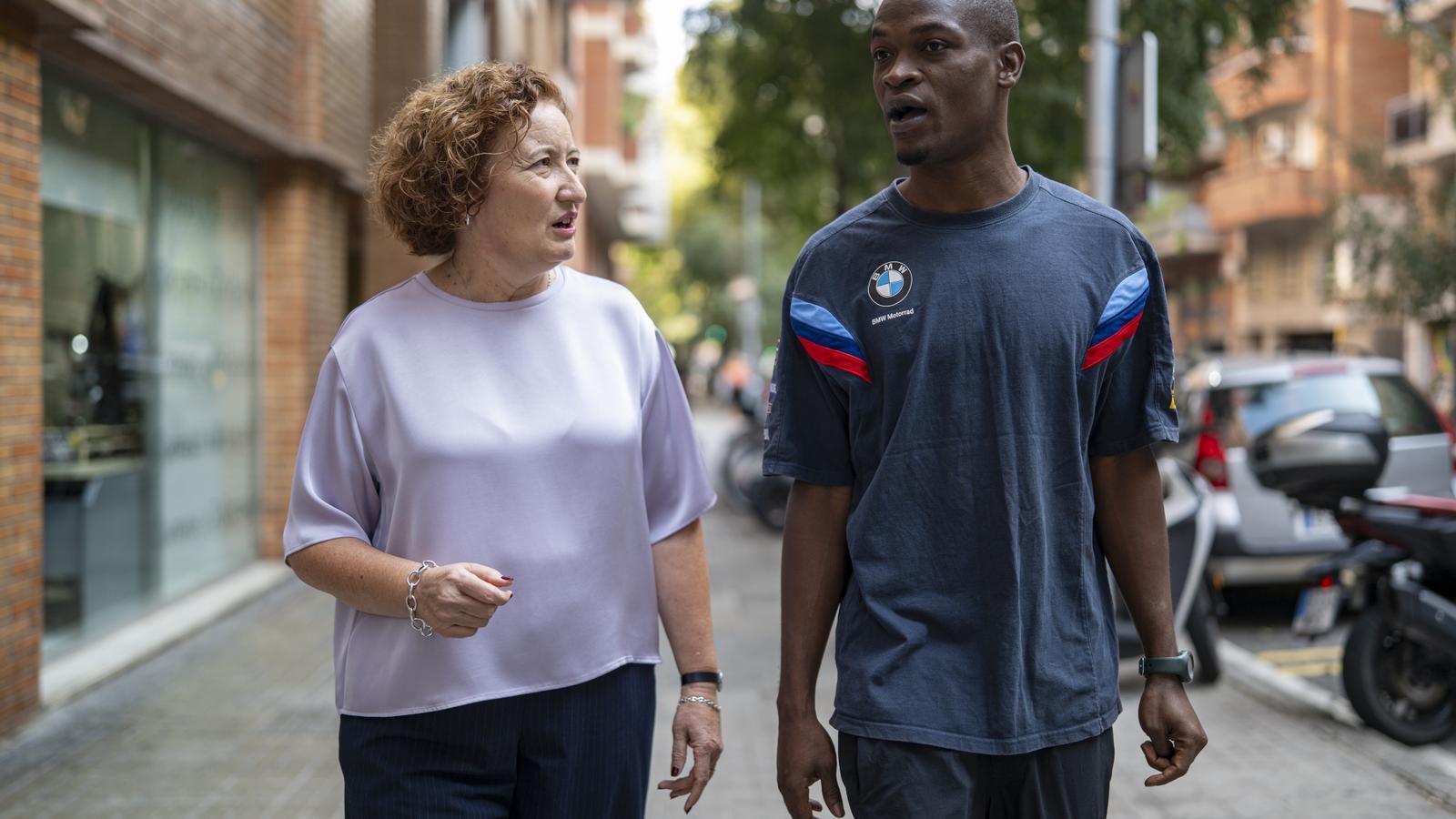
Letícia, who is 61 years old and works in a pharmaceutical company, has become the reference person for Issiaga, a 22-year-old young man who arrived by boat in the Canary Islands

-
CAT -
CAST
BarcelonaIssiaga Sylla was 19 years old when he arrived in Catalonia completely alone. He says he did not understand the culture, nor did he speak Catalan or Spanish, and he barely knew anyone here from his country. He is from Guinea Conakry. "I didn't interact with anyone," he confesses.
In Catalonia there are many Africans, but not all of them share the same culture, he clarifies, even if we put them all in the same bag. "Those who have been here for a long time do not have time to dedicate to you. You can contact them sometimes through a mobile phone," he adds. But not much more. Likewise, the social workers who, for example, have helped him with administrative procedures are not always available. "You have to make an appointment to talk to them." So he was always alone, with his head spinning. "It is very hard not to have anyone with whom to share anything," he assures.
Letícia Lluch is 61 years old and works in a multinational pharmaceutical company. She did not know any immigrants, nor did she have any special interest in social issues. But following the war in Ukraine in 2022, she considered volunteering at an organization, she began searching for information on the internet, and she found an association based in Barcelona called Punt de Referència, which offers accompaniment to young people between 16 and 23 years old who do not have any person as a reference. "I am a mother of three children and I thought how hard it would have been for them to be completely alone at that age. Or what it would be like for me not to have friends and family who could help me," she declares. So she became interested in becoming a volunteer.
Punt de Referència has mentoring programs that, among other options, offer the possibility for an adult to accompany a young person for nine months, with meetings of a couple of hours once a week. "The requirements are to be over 30 years old and have the desire to do it, and to pass an exhaustive interview," explains Letícia, who assures that this is one of the things she liked the most. "It shows that it is a professional and serious entity, they don't accept just anyone," she states.
Before starting the mentorship, she had to undergo training in which, for example, she learned that the meetings always had to be in public places and alone with the young person assigned to her, with the goal that this would contribute to fostering the bond between the two. And that is how she met Issiaga.
“If it hadn't been for this program, I would never have met a person like him,” she asserts, because her social, family, and work environment has no connection with young people who emigrate from other countries. The first meetings, however, were not easy at all, she admits. Because of the difference in age, culture, everything. “But little by little we began to discover common ground.”
They would meet one day on the weekend. "I looked for free activities we could do, or we would visit some place. For example, we have been to a ton of museums. Or we would simply walk and talk. A very important part is listening, because they are people who have lived through very hard experiences," says Letícia.
Issiaga emigrated from his country when he was only 15 years old, after his mother died. Before landing in a small boat in the Canary Islands in June 2021, he was in Mali, Algeria, and Morocco on a journey that lasted three long years. His friend, with whom he undertook the trip, drowned in the shipwreck of a boat in a first attempt to reach Europe that ended in disaster. He succeeded on the second attempt.
"I had heard about the situation of immigrants, but it is one thing to hear about it and another to experience it up close. It is very different," asserts Letícia, who has been surprised by the many administrative obstacles they face and the multiple difficulties they have to deal with. “Even to rent a room I had to call because they wouldn't rent it to him.”
She also asserts that the experience has helped her rethink things. "There are many things that we have internalized here and we believe are normal, but that he did not understand. You learn that there are also other perspectives," she declares. "In my country you cannot look into the eyes of a person who is older than you, it is considered a lack of respect. On the other hand, here it is the complete opposite: if you don't look into their eyes, they think you are rude," explains Issiaga, who also says he has learned the importance of being punctual. Before, he always arrived late or even didn't show up at all.
Currently, Issiaga is about to turn 23, is studying a higher degree in automotive technology, has completed an intermediate vocational training course in vehicle electromechanics, and speaks Catalan quite well after having attended classes at the Consortium for Linguistic Normalization. Furthermore, he is studying English because, as he says, a lot of information related to vehicles is in this language. He has a determination: to be a mechanic. And he no longer feels alone. “I have Leti and her family”. He has lunch with them every Sunday and knows that, if he has any doubts, he can contact them and they will help him.
"Now he is part of my family", assures Letícia, who has learned that immigrants, before being immigrants, are people.
