Amnesty International documents cases of "torture" by soldiers against immigrants in Ceuta
The Spanish government expects that the beaches will recover normality before October 15 and that it will not be necessary to open more reception spaces
-
CAT -
CAST
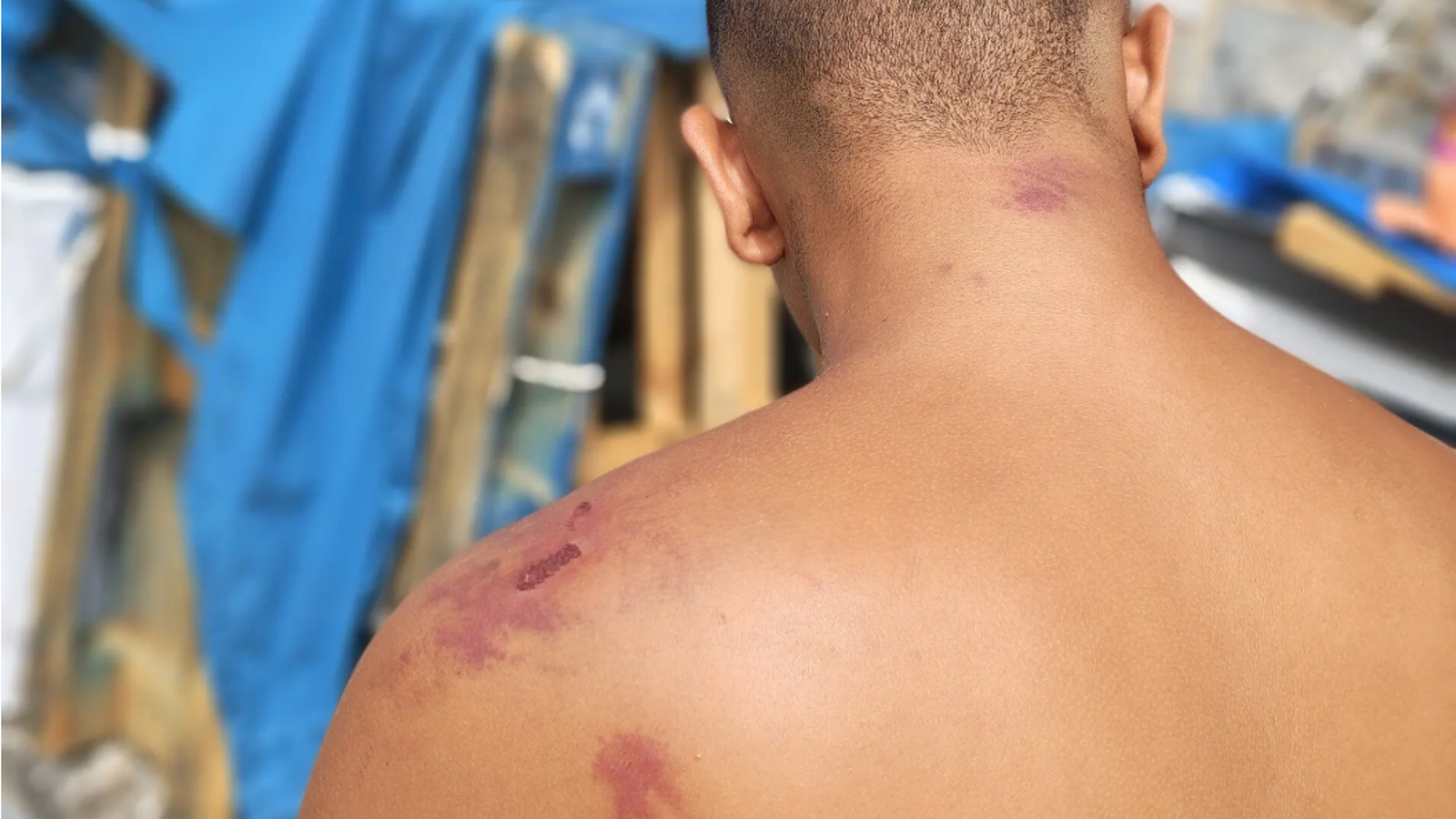
BarcelonaAn Amnesty International investigation has documented "torture and cruel, inhuman and degrading treatment" of migrants in Ceuta by members of the Spanish armed forces. The organization, which made the investigation public this Wednesday, reports beatings, harassment, and the theft of money and mobile phones by soldiers patrolling the city, and describes these as attitudes that follow "a pattern" against migrants remaining on the streets of the Spanish city following the mass crossing from Morocco on July 30th.
The NGO's report, which comes a week after various videos of assaults on migrants came to light, has prompted a reaction from the Spanish government. The Ministry of Defense has referred the complaint to the Public Prosecutor's Office and the courts and has ordered an internal investigation within the army to determine responsibilities. "In view of the report made public by Amnesty International, it has been agreed to refer this report to the Public Prosecutor's Office and the Duty Court of Ceuta, and the Operations Command is urged to investigate and clarify possible individual responsibilities, in order to preserve the good work and the name of the Armed Forces," ministry sources indicated.
Amnesty International claims it has been able to speak with more than 65 immigrants and asylum seekers, and many of the testimonies pointed to "the violence and vexatious treatment" they suffer at the hands of soldiers, including women and unaccompanied minors, "acts which, in some cases, due to their severity, may constitute torture—a crime under international law—," the organization points out. In this sense, Amnesty International asserts that it has collected 22 direct testimonies that attribute to the soldiers patrolling the city "beatings, harassment, humiliation, and the theft of money, as well as the confiscation and breaking of mobile phones belonging to migrants." According to their findings, some soldiers "have even acted at night and hooded against migrants, striking them and beating them, or spraying their faces and bodies with an irritating spray.
The organization has documented migrants' bodies covered in bruises and with injuries that appear consistent with baton strikes. Two Moroccan boys interviewed by the organization had such injuries on their heads, and one of them stated that he had been forced to kneel before being beaten. Another Moroccan boy explained to Amnesty that "he had been unable to walk for 25 days after being pushed by a soldier from a considerable height, after a group of soldiers woke him up and harassed him, along with other people, while they were sleeping at the doors of the Sant Antoni hermitage." Another Moroccan boy and an Algerian boy reported "having been repeatedly beaten with batons and punched while they were restrained with zip ties," the marks of which on their wrists were verified by the organization.
Amnesty International states that among the practices reported by those interviewed are insults and threats to leave Ceuta, preventing them from sleeping at night, forcing young men to shave their heads, forcing Muslims to kneel to kiss a Christian cross, beating them with batons and boots, and withholding food if they refuse to comply with an order. The organization has written to the Spanish president and the president of Ceuta to share the findings of this investigation with them and to request an urgent plan to provide adequate humanitarian aid and dignified reception.
"Racist harassment"
The organization also denounces "the daily harassment of a racist, xenophobic and Islamophobic nature, which seems to aim at wearing down migrant people and which also affects racialized people in Ceuta, to whom the military prevents access to the city center and to shops or supermarkets". Through a threatening presence at access gates or on adjacent streets, Amnesty ensures, the military decides arbitrarily, based on skin color or clothing —in the case of women, if they wear a veil—, whether they can pass or not, and carries out identifications.
"Thousands of people have been in Ceuta since July 30 without urgent measures having been adopted to avoid the humanitarian crisis that is being caused; thousands of people remain practically without food, without emergency resources or sanitary facilities and, in the case of women, exposed to discrimination and sexual violence. As if that were not enough, they suffer the harassment and violence of the military deployed in the area and are ignored by the authorities", underlines the international organization.
The Amnesty International report arrives just one week after several videos came to light documenting beatings and harassment against migrants by the military deployed in Ceuta. Those images, published by Eldiario.es, showed several uniformed soldiers chasing, subduing and beating migrants in various parts of the Spanish enclave. At that moment, and in response, the Spanish government assured that it would open an internal investigation into the complaints.
Transfers and returns
On the other hand, the Spanish government reported this Wednesday that it expects the beaches of Ceuta to return to normal before October 15 and that it will not be necessary to open more reception spaces apart from those already planned. This week, 1,200 new places will be set up. According to data provided by the Pedro Sánchez executive, 900 will be located in the Caballeria and the Loma de Colmenar embankment areas. Spaces intended for mothers with children, with a capacity for about 300 people, will also be adapted, and the available facilities will be expanded with land in the Mendizábal area, next to the penitentiary center.
Regarding minors, the autonomous protection system of Ceuta currently hosts 2,493 minors. Of these, 213 have been relocated to the peninsula: 69 through family reunification processes and 144 with transfers to different autonomous communities. In parallel, the executive asserts that it has intensified the processing of adult files: 3,336 have already been completed. According to the Minister of Territorial Policy, Ángel Víctor Torres, between 25% and 30% of these people do not request international protection.
Regarding returns, 8,223 people have left Ceuta, 1,134 of whom during the last week. Of this total, 7,794 returns have been voluntary and 449 correspond to expulsions. "It is false to say that everyone can be returned. What I can guarantee is that Ceuta will not be a CETI and normality will be achieved, always respecting international law," the minister defended.
