John Cryan: "Moderate coffee consumers are less likely to develop dementia"
Professor and director of the department of anatomy and neuroscience at the University College Cork (Ireland)

-
CAT -
CAST
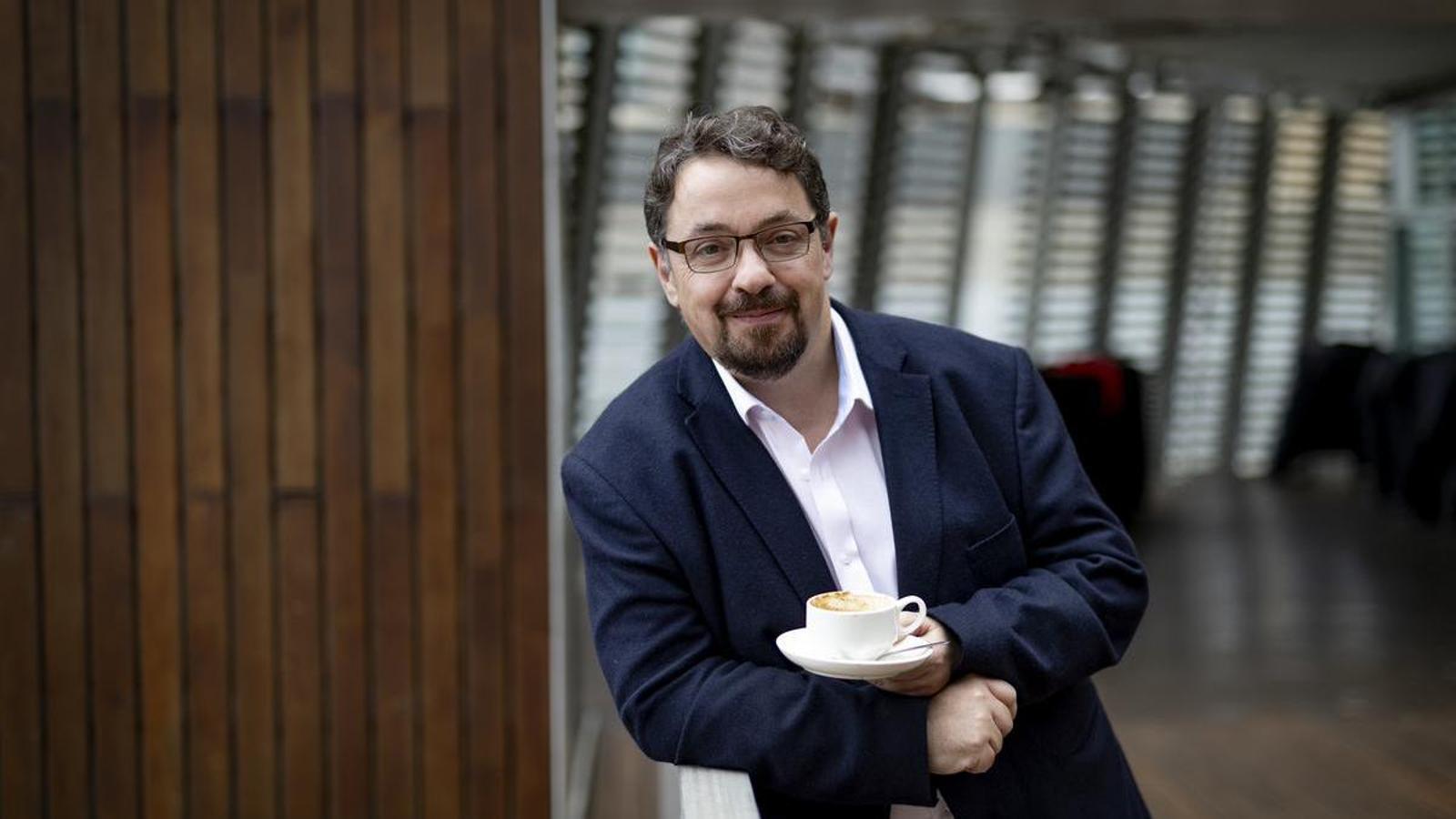
John Cryan, a neuroscientist, is one of the most globally recognized voices in the study of the communication between the gut and the brain. His work has helped to demonstrate that the gut microbiota not only plays a role in digestive health, but can also modulate the response to stress, behavior, and mental health. A professor and chair of the Department of Anatomy and Neuroscience at University College Cork (Ireland), he has investigated the effects of a beverage that is part of the daily life of millions of people: coffee. Cryan visited Barcelona to participate in a biomedical research symposium at Pompeu Fabra University.
Can diet influence mental health?
— We have been researching the relationship between the gut and the brain for years. Some of our first discoveries highlighted that the gut microbiota –the trillions of microorganisms we have in our body– can communicate with the brain at key moments throughout life. This led us to look for ways to act on it positively so that, in turn, it would have a beneficial impact on the brain. And the easiest way is through diet, yes.

You have published a study focused on coffee. Why?
— We have studied various substances present in food and how we can influence the brain and behavior through the microbiota: from fibers and fermented foods to omega-3 fatty acids. We have also worked with probiotics. But one of the areas we had been interested in for a long time was that of the polyphenols contained in coffee.
What are they?
— Very important plant-based chemical substances that, in a certain way, give color to plants. There are many different types and many are metabolized only by intestinal microbes and affect their composition. For this reason, they have become a very interesting area of study.

They are present in many other foods, from grapes to chocolate or olive oil.
— One of the really interesting sources of polyphenols is coffee, which began to be consumed as a beverage in Yemen, on the Arabian Peninsula, in the 15th century. We usually think of caffeine as the beneficial active ingredient, but coffee contains hundreds of chemical substances and we wanted to know if polyphenols contributed to the positive effects attributed to coffee.
Its consumption has been linked to better concentration and memory.
— Large-scale epidemiological studies show that moderate coffee consumers –two or three cups a day– are less likely to develop dementia. It seems there is less cognitive impairment associated with measured intake. However, one must be cautious because caffeine has other effects outside the gut and the brain: it can increase blood pressure and is a stimulant.
So, what happens in the gut when we drink a cup of coffee?
— To find out, we conducted a study. We took 62 people, 31 regular coffee consumers and 31 who did not drink it, between 30 and 50 years old. In Ireland, it is not as difficult as in Central Europe to find people who do not drink it, because we do not have as long a coffee tradition as you possibly do. We drink more tea. We found, first of all, that regular coffee consumers seemed to have fewer inflammatory markers, which was surprising. When we subjected them to a period of abstinence from this drink, the inflammation markers associated with the immune system increased and, conversely, when we reintroduced coffee, they decreased.
And what does this relationship imply?
— It highlights the complexity of what happens when you have a cup of coffee, like the one I am having right now: it affects the entire body and all the organism's systems, partly through the microbiota, because it modifies it. When we removed coffee from regular consumers, their microbiota and immune system changed, and their anxiety levels increased. When we reintroduced it, everything returned to normal. The most surprising thing was discovering that it did not matter if the coffee was caffeinated or decaffeinated, the effects were the same.
It is not, therefore, just the caffeine.
— Both caffeinated and decaffeinated coffee contain the same polyphenols that, under normal circumstances, feed microbes; in fact, they change them and this generates a kind of balance in how the gut talks to the brain. When you take this food away from the microorganisms they do not like it, they begin to change and become more inflammatory. But it is a small study, more research is needed. Furthermore, decaffeinated coffee is not simply coffee from which we have removed the caffeine, but rather the decaffeination process also modifies its composition.
Did you find any difference between caffeinated or decaffeinated coffee, though?
— We found an improvement in some aspects of learning and memory in participants who consumed decaffeinated coffee, which suggests that there are other components of this drink, beyond caffeine, that may contribute to its effects. In contrast, caffeinated coffee was associated with a reduction in anxiety and an improvement in attention. Both types of coffee were also associated with less stress, depressive symptoms, and inflammation.
Therefore, would you recommend coffee to improve cognitive function?
— There have been very interesting works, such as those by Nicola Segata and other groups, which have analyzed large population studies on diet and have also linked coffee consumption to changes in the microbiota that could be beneficial for different aspects of health. And epidemiological data are also emerging that link coffee consumption to a lower risk of cognitive decline. Therefore, there could be a protective effect of coffee on cognitive function as we age.
