Birds on a secret mission monitor illegal fishing
Equipped with GPS and microphones, the birds detect ships that escape tracking systems and threaten marine fauna

-
CAT -
CAST
Patrolling the Catalan and Balearic coasts incognito are secret agents with very peculiar feathers. They carry GPS devices and acoustic recording equipment, and they are helping to map vessels previously invisible to public tracking systems. They are also shedding light on the areas of interaction between marine fauna and ships that may pose a risk to biodiversity.
To do this, they fly over fishing boats, attracted by the concentration of fish and bait in the water, and collect data that will later allow researchers to better understand untracked maritime activity on the high seas.
These winged spies are Balearic shearwaters (Puffinus mauretanicus), a bird species critically endangered. They have been recruited by researchers from the University of Oxford, who have also used northern gannets (Morus bassanus) in the North Atlantic and Westland petrels (Procellaria westlandica) in the South Pacific, in the area of New Zealand.

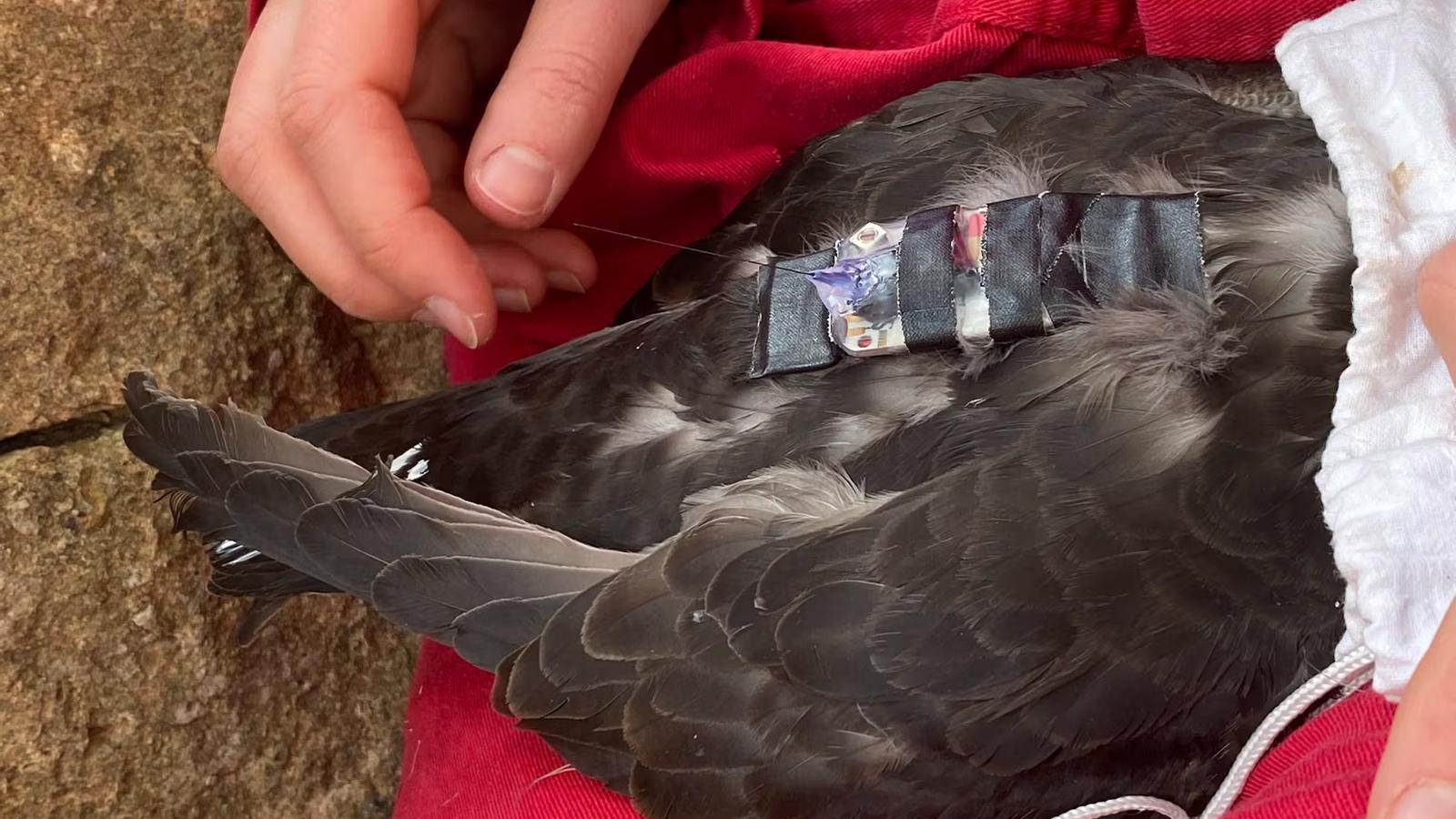
With devices placed on the birds, adapted to the weight and size of each animal and under the supervision of ethics committees, the animals capture the low-frequency hum of vessels and the GPS positions of the ships. Then, with a computer algorithm, researchers identify the specific sounds and distinguish them from other environmental noises. They then compare the coordinates of the recorded vessels with those from the ships' automatic identification tracking systems.
In a study published in Science Advances they conclude that the detected recordings often belong to areas that, according to tracking programs, should be empty. In fact, they conclude that a third of all detections made by northern gannets did not correspond to any vessel identified in the tracking systems. In the case of Balearic shearwaters, one in ten detections corresponded to untracked vessels.
It is mandatory for large commercial and passenger vessels to carry automatic identification systems that provide position and identification data, key information for assessing interaction with wildlife and analyzing impacts such as accidental capture, collisions, or certain types of pollution. In the case of vessels that do not emit any location signal, it could be that the system is not working, that they are small vessels not required to carry it, or that they deliberately disconnect it because they are fishing illegally. In fact, another 2020 study with albatrosses in the Southern Ocean detected that some vessels were deliberately disconnecting the system. The authors of the study point out that it is very likely that the vessels caught by the seabirds were also fishing illegally.
