Zapatero, Sánchez's beacon who challenged felipism
The former Spanish president is to blame, according to the right and González, for having moved the PSOE away from the correct place in history

-
CAT -
CAST
BarcelonaOn April 15, 2004, the first session of the investiture debate of José Luis Rodríguez Zapatero was held. At the end of his speech, the candidate delivered a quote, the authorship of which he did not reveal, to summarize his ideology: "An infinite yearning for peace, love for the good and for the social betterment of the humble." It was later revealed that these words had been written by his grandfather, Captain Juan Rodríguez Lozano, just before being shot by the Francoists in August 1936 in Puente Castro (León). Lozano remained loyal to the republican legality and paid for it with his life. His figure, and especially his testament, greatly influenced Rodríguez Zapatero, who over the years would become the first descendant of Francoism victims to reach La Moncloa (Felipe González had been born into a well-off family in Seville).

We remember that Zapatero had reached the general secretariat of the PSOE in the year 2000 against the wishes of Felipe González, who supported José Bono, with a speech of federalist and modernizing airs that seduced, for example, the Catalan and Valencian socialists. His arrival at Ferraz was not, however, entirely peaceful. Felipismo still had a powerful weapon, which was the newspaper El País, which closely watched the young Leonese and treated him with condescension, predicting that he would probably not reach Moncloa. The attacks of 11-M changed everything.
The law of memory
The complete break came at the end of 2007, when the Historical Memory Law was approved in Congress, which sought to compensate the victims, end the vestiges of Francoism in public spaces, and give an impetus to the exhumation of mass graves. "A democracy is not complete if it has thousands of citizens in ditches," Zapatero said at the time. Felipe González – not to mention the right wing – took this law very badly and criticized it openly. Why? Because he saw in it the danger of a certain vengeful spirit that broke the consensus of the Transition, which had been specifically based on the policy of forgetting. For González, the matter was very clear: Zapatero was challenging and questioning his political legacy, which was 13 years of great social transformation but with its ups and downs, and was reopening the wounds of the Civil War.
The right-wing makes a similar diagnosis and considers Zapatero as the man who took the PSOE out of the correct place in history and placed it alongside historical enemies of Spain such as Catalan separatists. Indeed, ERC had voted for Zapatero's investiture and had displaced CiU, which had supported González in 1993 and Aznar in 1996, as a governing partner. One of the milestones that the PP often recalls, and which it links to Zapaterismo, is the cordon sanitaire that was imposed on the PP in Catalonia with the arrival of the tripartite government and the processing of the new Statute of Autonomy.
Objective: a PSOE of Page
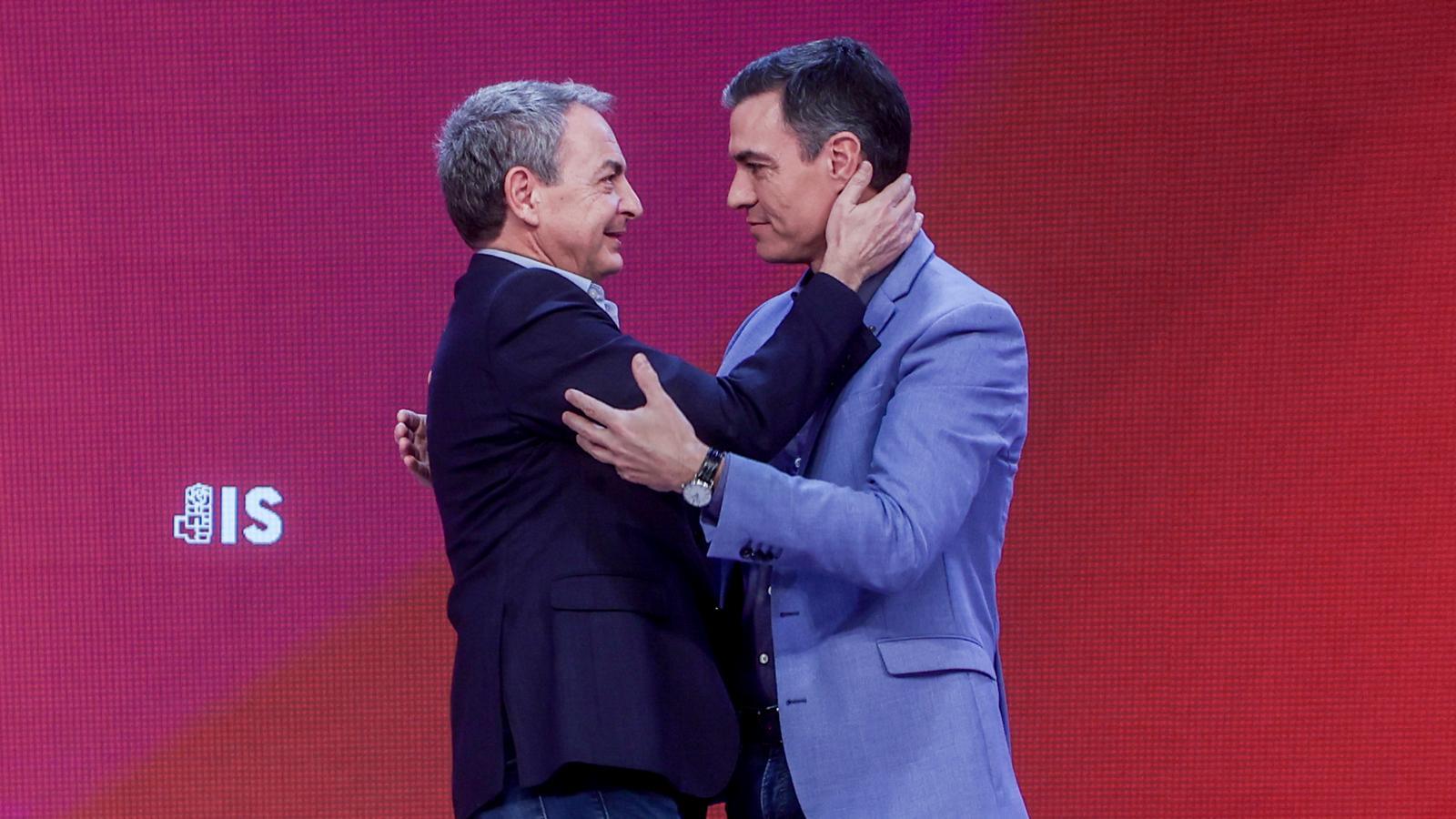
Curiously, Felipe González was among those who supported Pedro Sánchez the first time he reached the general secretariat of the PSOE in 2014 against Eduardo Madina (who now seems closer to González than to Sánchez), but he was also one of the promoters of the operation to oust him in 2017. It is from his return to the general secretariat and later to Moncloa that his rapport with Zapatero grew, until he became his main support outside the executive, both in campaigns and in delicate operations like the dialogue with Junts. Sanchismo, therefore, draws from Zapaterismo, and that is why Sánchez can do nothing but support the former Spanish president as long as there is no conclusive evidence against him.
For the right and for felipismo, Zapatero's political death is a historic opportunity to end sanchismo and return the PSOE to the moment before the Congress of July 2000, when only 9 votes changed history. And who better represents this sensibility within the party today than the president of Castilla-La Mancha, Emiliano García-Page. The problem is that going back in time is easier in movies than in reality.
