The Pope's visit balance

-
CAT -
CAST
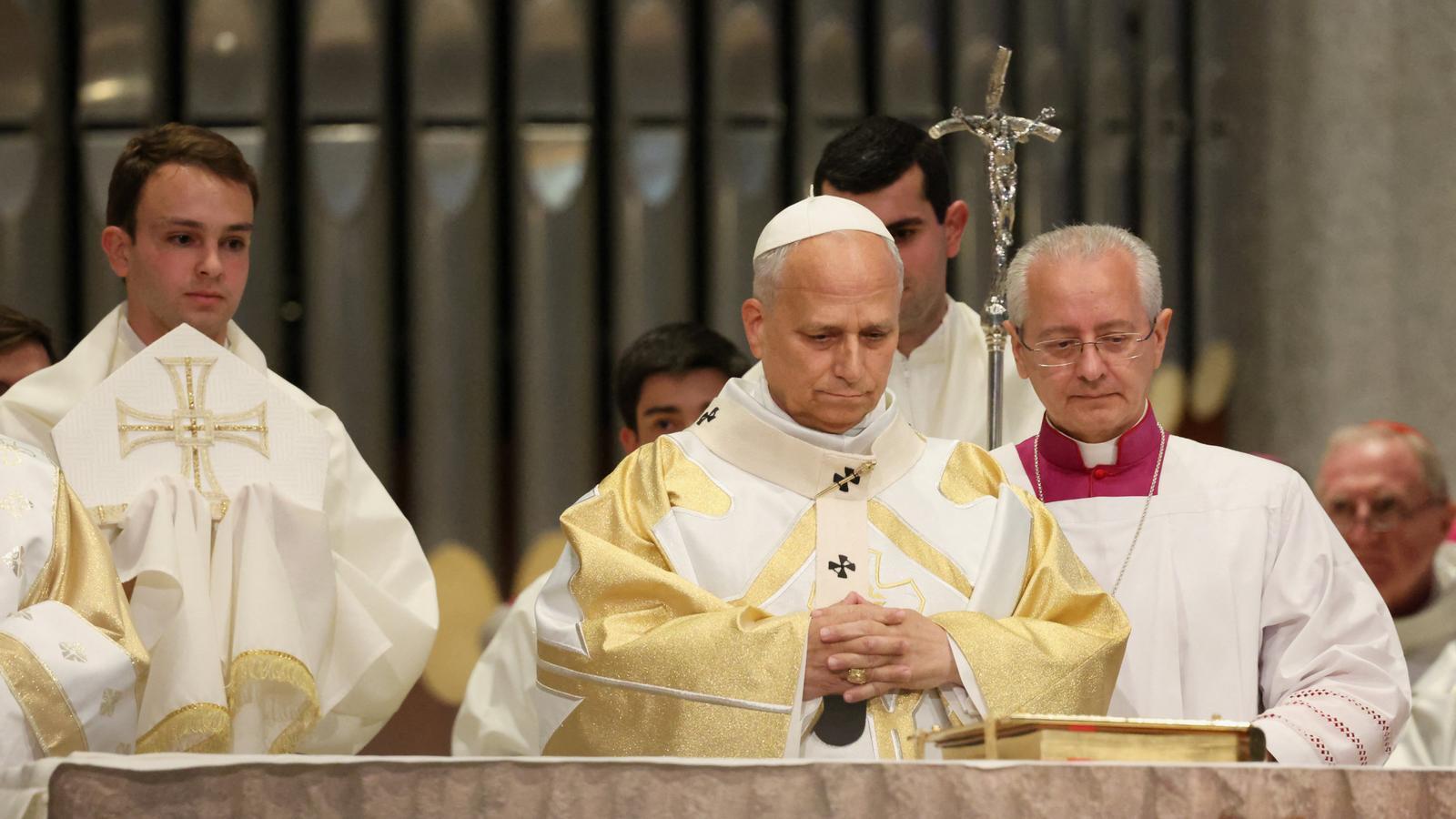
What impact will the Pope's visit leave? Undoubtedly, Leo XIV, from his position as head of state and religious leader, has impacted political and civic life. Both the right and the left have wanted to claim him. But his clear discourse of a purely social nature, in favor of welcoming immigrants, peace, and an economy at the service of people, and therefore antithetical to Trumpism and the Catalan and Spanish far-right, has especially given a boost to Pedro Sánchez's party.
Regarding Catalonia, in a calculated Catalan-Spanish linguistic balance, the pontiff has made the Moreneta and Gaudí's Sagrada Família his own, while insisting on praising coexistence in diversity and visiting prisoners (Brians) and the disadvantaged (parish of Sant Agustí, in the Raval). Vatican diplomacy in its purest form. On matters of morality, few novelties: no to abortion and, at the same time, a sincere but calculated self-criticism about pedophilia within the Church, in addition to emphasizing the need to end violence against women; women who, however, continue to hold a completely subordinate role within the institution headed by Leo XIV.
In a non-confessional state, the papal visit will leave a bittersweet taste regarding the inability of political institutions to mark a certain distance, even an aesthetic one, with the Catholic Church. Were the seven minutes of applause in the Congress of Deputies necessary? A Congress where, incidentally, the "pax romana" lasted a few hours: this Wednesday the PP and the PSOE have already started throwing plates at each other again. Was it necessary to hang the Vatican flag at the Generalitat and the City Council? Will we ever know how much money the administrations have dedicated to organizing the reception? It is true that the pontiff has generated notable fervor and public expectation, but that cannot justify everything.
A fervor, on the other hand, more massive and extreme in Madrid than in a highly secularized Catalonia, where, consequently, there has been more restraint in the staging, which is not so easy given a millennial tradition that makes the Vatican machinery and Catholic liturgy excel in their capacity to generate a spectacle of impact and popular emotion.
And here we enter another dimension, or collateral effect, of the pontiff's presence among us. The visit of Leo XIV to the State, and especially to Barcelona and, even more specifically, to the iconic and globalized Sagrada Família temple, will have consequences. It has awakened phenomenal global media interest. The urbi et orbi broadcast of the papal blessing of the Tower of Jesus will lead in the coming years to a more than probable increase in tourism in the city, just as happened in 2010 when Benedict XVI consecrated Gaudí's basilica. On the other hand, if there is one thing Barcelona has in abundance, it is tourists. And if there is one thing it lacks, it is housing.
This Thursday, the Pope will leave, leaving behind a fond memory for many. And in the Canary Islands, he will further reinforce his message in favor of welcoming, which is so necessary. He will also leave under the aesthetic impact of having blessed the cross of Jesus that crowns the Gaudí temple, a Sagrada Família with which the pontiff aspires to illuminate the world with a message of hope in peace, tolerance and justice for the most needy.
