Why has the Supreme Court kept the Puigdemont case?
The CJEU's decision on the amnesty once again puts the focus on a legal figure that marked the trial of the process: the privilege of the forum.
-
CAT -
CAST
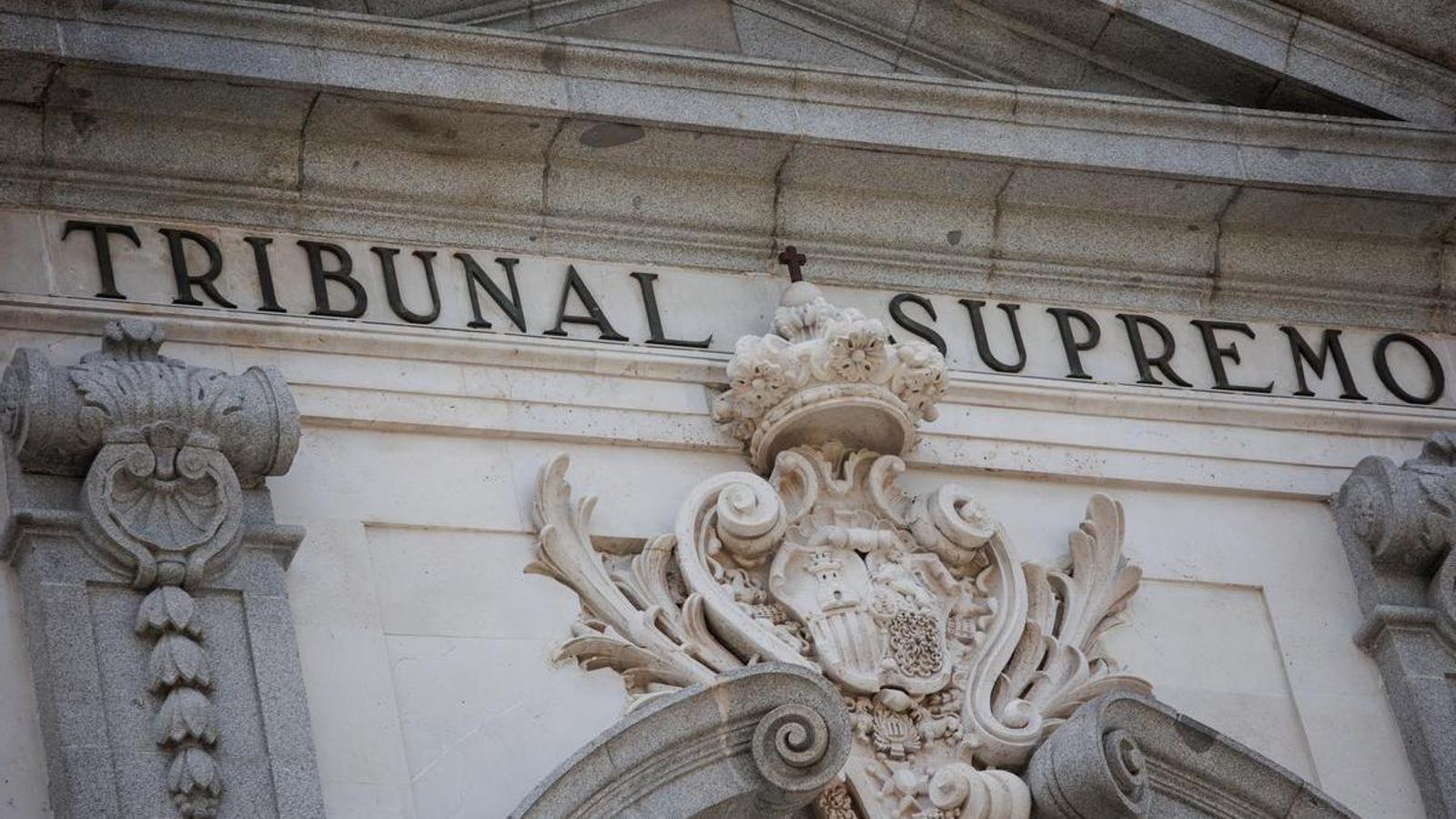
BarcelonaThe ruling of the Court of Justice of the European Union (CJEU) on Thursday regarding the amnesty has once again focused attention on who judges our representatives and how. Once the Constitutional Court (TC) determines its position, the final decision on the application of the law to the leaders of the 'procés' will fall to the Supreme Court (TS), given that they were or should have been tried by this body. But why go directly to Madrid?
The answer lies in 'aforamiento' (immunity from prosecution), a parliamentary prerogative that is a minority in most Western European democracies but is deeply rooted in the Spanish state. According to Damià del Clot, professor of constitutional law at the Autonomous University of Barcelona (UAB), 'aforamientos' are "a series of advantages that parliamentarians have to be able to exercise with complete freedom." Its origin, points out fellow professor of constitutional law at the UAB Joan Marsal, dates back to the 1978 Constitution, responding to "a certain distrust of the functioning of the entire judicial apparatus" of the time and to prevent local judicial bodies from opening "processes for political trivialities" against elected officials.
However, the experts consulted by ARA point out that the figure has undergone an exaggerated expansion. "This is replicated in the statutes of autonomy and then the organic law of the judiciary extends it to judges and prosecutors," recalls Marsal. Del Clot agrees, remarking that "Spain has a problem, it has many 'aforados' (people with immunity)," and warns that this figure today "has lost its meaning a bit."
Currently, Article 71.3 of the Spanish Constitution (CE) establishes that in cases against deputies and senators, the criminal chamber of the Supreme Court will be competent. In the Catalan case, Article 57.2 of the Statute fixes that the Superior Court of Justice of Catalonia (TSJC) is competent.
More shadows than light
Constitutionalists warn that this situation, conceived as a privilege, actually hides great disadvantages. The first, evidenced in the trial of the Process, is the violation of the right to the ordinary judge predetermined by law (article 24.2 CE). As Del Clot says, if a crime is committed in a territory, "the judge of the territory must be the one to judge it, and not the National High Court or the Supreme Court." But the Supreme Court took on the Process case because "it was argued that the event surpassed the autonomous community and affected the entire State," says Del Clot. Likewise, Marsal recalls that "the initial crime being imputed was rebellion and they understood that the entire state structure was involved," which is why it ended up in the hands of the Supreme Court.
The second major grievance is the loss of double instance. Being judged in the first instance by the higher instance means you have nowhere to appeal. Marsal clarifies that the Constitutional Court "is not a second instance, but the last instance of constitutional protection" before going to Europe. In the case of regional governments and deputies judged by the High Court of Justice of Catalonia, "there is indeed the possibility of going to the criminal chamber of the Supreme Court."
Added to all this is the proximity between the accused and the judicial elite. Del Clot denounces that in the second chamber of the Supreme Court, "one does not arrive by merit or capacity, but by political favors," which turns the privilege into a "firewall" that is useless "when you are a politician of the opposing flank." For Podemos politicians or independentists, he concludes, "it has been detrimental." All this has led communities such as Cantabria, Murcia, the Canary Islands, the Balearic Islands, La Rioja, and Aragon to already eliminate the privileges from their statutes.
The fall of the privilege
And what happens if the privileged status is lost? The Supreme Court, backed by the Constitutional Court in rulings such as those of the leaders of the 'procés' Josep Rull or Carme Forcadell, established in a non-jurisdictional plenary agreement in 2014 that if a firm indictment order had already been issued, the high court retained jurisdiction of the case despite the resignation from office.
This doctrine clashes head-on with the view of experts such as constitutional law professor Javier Pérez Royo, who labels it as "manifest unconstitutionality." “The moment he is no longer a privileged person, jurisdiction ceases to be the Supreme Court's,” states Pérez Royo in conversation with l’ARA, and emphasizes that “for this not to be the case, a review of the Constitution would have to be carried out and Article 71.3 complemented.” Using the case of former minister Ábalos as an example, he states that upon losing his seat, the case and the satellite defendants (such as Koldo), who also come to be tried by the high court, should be passed directly to the ordinary judge. “In no case could the Supreme Court have issued a sentence,” concludes the professor.
