The 8th edition of the Clàssics Festival, which will be held in various venues in Barcelona between October 8th and December 17th, has the lie as its central theme. "This year we are not here to denounce the lie. We are here to exhibit it –with curiosity and humility–: to look at it twice, to cut it open, to interpret its hidden meaning, to judge the evidence and to draw our own conclusions", states the presentation text of this contemporary arts and thought festival, which will detail its program on Monday, October 5th.
The art of lying: from being a sin to becoming a 'trending topic'
The philosopher Sira Abenoza proposes in 'If everything were a lie' a journey through the evolution of the concepts of 'truth' and 'lie' based on great figures who have reflected on them and literary examples such as Homer's 'Odyssey' and Dostoevsky's 'Crime and Punishment'
03/10/2026 - 07:55 h

-
CAT -
CAST
BarcelonaPerhaps because "everyone lies at one time or another" –as Jean-Luc Nancy states in La vérité du mensonge (Bayard, 2021)–, truth is in a permanent crisis. This crisis has been aggravated over the last decades by the end of the single narrative advocated by postmodernity, the multiplication of the capacity for impact and the transmission of lies through social media, which have become one of the great trending topics of our present, and the worrying expansion of falsehoods that artificial intelligence can transmit.
"You will know the truth, and the truth will set you free": a lot has rained since this message of Jesus Christ recorded by John in his gospel at the end of the 1st century. Si tot fos mentida, the new essay by Sira Abenoza (Igualada, 1980) –which Arcàdia publishes on October 13th–, reconstructs the evolution of two concepts that have been studied very unevenly throughout history. "Philosophy has had a tendency to focus more on the study of truth for several reasons," comments Abenoza, philosopher, tenured professor of the department of society, politics and sustainability at ESADE (URL) and director of La Casa dels Clàssics. "Firstly, because of the type of people who have traditionally dedicated themselves to philosophy: the majority have been men subjected to notable pressure to establish the norm. The epiphenomenon of this type of thinker would be Immanuel Kant, someone incapable of living with uncertainty and the grays who needs absolute guidelines and to establish principles. Then there is a change in the focus of the discipline: Hellenistic philosophy was closely linked to life, but in later historical stages it became more speculative. In this sense, inquiring into truth is more interesting, because truth was there before us and will continue to be there when we are no longer here. The study of lying, on the other hand, is more related to human weaknesses and darkness," explains Abenoza.
Sira Abenoza is convinced that "inquiring into lies continues to be uncomfortable." "When we were little, we were told that lying was wrong and that it was a sin, and it is one of the first things we still ask of our children, that they do not lie," she continues. If everything were a lie delves into the subject of the falling of the veil of ignorance: "It is when we realize that existence has something of a farce to it, that not all the people we love and who love us will always tell us the truth." From then on, one usually stops seeking the truth with the same eagerness as before. "For some years now, I no longer ask to know the truth from my friends or my partner –writes Abenoza in the essay–. I never look, on my own initiative, at the evaluation surveys for the courses I teach. In general, I must say that I live much happier without knowing the truth about some matters. I ignore if it has to do with the passage of time, with accumulated experience, and with realizing that, sometimes, truths hurt and are difficult to overcome."
If everything were a lie starts with a revealing professional anecdote. "In 2015, in the second edition of a philosophy course for law students and prison inmates, we experienced a memorable scene that, more or less, has been repeated the rest of the years we have held it. An inmate, José Luis, said that in the reality of a prison, 80% is fiction, because many prisoners choose to put on a mask in front of the educator and promise her they will behave well in exchange for permits to go out. When students and faculty enter the prison to teach a course, we do so with prejudices: the inmates deserve to be there because they are bad, right? That is the general sentiment. As time goes by, we all begin to connect and empathize with the inmates. We believe what they tell us until the day comes when a crack appears in the narrative, like that time when José Luis admitted that inside the prison everything was a farce."

The intelligence of false men
Based on this first-person story, Sira Abenoza looks back with the goal of returning to the initial philosophical reflections on lying, which is not exactly an antonym of truth, "because while one can exist by itself, the other requires someone to give it life". In one of the Dialogues of Plato, Lesser Hippias –written in the 4th century BC and available in Catalan at the Fundació Bernat Metge thanks to the translation by Joan Crexells–, Socrates discusses with the sophist Hippias of Elis about which is better, a liar or an ignorant person. "Socrates maintains that false men are intelligent, have malice, and know what they are doing, while the ignorant cannot become false –he explains–. For Socrates, the liar is better than the ignorant because to be able to become false in a matter, one must first have become learned. Socrates and Hippias reach this logical conclusion, although even they themselves are not entirely convinced by it. What seems important to me about this dialogue is that it makes us see the importance that knowledge has for Socrates. We must ensure we know; this is what should move us. The wise man will have a tendency to choose good and not do evil, according to Socrates. In case he chooses the lie, it will be a step towards becoming better".
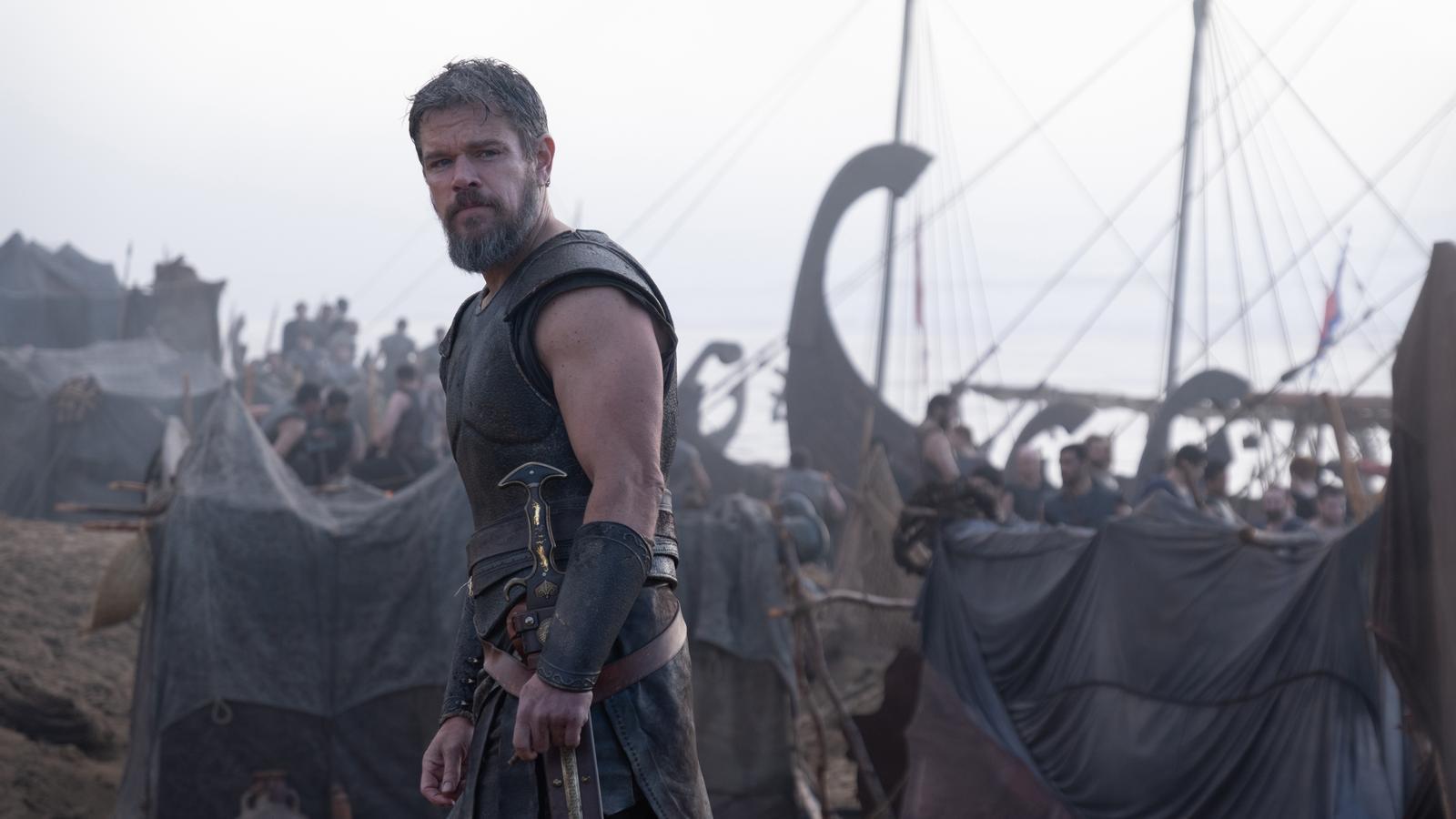
One of the precursors of the "pragmatism of the lie" is Odysseus, the hero who stars in the Odyssey, of Homer. In this foundational text of the Western literary tradition fixed in writing in the 8th century BC –which Pau Sabaté recently retranslated it a few months ago for the Bernat Metge Universal–, Odysseus "manages to win the Trojan War and, later on, return home with his men thanks to lies –asserts Abenoza–. Whatever he has done to achieve the goals that make him a hero is relatively irrelevant. Seen from the 21st century, this strategy has a Machiavellian point, but in Ancient Greece, the closest word to lie was pseudos, which had a much broader semantic field; it was a catch-all that included different forms of dissociation between what we say and what we do. It was not just deception, but could also be a mistake, a piece of cunning, a fiction, and an illusion".
The "double heart" of the liar
Two later philosophers "with an extreme view on lying", and highly influential, were Augustine of Hippo and Immanuel Kant. In the treatise On Lying, written at the end of the 4th century, Saint Augustine denounces the "double heart" of the liar. "On one hand, he keeps silent about what he knows or believes to be true, and on the other, he says what he thinks or knows to be false," we read in If Everything Were a Lie. For the Christian theologian and philosopher, lying is a sin that must be condemned. "The split or discordance between the head and the lips is what characterizes lying—says Abenoza—. One part remains opaque and the other is externalized. This notion of Saint Augustine is the one that has most marked the subsequent tradition and the way we have conceived lying in the West".
Sira Abenoza considers that the theologian and philosopher "has a savage hardness towards himself and a terrible self-hatred" that translate into "the obsession with purity" which allows him "to consider, incomprehensibly, that the least serious lie is that which you tell to avoid physical humiliation, over the lie that is told to save someone's life". Kant, too, at the end of the 18th century, pulls the string on the impossibility of accepting any lie. "He proposes a principle that is incompatible with life, because he says that lying is not justifiable in any case –explains Abenoza–. In Kant's eyes, lying is a rejection and the annihilation of man's own dignity because communicating to other people the opposite of what we think, without warning them that we think the opposite, goes directly against the purpose of communicating thoughts and, consequently, is a renunciation of one's own personality".
Benjamin Constant introduces in On Political Reactions (1797) a crack in Kant's implacability. "In the essay, he asks whether it is legitimate to lie to save someone's life –recalls Abenoza–. For Kant, if a murderer enters someone's house looking for an enemy and asks you where he is hiding, if you know where he is you must tell him, even if by telling him the truth you could lead to the injustice of someone's death. Benjamin Constant, on the other hand, expresses that someone who wants to do harm does not have the right to know the truth".

Nietzsche's hammer
Already in the 19th century, Friedrich Nietzsche used his philosophical hammer to shatter the notion of truth. "For Nietzsche, reality is the open air —comments the author of If everything were a lie—. We pretend that there are truths but it is not so or, at the very least, we cannot transmit them for certain because we communicate them through language, which is essentially metaphorical". Nietzsche's forcefulness not only makes an impact among the thinkers of the time, but also also permeates the work of novelists such as Fyodor M. Dostoevsky with nihilism. A Crime and Punishment (1866; in English in the Bernat Metge Universal, translated by Miquel Cabal Guarro), the Russian writer is capable of having one of the book's characters say: "By lying, one arrives at the truth!". "Nietzsche calls into question truth as a category: what is relevant for him is who has the most strength to create an idea and impose it," says Abenoza.
In this sense, Nietzsche connects with the notion of lying that the thinker from Mollerussa will praise later on Josep Torres Tribó to In Praise of the Lie (1928; recovered by Cal·lígraf in 2022) and also with the concept of "modern lie" that Hannah Arendt exposes in the essay Truth and politics (1967). "Arendt delves into the lie from the dimension of political manipulation –says Abenoza–. At the end of the history she was witnessing, humanity had not reached absolute knowledge, but had evolved towards the absolute lie. Totalitarian regimes monopolized truth and lies, but they were not the only ones: democratic states did so as well".

From the modern lie to the post-truth
If in the 20th century a modern lie abounded "that wanted to replace reality with a false and fictitious narrative", the 21st century has seen the consolidation of a new reality, "the constant bombardment by lies of all kinds". "The current post-lie would be the pandemic of lying –states Sira Abenoza–. There are lies that obey economic interests and others that are told for political causes. There are small groups or collectives more or less organized like flat-earthers and deniers of all kinds: of climate change, of evolution, of the Holocaust or of genocides, the anti-vaccine movement, QAnon, Pizzagate, the manosphere...". All these narratives and counter-narratives proclaimed "with a myriad of intentions and arbitrariness that mean it has neither order nor concert" are received by a "liquid or absent subject", reminds the author, and often end up becoming trending topic, before being replaced by the next wave of falsehoods.
Lately, artificial intelligence has instigated the circulation of some lies, errors and glitches that are "followed by many people and can be amplified through the network". The ability to lie, which until now was exclusively human, has already been adopted by machines that know how to reproduce our intelligence. Perhaps it is, as has been commented during the last weeks, with the ultimate will to exterminate us as a species. "Artificial intelligence could kill us all by the end of this decade", asserted Jacob Coxon, an Anthropic engineer who had previously worked for OpenAI, in his resignation letter. It could also be the case that these and other alarmist statements contribute to enlarging a little more the tsunami of the post-lie, which threatens to erase the few certainties that remain in society.
The lie, the axis of the Clàssics Festival
