Junts takes on the pressure from the street united
The party "maintains the line" and assures having received many congratulations for not having yielded to the PSOE

-
CAT -
CAST
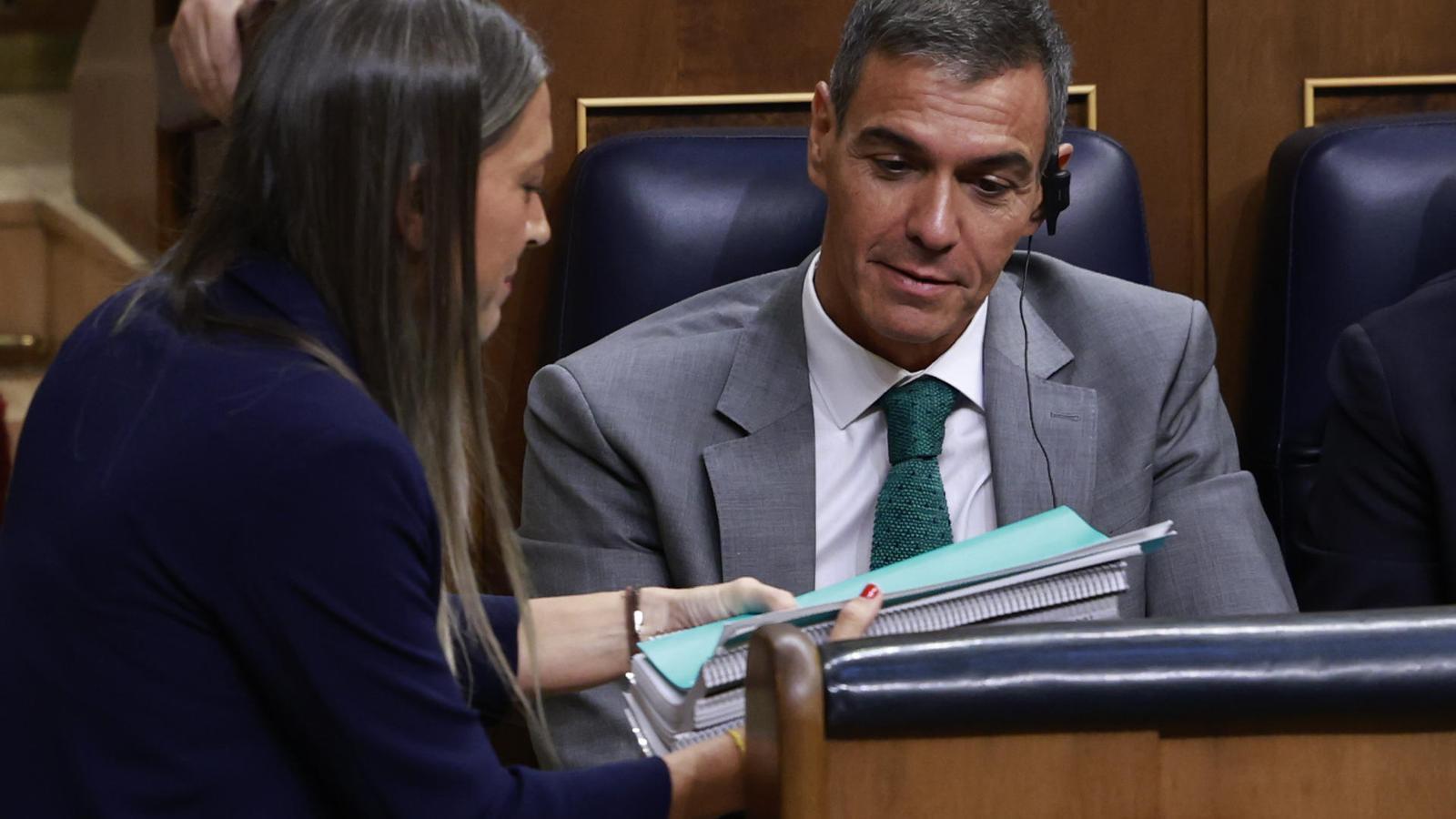
BarcelonaDefinitely, Junts has made its own profile clear in Congress in a week where all eyes were on Carles Puigdemont's party. The pressure from the left had no effect and the 'juntaires' struck down the housing decrees, contributing to an institutional crisis that threatens to lead the State to new elections. The assessment the party makes is positive: they are the only Catalan party –besides the PP and Vox delegations– that has distanced itself from the proposals from Moncloa. In fact, 'juntaires' sources explain that they have not stopped receiving "congratulations" from small property owners, who had demanded they strike down the decrees (some of the letters were published by the party itself on social media).
Several sources from Carles Puigdemont's party point out that the key to it all was to continue with their own character. The party considers that it started from a dichotomy: being with small property owners and the Catalan middle class or with the demands of the left and the Tenants' Union, from whom they stand at the antipodes. The 'juntaires'' arguments have been based on highlighting the "insecurity" that the decree causes; criticizing "not being tough enough against vulture funds," and on the fact that the ban on evictions should be accompanied by public spending to cover the rent.
Junts has not viewed the possible early election that Pedro Sánchez is considering as an element of pressure. However, has the party calibrated the consequences of an election with the prevailing framework of housing, which is favorable to Sánchez? Initially, they argue that if Sánchez calls elections now, they are "the only ones who differentiate themselves from the rest" and can represent a "central position." In the event of an early election in Spain, moreover, they know they would avoid the competition from Aliança Catalana, which threatens their votes in municipal and Catalan elections.
Regarding housing, Junts has proposed its own royal decree-law in which it expresses its model of the country. Other consulted voices are even more emphatic and conclude that elections do not "harm" Junts, adding that for the PSOE it would denote "electoralism" –and not "interest in housing"–. However, there are also those who are more cautious in the face of the "complex" narrative battle that awaits them, especially when the great moment for Junts, the return of Carles Puigdemont after nine years in exile, is about to take shape.
The debate in the executive
Although some tax relief measures were included in the first royal decree, there are multiple points of friction with the socialists' text, such as in the extension of contracts or how the veto on vulture funds has been articulated, in addition to state responsibility in the eviction of vulnerable people. Of the multiple sources consulted, all highlight the unanimity that existed in the decisive debate of the national executive this Thursday against the two decrees. Beyond the hard core of decisions, the different currents of the party have also endorsed the strategy, even the left-wing one.
It was the party leader in Madrid, Miriam Nogueras, who spoke first and, immediately after, she was reaffirmed by the secretary general, Jordi Turull. The leadership, in fact, approved this position by total assent, according to the sources, and this ties in with the "coherence" exhibited on the matter in Congress. The arguments are based on several key points: "legal uncertainty", the failure to resolve the social problem, and the phenomenon of investment funds.
Ideological definition
The position of Junts is in line with what the group led by Nogueras has been taking over the last three years. A position quite different from the one the party had defended during Quim Torra's mandate at the head of the Generalitat: in 2020, his executive chose to contain rental prices with caps. In fact, Carles Puigdemont had already supported the price index in 2017 during the 1-O government. These were "exceptional" contexts for the independence movement, with coalition governments, according to sources. Now, the ideological definition is clearer.
Many voices speak of the 2024 Calella congress as the key moment for this ideological realignment. However, there are also consulted sources that point out that having the key to governability in Madrid has helped to set the party's strategic course. In this process of redefinition, it is also necessary to remember that, as reported by ARA, recently Junts joined the European Democratic Party, a centrist and pro-European social-liberal formation –which encompasses the center-right and the moderate center-left.
Sources from Junts' leadership report that they felt "deceived" when seeing the anti-eviction decree, after a negotiation they saw as "failed" with "distorted" elements. However, they also point out that, seen in perspective, "the socialists wanted to play hard to eat up Sumar, ERC, and Podemos". Now one of the challenges is the battle for the narrative that reaches the citizenry, especially if Sánchez decides to call elections.
