The PSOE falls five points after the scandals of Zapatero and Leire Díez, according to the CIS
Sumar and Podem grow at the expense of ERC in the midst of debate on Rufián's left-wing front
-
CAT -
CAST
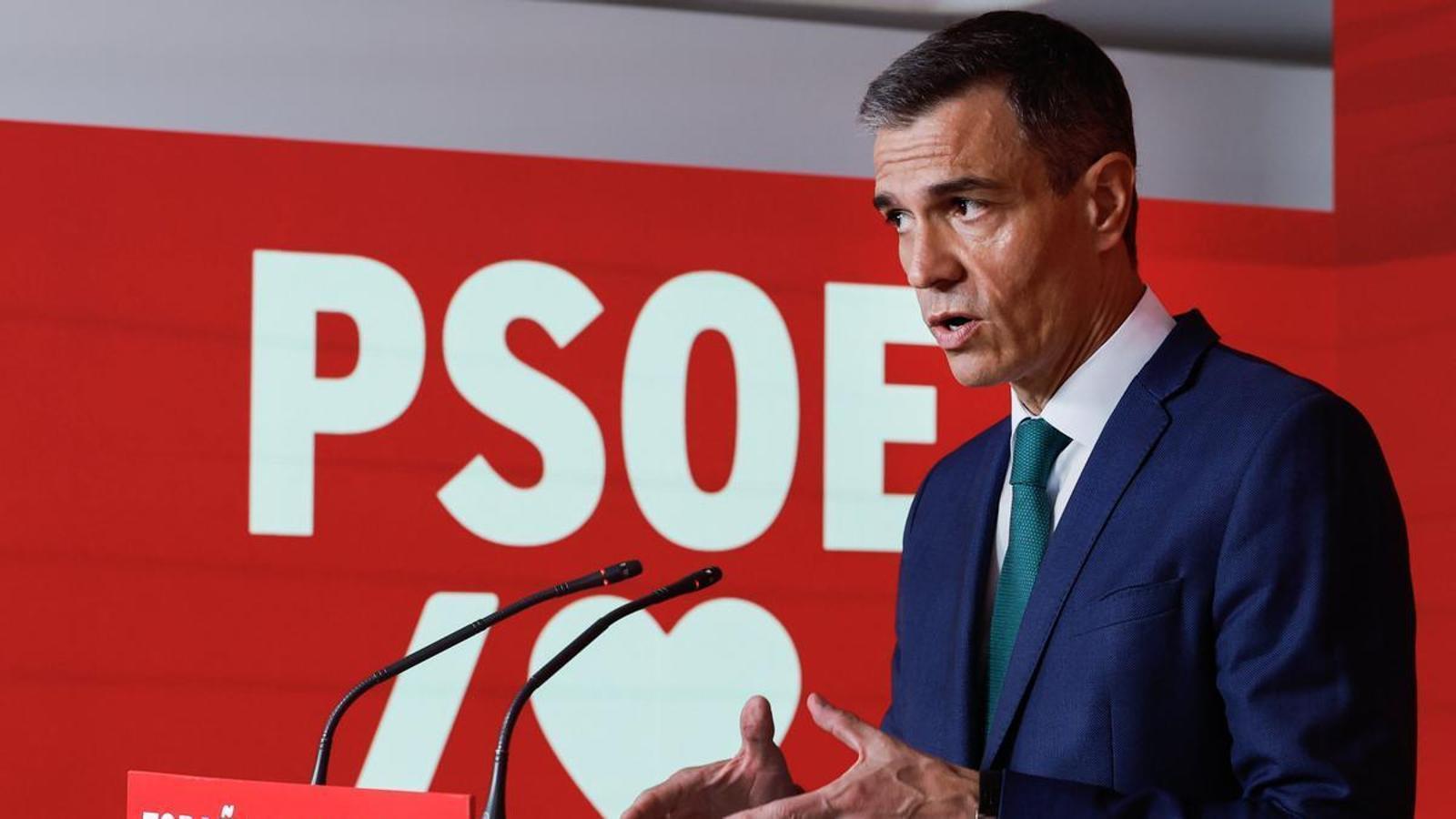
MadridThe first barometer of the Sociological Research Centre (CIS) conducted after the indictment of José Luis Rodríguez Zapatero and the outbreak of the Leire Díez case —of alleged PSOE sewers— worsens Pedro Sánchez's electoral prospects for the upcoming Spanish elections. According to the survey published this Thursday, the socialists fall 4.9 points, to 31.3% of estimated votes. On the other hand, the PP improves it with an increase of 2.2 points, to 27.1%. In this way, Alberto Núñez Feijóo's party cuts the distance separating them from the PSOE by 7.1 points. If in the previous barometer it was 11.3 points, in the current one they are only 4.2 points apart. In fact, the popular party is the one that best capitalizes on the PSOE's decline, as Vox, on the contrary, falls four tenths —from 16.2 to 15.8%— and S'ha Acabat la Festa (SALF) of MEP Alvise Pérez, which is the sixth force, falls half a point, to 1.9%.
Beyond the PSOE, regarding the rest of the plurinational majority, Sumar and Podemos are growing. The former increase their vote estimate by seven tenths, to 6.4%, while the purple party does so by three tenths, to 2.8%. In this way, this June, Ione Belarra's party overtakes ERC, when in May the Republicans had placed themselves above, as the fifth force. On the other hand, in this barometer, the independentists fall 0.7 tenths, to seventh position. This is the first poll conducted after Gabriel Rufián publicly showed his willingness to lead a left-wing front in the Spanish elections. However, the popularity of the Republican spokesperson is growing, and he is, once again, one of the names that respondents spontaneously mention as a presidential candidate. He would be the preferred option for 5%, six tenths more than in May. Junts, for its part, remains below the Republicans with a 1% vote estimate, although it has grown two tenths in the last month.
What is also increasing, by almost a point, is abstention. 5.8% of those surveyed respond that they would not vote, when a month ago it was 4.9%. The poll was conducted between June 1 and 4. Therefore, it already captures the effect of recent weeks in which judicial scandals surrounding the Spanish president have occurred. Since May 19, when Zapatero's indictment by the National Court for alleged influence peddling was made public, there has been a trickle of news about the Plus Ultra case, with the leak of the summary affecting the former socialist Spanish president, to which has been added the entry of the Central Operative Unit (UCO) of the Civil Guard into the PSOE headquarters on May 27, and successive reports on the Leire Díez case.for alleged influence peddling, there has been a trickle of news about the Plus Ultra case, with the leak of the summary affecting the former socialist Spanish president, to which has been added the entry of the Central Operative Unit (UCO) of the Civil Guard into the PSOE headquarters, on May 27, and successive reports on the Leire Díez case. In addition, on May 28, the trial against Sánchez's brother also began in the Badajoz Court.

More concern about corruption
This context also translates into an increase in people showing concern about corruption. While in May, in the barometer conducted between the 4th and 18th – that is, until the day before Zapatero's indictment – corruption was considered the tenth problem currently existing in Spain, this month it rises to fourth position. 18.4% of those surveyed place this scourge among the three main problems of the State, whereas in the previous one only 9.1% did. However, concern about corruption does not unseat what are considered the three main problems, which continue to be housing, the economic crisis, and immigration.
