The destiny of the Duchess of Kent's heritage: the first testament of a Windsor to be made public in a century
Discreet but at the same time groundbreaking, Duchess Katherine of Kent managed to have King Charles III preside over her Catholic funeral, which had not happened in the United Kingdom for 400 years
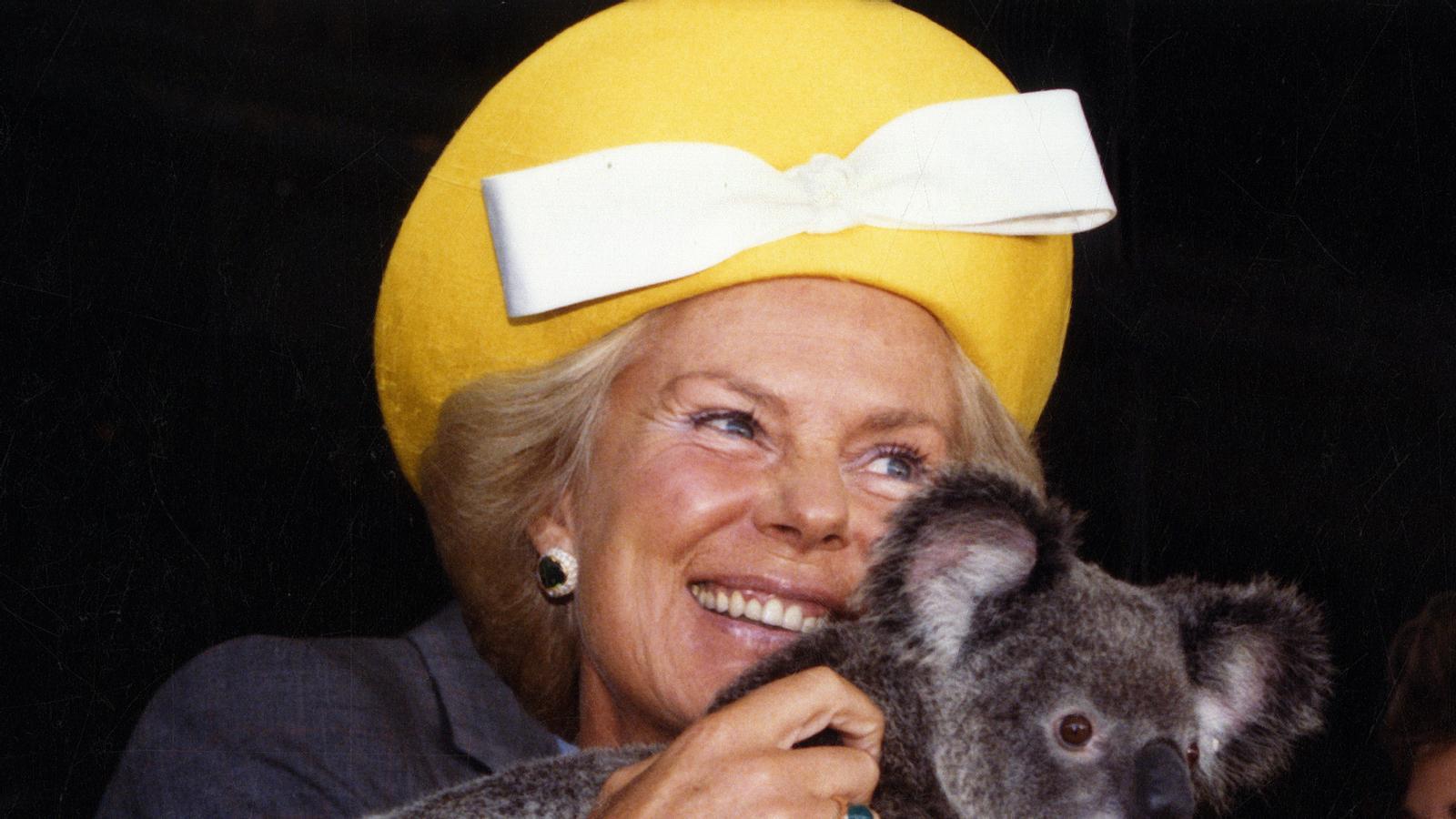

BarcelonaShe was unique in life and also after death. This would be the sentence that summarizes the figure of the Duchess of Kent, Katherine Worsley by birth, Kate to most of those who knew her throughout her long life. She was related to the most central core of the Windsor family since she married in 1961 the Duke of Kent, grandson of King George V and a prince with the consideration of royal highness who, besides being Duke, was also Earl of St Andrews and Baron Downpatrick. Her presence in this controversial and problematic family was always valued. And this, despite representing what for a large part of the aristocracy at the time was a sacrilege: a commoner in the palace!
This rare bird, despite starting from further back that the rest of his exclusive circle has won the affection of everyone, both inside and outside the family, has once again been particular in distributing his last wishes. And not because he distributed them in a very original way, but for the simple fact of having done so with light and shorthand. For the first time in generations, the will of a member of the Windsor family has become public, something that is legally established not to happen if they do not wish it. In fact, since 1910, the High Court of the United Kingdom has kept the wills of members of the royal family secret. These documents are kept out of public access for a minimum period of 90 years. So great is the secrecy that there is a position, that of president of the Family Division of the aforementioned court, dedicated to keeping about thirty royal wills in a safe.
Died in September last year at the age of 92, the Duchess of Kent has left an estate to be divided of almost two million euros. A sum that some media have dared to call small and that she has distributed among her children and grandchildren very equitably. According to the Daily Mail, the wife of Queen Elizabeth II's favorite first cousin – who is still alive – has left her husband the income from her family trust, the Worsley Settlement. However, most of her estate has been distributed among her three children: George Windsor, Earl of St. Andrews; Lady Helen Taylor and Lord Nicholas Windsor. In addition, she has left 5,000 pounds to each of her ten grandchildren. As for her personal belongings – jewelry, furniture, household items and other possessions – the recipient has also been the Duke of Kent, who, as indicated by the will, will have to distribute them in accordance with the instructions she had given during her lifetime.
A very exclusive gift
The only twist in this will is the special favor it has done to his eldest grandson, the firstborn of the firstborn. This is Edward Edmund Maximilian George Windsor, popularly known as Lord Downpatrick. To him he has left a special stake in a royal property in Edwardes Square, a family asset in Kensington, one of the most expensive neighborhoods in the world. Much less known than his sisters, something always valued by the discreet Duchess of Kent, he was the godson of Diana of Wales and shared his late grandmother's Catholic faith.
In fact, regarding her faith, Duchess Catherine of Kent was controversial throughout her life. In 1994, she converted to Catholicism for strictly spiritual reasons, as she explained. With the permission of Queen Elizabeth II, who held her in very high regard, the Duchess Consort of Kent was the first member of the Windsor family to publicly profess the Catholic faith since the 17th century. Although she argued that it had been an intimate and spiritual matter, some voices pointed out at the time that there was a disagreement with some open-minded decisions – the ordination of women as priests, for example, which occurred that same year – that the Church of England had made, of which her beloved political cousin was the supreme governor. Despite the constant stir surrounding this issue, she maintained her faith until the last of her days and was buried last year with a Catholic funeral. To symbolize the great affection the royal family had for her, King Charles III broke a 400-year-old royal tradition and presided over a Catholic funeral.
Two years after her conversion to Catholicism, the Duchess of Kent also began to withdraw from public life. Discreetly, she greatly reduced her official obligations until they were almost nil. That disappearance from official events did not, however, mean a reclusion in her home. Quite the contrary. Shortly after, she began to work discreetly as a music teacher in a public primary school in a working-class area. She did so without revealing her identity, which she was able to maintain until a local newspaper discovered her and published her story. She was there for 13 years, until she retired. Upon being discovered, she explained that she had made that change in her life in fulfillment of a personal dream and also with the permission of the queen, who very succinctly had told her "go and do it".
Music was one of her great passions, and she explained that teaching children from humble families provided her with much more satisfaction than the protocol life of the palace. This experience led her, in 2004, to found Future Talent, dedicated to helping children with musical talent but with few resources. From 2002 onwards, she stopped using the title of royal princess, to which she was fully entitled.
Two Windsor 'with heart'
When Diana of Wales entered the Windsor family and became Princess of Wales, she acquired some of the social commitments that until then had been steered by the Kents. For example, the patronage of the All England Club, which enabled her to present the trophy to the winner of the Wimbledon tournament. In fact, it was there that she had one of the most media-covered moments of her public life when she hugged Jana Novotná in 1993, who was devastated because she had lost the tournament to Steffi Graf despite having led the match. That human gesture, far beyond protocol, shaped her in the minds of the British as a more human Windsor, which in narrative terms strongly linked her to Lady Di in the future.
That transfer of the Wimbledon patronage built a magnificent relationship between these two branches of the Windsor family, which increased the social visibility of the latter and their internal power of influence. This is why Lady Di was the godmother of Katherine of Kent's eldest grandson, Lord Downpatrick, the current special heir of the late Duchess. A grandson who, incidentally, has been excluded from the line of succession to the British throne for his conversion to Catholicism at the age of 15. Perhaps his grandmother has given him this post mortem gift to distract him from his disappointment...
