These are all the ballots that you will find on 29-N
About fifty parties, coalitions, platforms and groups are opting to achieve representation in Congress
-
CAT -
CAST
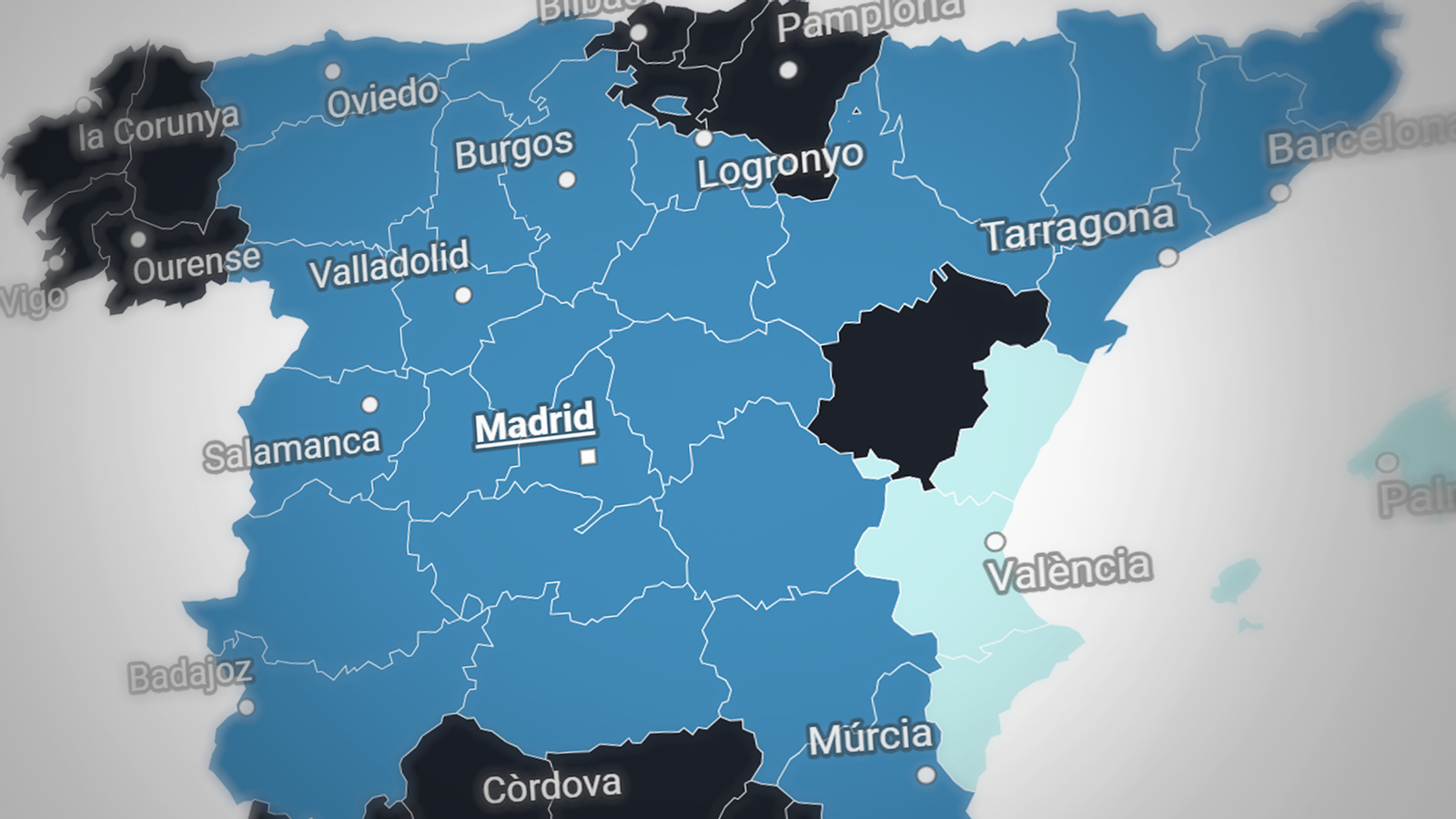
BarcelonaMore than half a hundred constituencies, dozens of parties and three maps so you don't get lost among the ballots. The Official State Gazette (BOE) published this Wednesday the candidacies for Congress for the general elections of November 29th. Although the parties, coalitions, and electoral groups can still file allegations, the electoral board already outlines the options that citizens will find at the polls in the 52 constituencies.
ARA collects in three interactive maps the candidacies of the left, the right, and the alternatives running in the elections. From the large state parties to the territorial formations and the most minority proposals, the graphics allow you to consult who is running in each province. The final lists will be published in the BOE on November 3rd. The maps include the formations that have correctly submitted the documentation to the Central Electoral Board.
The left, less fragmented
The polls remain stable and point to an absolute majority in favor of the PP and Vox. The left has tried to reduce the number of candidacies as much as possible, but, despite this, on the PSOE ballot will be added, practically everywhere, those of the Broad Front, Podemos, and that of the minority Workers' Front party. The latter is, together with the PSOE, the only party that presents lists in all Congressional constituencies without running in a coalition.
To the left of the party that presides over the Spanish government, the Broad Front, which groups together fifteen parties under the leadership of Ada Colau, is finally presenting itself in 45 constituencies under its own brand, in the Valencian Community with the brand Compromís: Valencian Front, and in the Canary Islands with Unity of the Canarian People. Podemos, which has distanced itself from the large grouping of parties, is running jointly with the Broad Front in the Canary Islands, the Valencian Community and the Balearic Islands; with ERC in the four Catalan constituencies, and separately in 42 other constituencies. Beyond the major agreements, there is also the candidacy of EH Bildu in the Basque Country and Navarre, that of the Galician Nationalist Bloc (BNG) in Galicia and that of Forward Andalusia.
Among the other left-wing candidacies that have not achieved historical parliamentary representation are For a Fairer World (PUM+J), the animalist party Pacma, the Communist Party of the Workers of Spain (PCTE) and its homologous formations in Catalonia (PCTC) and Galicia (PCTG), the platform Left for Almeria and the initiative Empty Seats, which wants to express citizen discontent by leaving the seats it may obtain empty.
The right and the return of old acquaintances
With the polls in their favor, but with an absolute majority that has been narrowing as the days go by, the PP and Vox have been announcing the heads of the lists and the members of the candidacies against the clock. This Monday, in addition, they announced an agreement in the Senate in 23 provinces. The two right-wing parties are running separately for Congress in each and every one of the 52 constituencies. The only coalition in which one of these two parties participates is that of the PP in Navarre, where it is running with the Navarrese People's Union (UPN).
On the right of the political spectrum, S'ha Acabat la Festa, the group led by MEP Alvise Pérez, has obtained the necessary endorsements to run in 46 of the 52 constituencies. The group will not run in territories with a more nationalist tradition, such as Girona, Lleida, or the Basque Country, where the results could be unfavorable for it. Next are the right-wing nationalist parties with more electoral experience, among which are the Basque Nationalist Party (PNV), which is running in the Basque Country and Navarre –in the latter case, with Geroa Bai–, and Junts. The other two right-wing groups with current or past institutional representation are Coalición Canaria and Democracia 21, which is running with Ciutadans, the orange party that collapsed electorally in 2023.
Beyond the groups with institutional representation, also running are the Falange Española de las JONS, an openly fascist party, and Iustitia Europa, a civil society initiative that has recently gained notoriety for exercising private prosecution in several judicial cases opened against the Spanish government.
Around thirty alternative candidacies
Beyond traditional ideological blocs, the electoral map also includes alternative candidacies and territorial platforms seeking to secure a place in Congress. Among these stands out Alhora, the party promoted by Clara Ponsatí and Jordi Graupera, which is running in the four Catalan constituencies. There is also the Humanist Party, which is running in Madrid after rejecting the Front Ampli's invitation to join its joint candidacy.
The rest of the candidacies respond to territorial realities and diverse demands. In Castile and León there is Soria ¡Ya!, the Regionalist Party of the Leonese Country and the Nationalist Party of Castile and León - Citizens' Reformist Union. In Aragon, the Federation of Independents of Aragon is running in Zaragoza and Huesca, while in Extremadura New Extremadurism - Forward Extremadura and Together for Extremadura are doing so. In the Canary Islands, Drago Canarias and Canarian Liberation compete to represent the archipelago. There are also local candidacies, such as Malagueña Alternative, Carthaginian Union and United Valencia, as well as sectoral proposals such as Third Age in Action, Autonomous Party and Feminists to Congress.

