The Ceuta crisis gives wings to Catalan and Basque independence movements with immigration powers
Bildu and the PNV join Junts and transfer the demand directly to Pedro Sánchez

-
CAT -
CAST
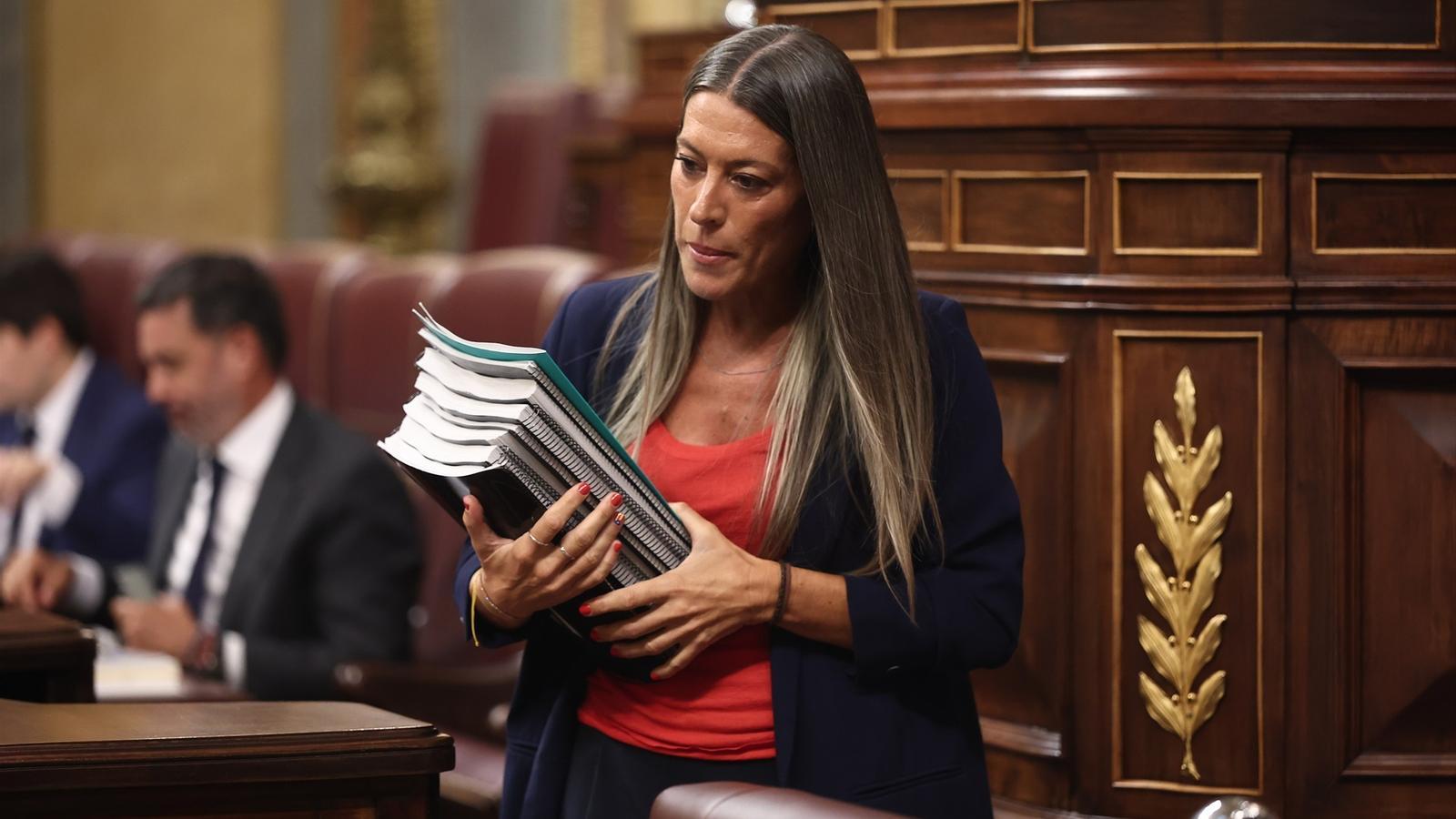
MadridOne of the secondary protagonists of Pedro Sánchez's appearance at the Congress of Deputies to give explanations for the management of the Ceuta crisis has been the repeated demand by Junts, Bildu and the PNV for the Spanish government to transfer immigration powers to Catalonia and the Basque Country. ERC has not made any reference to it, but also supports it. The one who opened the door was Miriam Nogueras: “We want them so that Catalonia stops paying for the bad decisions of Spanish governments and starts doing the work that clearly has not been done,” she proclaimed during her speech. It was Junts who, in January 2024, placed this demand on the political agenda after wresting the commitment from the PSOE in exchange for the first three decrees of the legislature. It took a year to materialize in black and white, but the Podem veto has prevented it from prospering.
Miriam Nogueras has argued that Junts wants the powers to “do exactly” what the rest of the countries in the European Union are doing: “Control how many people enter and through what channels they do so, guarantee integration, language, work, values and Catalan identity, and execute expulsion orders quickly,” she said. A week ago Junts re-registered the bill winking at Podem by changing the preamble that the left considered “racist” so that they would have “no excuse” to vote against it. However, Podem closed the door again, alleging that it maintains a “migration control approach based on security.” Although only the preamble has been modified, with an explanation regarding the delegation of powers to the autonomous regions, Pedro Sánchez considers that the new text “exceeds some of the elements” that the PSOE and Junts agreed upon. Mind you, he has announced that the Socialists will vote in favor of it in the first parliamentary examination.

After Nogueras' intervention, the spokespersons for the two Basque parties voiced the same demand. However, they are a few steps behind because they have not yet reached any agreement with the Moncloa. The leader of Bildu in Madrid, Mertxe Aizpurua, has demanded the “capacity” and the “necessary tools” to be able to carry out an “integral management” of immigration that is not just following the policies “decided by the Spanish government of the day” and that allows them to apply a “Basque model based on human rights, dignity, reception, and integration”. “We Basques will be able to do it much better,” she claimed.
The PNV, for its part, has stated that it wants the Basque Country to be an “active political actor with decision-making power” and not a “mere passive actor” after the crisis in Ceuta has “irretrievably changed” the “perception” of migration: “We want to participate effectively in the definition of the migration policy that affects Basques and that has consequences for our people,” said Maribel Vaquero, the Jeltzale spokesperson in the lower house.

A demand that comes from afar
The demands of the Basque independence movement are not new. In fact, both parties included them in their electoral programs for the July 23, 2023 elections. So much so that a few days after the agreement between the PSOE and Junts, the PNV warned that the Basque Country would follow: “It wouldn't be bad if, for once, instead of the PNV being the one to open the breaches in Madrid's containment wall and the Catalans taking the things we have achieved, it were the other way around,” said Aitor Esteban in January 2024. Two years ago, the leader of Bildu, Arnaldo Otegi, also said that it was necessary to “recover” these powers: “We are part of a nation that has its national identity at risk.”
ERC does not mention it, but it is also in favor of it
For his part, the ERC spokesperson in Congress, Gabriel Rufián, did not make any mention or allusion to immigration powers. Despite this, the republicans are in favor of it: they supported it in September 2025 in Congress and also incorporated it into the 2024 Parliament election program. “It must allow us to create better public policies to guarantee social cohesion, human rights, and the national construction of the country,” the document argued. Now, sources from the parliamentary group insist to this newspaper: “We will always be in favor of having all powers.”
