Despite not being named in ecclesiastical circles, other Catalan-speaking active bishops should be kept in mind for potential surprises. These include the Bishop of Seville, Josep Àngel Sáiz, former Bishop of Terrassa, who is 70 years old and would be seen internally as an incomprehensible and highly unlikely move – although the cleric born in Cuenca favors more Hispanist sectors. Then there's the Bishop of Rabat, Cristóbal López, an Andalusian trained in Catalonia and very progressive, but who only has twelve months left before turning 75 and having to submit his resignation. Also, the Bishop of Ibiza, Vicent Ribas, who is currently serving in his diocese, as is the Bishop of Menorca, Gerard Vilallonga, both very established. Finally, the Bishop of Santander, the Valencian Arturo Pablo Ros, who was auxiliary bishop of Valencia. All these would be strange moves.
The Catalan Church opens Pandora's box: who will succeed Omella?
Valencia and Aragon are two key quarries to replace Omella as the Barcelona archbishop, but there are other routes such as Tortosa

-
CAT -
CAST
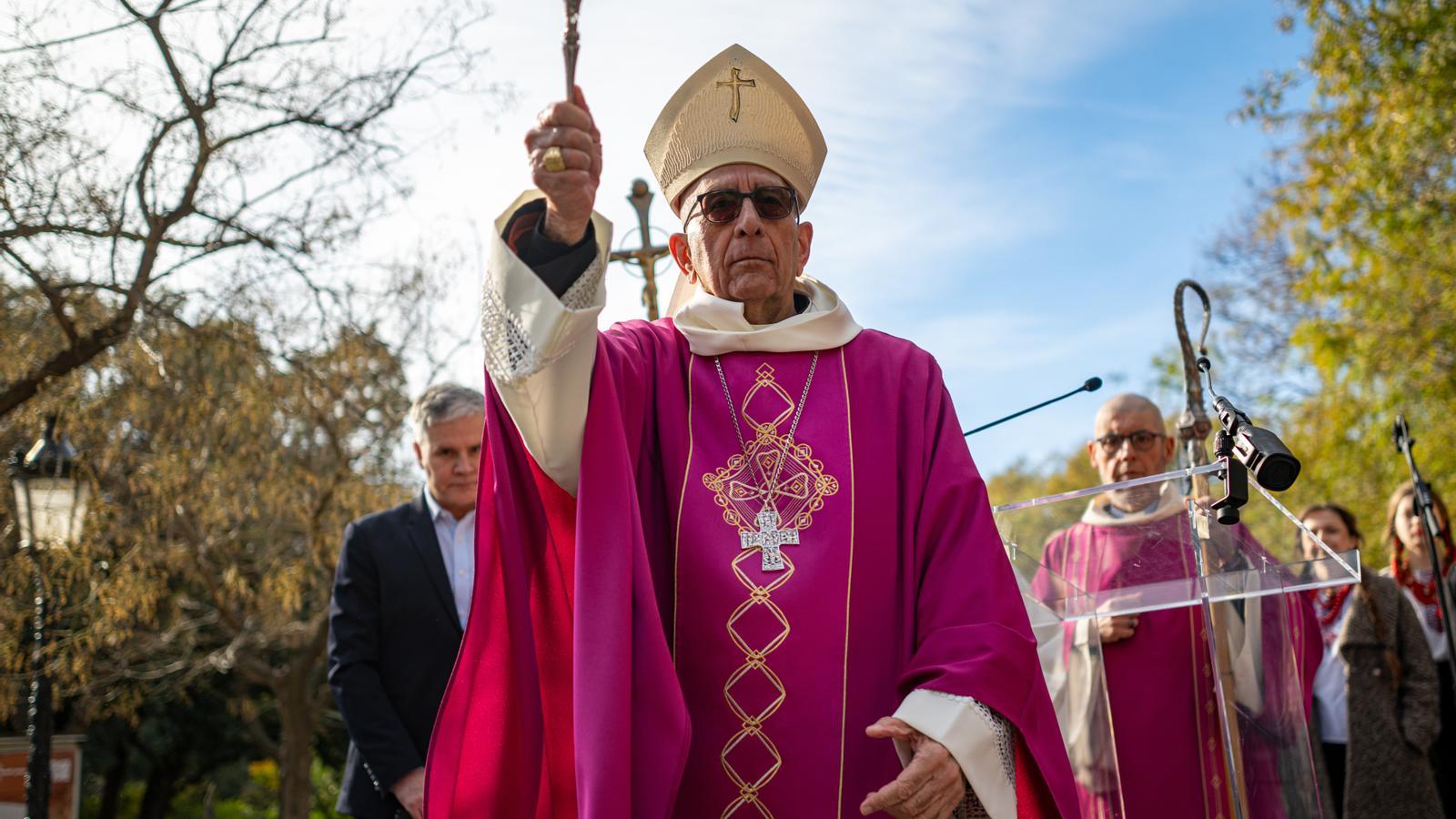
BarcelonaThe visit of Pope Leo XIV to Catalonia is the prelude to the changes of bishops in the Principality. Barcelona is the most important, but Tarrasa also needs to be renewed and, in the rest of the Catalan Countries, Mallorca. Juan José Omella, from Aragon in the Franja, landed in November 2015 at the archbishopric of Barcelona with the mitre he had from Calahorra. At 80 years old, five years past the normal age for the position, he will cease to be archbishop and the succession will be finalized this summer, after the pontiff's visit. Here comes Operation Barcelona: who are the best-positioned names? What role will Omella and the Pope play?
Omella will have a decisive weight. He is part of the Congregation for Bishops, which selects the names before papal approval, although the nuncio, Piero Pioppo, is also fundamental in the consultation process. But Leo XIV will be key: "It is a very important appointment, the final word will rest with the Holy Father," multiple church voices emphasize to ARA. Omella has aligned himself with Pope Francis's reformism, but it has not taken hold in a part of the Church with a more Catalanist tendency – due to the lack of a Catalan national vision and his use of Spanish in prominent speeches, alternating with Catalan.
How should Omella's succession be? "A person committed to synodality, socially sensitive, with flexibility and adaptability to be a point of communion," summarize some sources. In fact, there could be a similar operation to the one Omella initiated. However, if it materializes, there is a unanimous consensus that the new figure must "speak Catalan." Catalanism, moreover, also asks that he be from the country. The best-positioned names respond to the Valencian, Aragonese, or Catalan route. The premise of "we want Catalan bishops" has not been imposed lately and the Valencians "have had a lot of presence in Catalonia because they know they will not subscribe to independentist or nationalist theses," point out various sources. Of the last four bishops of Barcelona, one is Valencian, one is Aragonese, and two are Catalan.
Solsona and Tortosa
the vitriol of the Spanish far-right over the small steps to normalize Catalan in masses, although it is still residual. In the consultation process about the future bishop, bishops and some prominent priests and laypeople are asked for their opinion through a shortlist of three names for a bishopric or are asked in abstract about the qualities that would fit in a diocese.
Other names from Aragon and Valencia
A name that has also been strongly mentioned and would be very similar to Omella is the Aragonese Florencio Roselló, archbishop of Pamplona. He is not from La Franja, but he masters Catalan due to his training and residence in Catalonia for several years. He has only been bishop of Pamplona for two years, where he has shown sensitivity to Basque. Despite his social commitment, the lack of roots in Catalonia raises doubts.
Enric Benavent, archbishop of Valencia, has also been mentioned in ecclesiastical circles for almost a year. A Valencian with a very Catalanist youth trajectory, he has had problems in his episcopate due to the savagery of the Spanish far-right for the small steps to normalize Catalan in masses, although it is still residual. He played it safe with the Valencian government following the dana. A conciliator, he has only been in his episcopate for four years, after having been bishop of Tortosa.
From Planellas's factor to surprise
Several church voices warn that names have been published about possible replacements for Omella "to burn them" with negative campaigns, as is now happening against the Archbishop of Tarragona, Joan Planellas. The integralist blog Germinans Germinabit has fueled it, since Planellas is the voice of Catalanist Church and firm against the far-right. His move would be surprising, but not impossible: in 2004, the Catalanist Lluís Martínez Sistach already arrived in Barcelona from Tarragona.
On the other hand, the auxiliary bishops of Barcelona, David Abadías and Javier Vilanova, have names. Especially Abadías, who is a doctor and his intellect stands out. It is unusual to go from auxiliary to diocesan bishop, but it already happened with Daniel Cobo in Madrid. In any case, one of the auxiliaries points more towards Terrassa.
And one must be careful with the "surprise factor", according to sources, which was already seen with recent appointments such as Octavi Vilà in Girona, who was abbot of Poblet. In this regard, some mention the abbot of Montserrat, Manel Gasch. At the same time, the high regard for mossèn Jordi Bertomeu in the fight against pedophilia has made him the most beloved Catalan in the Vatican, and some think of him, but it would be an unexpected turn. The man from Tortosa is in Peru acting against the Sodalicio.
