Catalonia, the far-right's Port Aventura
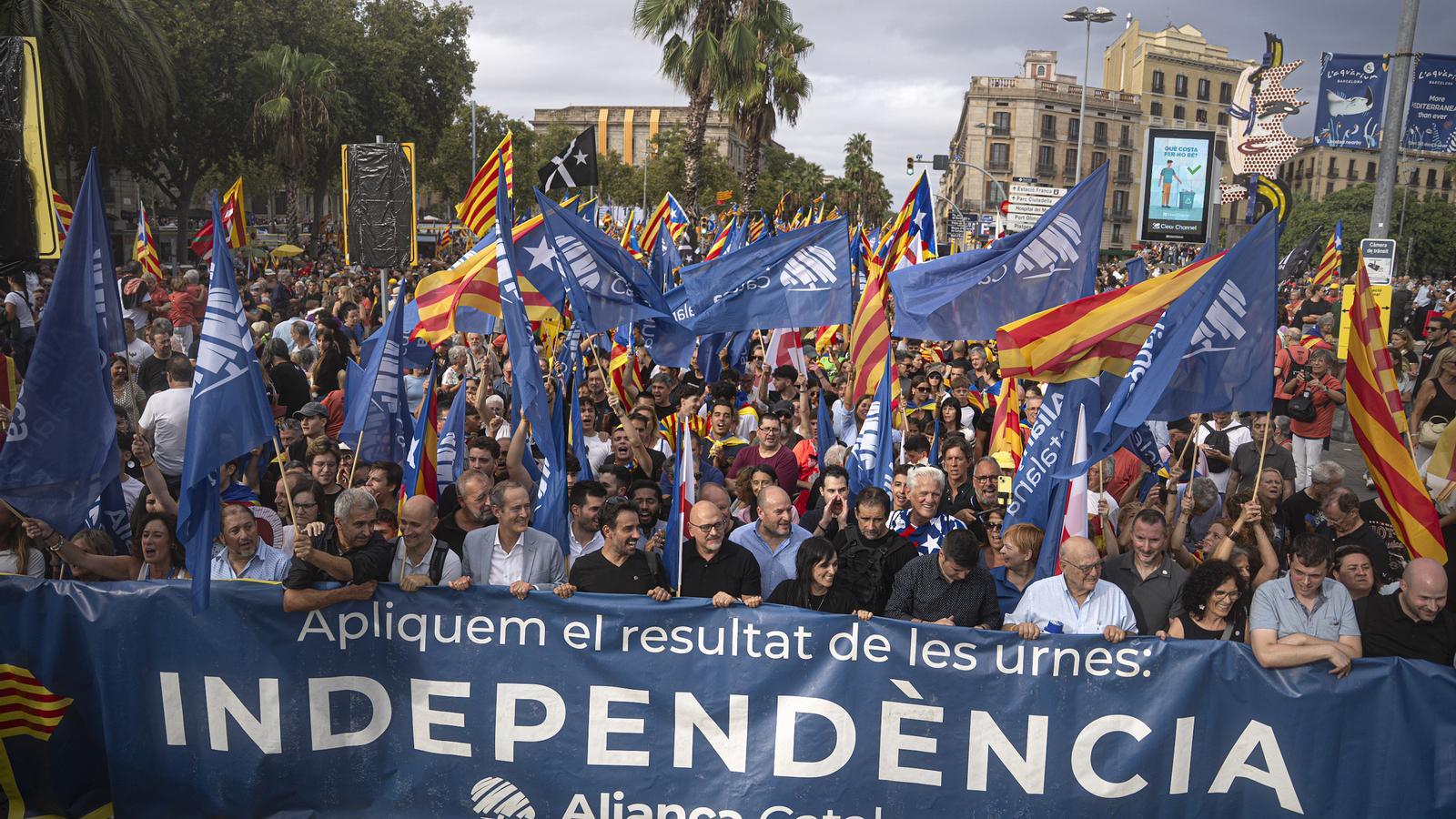

BarcelonaCatalonia concentrates such a diversity and complexity that it is a kind of Port Aventura of politics, where you have everything multiplied by two and sometimes apparently contradictory processes intertwine.
It happened in the 2012-2017 period, when the independence process, with leaders like Carles Puigdemont and Oriol Junqueras and entities like the ANC, coincided in time with the movement that stemmed from 15-M and had Ada Colau and the PAH as its main exponent. They were two processes that intertwined, sometimes clashed and sometimes cooperated, and which, depending on the specific moment, managed to prevail over the other.
Now there is also a double process that makes Catalonia a unique place in Europe, as nowhere else are the two major currents of the global far-right in competition as they are here. On the one hand, we have Vox, of Spanish national affiliation, which would represent the traditionalist and Catholic current (with touches of Joseantonian Falangism). And, on the other, Aliança Catalana, of Catalan identity, but secular and focused on the anti-immigration discourse (but with touches of Jaume Balmes and Daniel Cardona).
The ARA survey from two weeks ago shows the differences within the electorate. To begin with, Vox voters have no problem being labeled as far-right (52% accept it), while Aliança Catalana voters do not consider themselves as such (only 24% do). Vox voters are also the most clearly favorable to Donald Trump (47% have a good or very good opinion), while Aliança Catalana voters reject him (only 14% rate him positively).
On the other hand, when asked about immigration, Orriols voters are more radical than Vox voters, perhaps because they do not have sectors aligned with the pro-regularization theses of the ecclesiastical hierarchy. 92% of Aliança Catalana voters want more restrictive policies, a percentage that drops to 77% in the case of Vox. These are two models that maximize the far-right vote to the point of turning Catalonia into one of their strongholds, as together they approach 25% of the votes. Therefore, if someone wants to study the far-right in Europe today, they should come to Catalonia. To Port Aventura.
The details

There is no electoral campaign without some comical or compromising moment for Alberto Núñez Feijóo. Andalusia seemed like it was going to be the exception, but at his last rally in Almería, on Friday night, he wanted to jump to get on the stage but slipped and almost lost his balance. The image went viral almost immediately.
Junts is experiencing a turbulent situation in Barcelona after Jordi Martí Galbis announced he is running to lead the list in the next municipal elections. Martí Galbis initially received support on X from the mayor of Cabrera de Mar, Òscar Fernández, but mysteriously the tweet was deleted shortly after. Some sources suggest that Fernández did not delete it motu proprio.
