Salvador Illa has a problem

-
CAT -
CAST
BarcelonaBetween 1984 and 2024, invariably, the independence movement (or, rather, the sovereignty movement) always held a majority in the Parliament of Catalonia. But the end of the 'Procés' sank the electoral prospects of the parties that had driven it and cleared the way for Salvador Illa to enter the Palau de la Generalitat. The third socialist president also arrived with all the cards to break the curse of one-term presidents and, with practically no opposition, it was expected that he could consolidate his leadership.
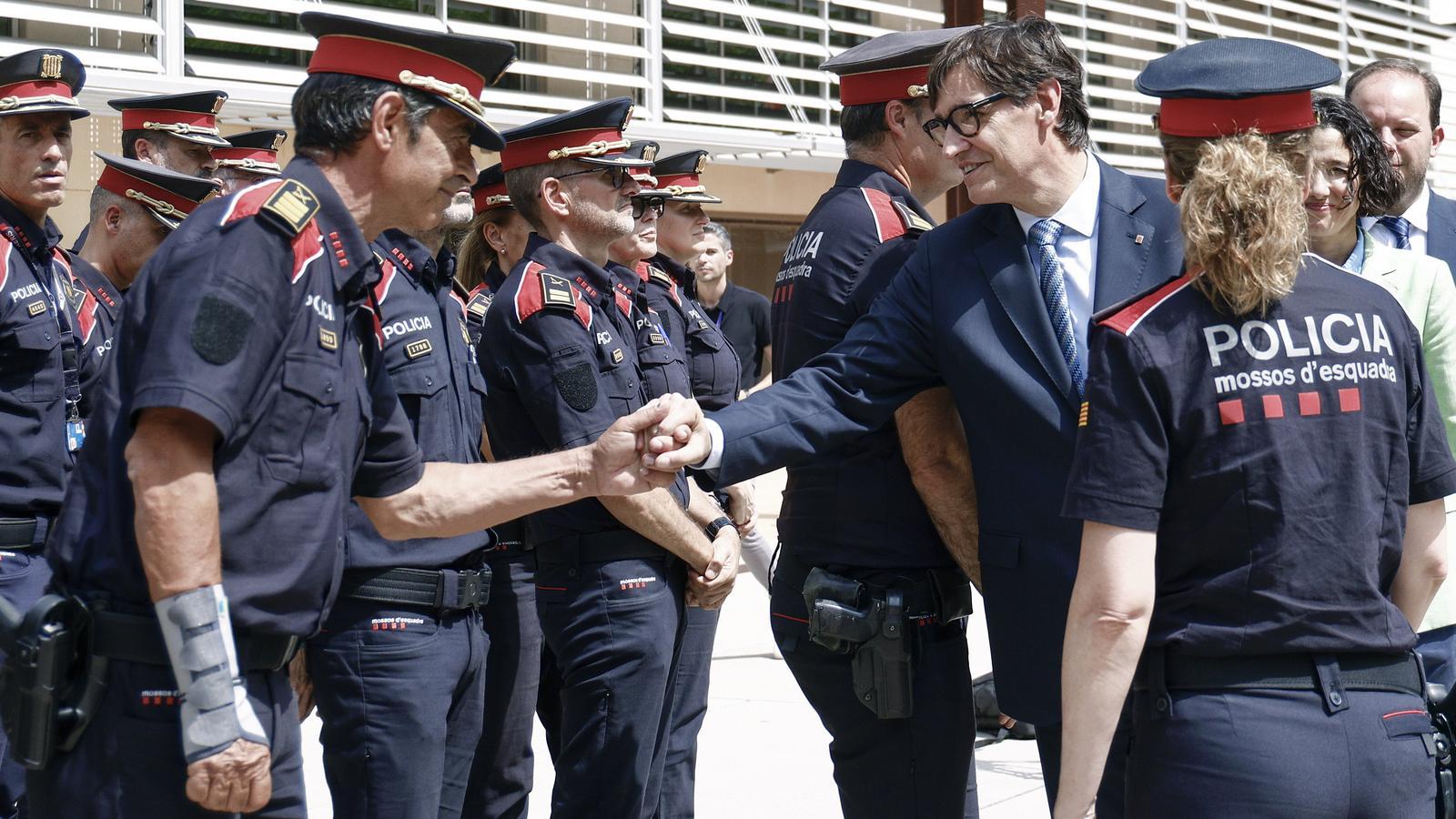
But the polls are punishing the socialists, who do not stop accumulating political crises (and some relevant success, such as the approval of the budget). The most recent one, the PISA report one, and the most resounding was the one regarding the Rodalies rail network in January –which is by no means resolved–, but teachers and doctors continue to remind the Government that they will not make it easy for them. Now, in addition, resignations and dismissals are arriving in the executive branch. In this chapter, none is as symbolic as that of Major Josep Lluís Trapero, the great signing to reinforce the security portfolio.
One of the great electoral promises of the then PSC candidate was precisely to turn around the citizens' concern about insecurity. Trapero, the only officer with the highest rank in the Mossos and a hero in the pursuit of the Rambla terrorists, turned to politics to imbue it with "professionalism," as Illa expressed when he announced his signing. Multi-recidivism became the top priority and, during these two years, the results are reasonably good: more agents, faster trials, and more sentences. The total number of crimes is also falling, but robberies with force in Barcelona are rising and attempted homicides continue to spread like a plague over the last decade.

Illa knows that data helps or hinders depending on the perspective that interprets it. And, regarding security, perception counts as much or more than the results: the recent fatal stabbing in Manresa has sounded the alarms again, at a time when bladed weapons and firearms are increasingly common among criminals. In politics, perception is also a determining factor. What is happening to Salvador Illa's government? In a few weeks, a minister, three secretaries-general, and the police chief have resigned.
The leader of the opposition
The president has a problem. And he must take the bull by the horns. This very Monday he is appearing to explain himself, coinciding with the midpoint of the mandate. Emulating Pedro Sánchez, some time ago he set himself up as the dam against the far right and, faced with Junts' failure to appear, he de facto turned Sílvia Orriols into the head of the opposition. Now, Aliança Catalana threatens to become the first or second force in Parliament. The message of this Diada has been to reclaim Catalonia, one single people and, shortly, the PSC could lose its great partner in Moncloa and have to switch to a resistance plan against a government with PP and Vox. Strengthening his leadership and bringing together a Catalan response could be the way to return to the 2024 outlook.
The details of the week

On Thursday, the Government commemorated the first Catalanist demonstration of the Transition in Sant Boi de Llobregat. Numerous authorities and former political leaders attended, but the presence of former minister and former MEP Ramon Tremosa, who is a tenor in the Coral Sant Jordi and sang El Cant de la Senyera, Els Segadors and L’Empordà.
One of the most popular images from the movie Love Actually comes towards the end, when one of the protagonists confesses his love to his best friend's partner. He does it in silence: he shows her one sheet after another so she can read it. Santiago Abascal has resorted to the same simile this week, but to tell Pedro Sánchez that he considers him a traitor.
