Catalonia was warned seven times to correct the error in the PISA tests
Niubó replaces his number two and opens a disciplinary file on a senior official and two civil servants

-
CAT -
CAST
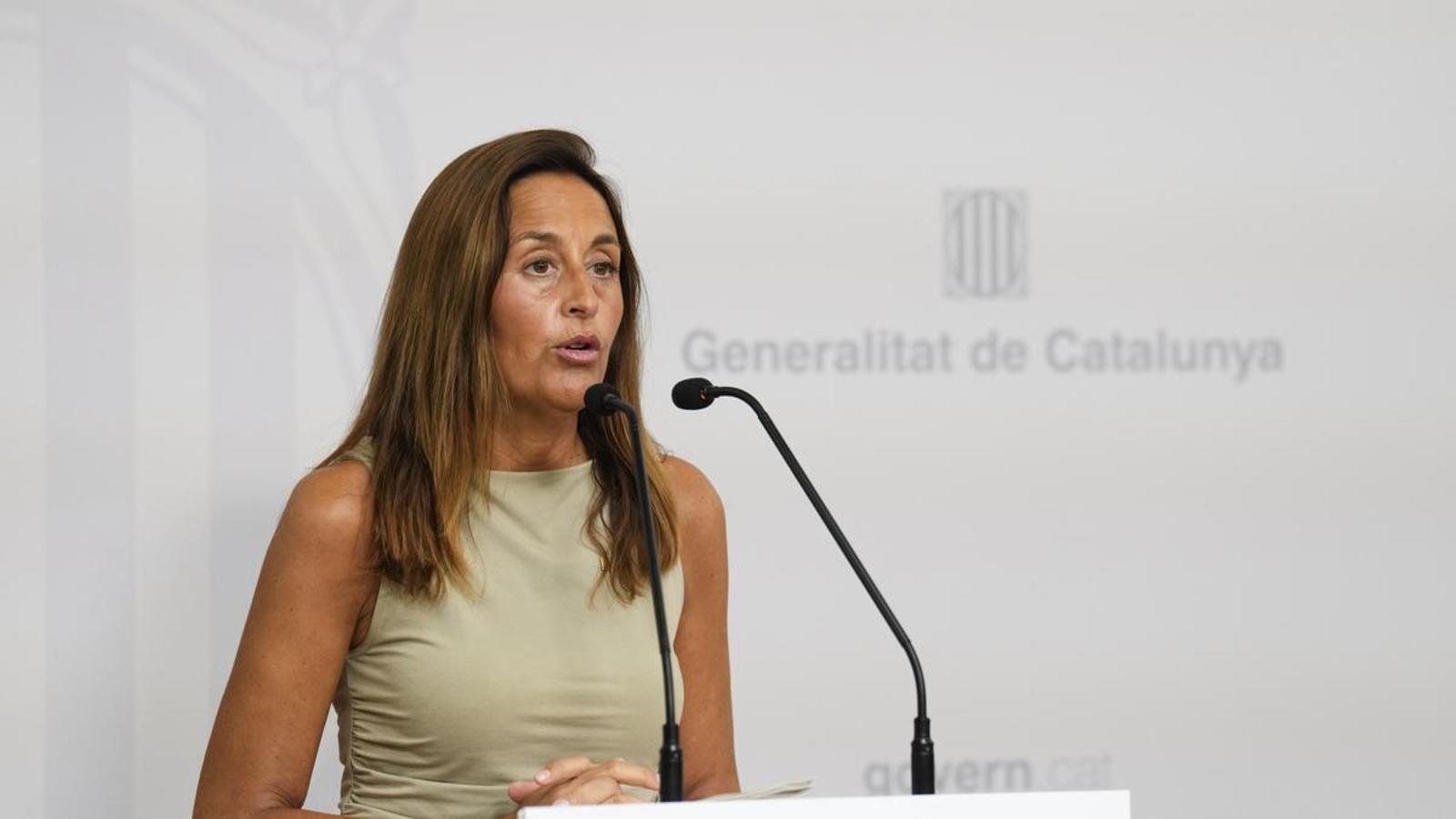
BarcelonaUp to seven times the National Institute for Educational Evaluation (INEE) warned that Catalonia had made errors in the student sample in the PISA tests. This is one of the main conclusions of the preliminary proceedings that the Department of Education has opened following the fiasco that has left Catalan results out of the OECD comparisons: 23% of students were discarded from the sample, when the OECD states that the maximum number of exempt students cannot exceed 5%. The minister Esther Niubó presented the conclusions of the investigation this Monday, which also points to deficiencies in the communication of criteria to the schools, and announced the replacement of the Secretary General of Education. The department has three disciplinary proceedings open.
According to Niubó, these warnings were sent to the Superior Council for the Evaluation of the Catalan Education System – the body responsible at the time for coordinating the tests, which no longer exists – in April 2025, when Catalonia could still have corrected the situation to avoid exclusion. A priori, the Council informed the INEE that it was forwarding this information to the schools to rectify the situation, but the preliminary investigation has found no evidence that this was actually done.
At the press conference, the minister reiterated several times that, if these warnings had been heeded, there would still have been time to resolve the percentage of excluded students or to attempt some form of test recovery the following month. In fact, Niubó also detailed that the errors had already arisen before. The preliminary proceedings concluded that when the meeting was held with the 50 schools chosen to take the PISA tests, it was not explicitly explained that the maximum number of students who could be excluded could not exceed 5%. The department described that "the information provided was correct, but incomplete" and said that these instructions depended on the INEE and the company managing the OECD tests.
Responsibilities and disciplinary proceedings
Niubó has described the PISA fiasco as "very serious", admitted that the department must take responsibility and announced a change at the top of Education, specifically her number 2. The minister is thus replacing the person who had been general secretary of the department since the beginning of the legislature, Teresa Sambola, and on Tuesday she will announce the name of her replacement.
Furthermore, following the proceedings, three disciplinary proceedings will also be initiated for the error in the OECD tests. One of the proceedings is opened against a senior official in the Department of Education for a minor offense of "omissions that constitute carelessness or negligence in fulfilling established obligations". The other two are opened for serious offenses against two officials from the now defunct Higher Council for Evaluation of Catalonia "for an alleged breach of their obligations and duties as public officials". None of these three professionals are still active and the Government has avoided giving their names, but, as ARA has been able to learn, one is a technical secretary who, after the upheaval, returned to the classrooms as a teacher in March. On the other hand, one of the officials facing proceedings has been on leave since the beginning of the year.
It could have been avoided
Beyond the initial people responsible for the blunder in the OECD test sample, what Niubó has made clear is that there were several occasions when the error could have been corrected. After it was not made clear to the schools at the informational meeting that the maximum student exemption was 5%, the counselor detailed that "the turning point was April 9, 2025". Once the tests began, the INEE communicated to the Council that the percentage of exempted students was higher than permitted and, in Niubó's words, "expressly requested that schools be reminded" that only students for whom it was "totally impossible" to understand or take the tests should be excluded. It has not been proven that this information reached the schools. "This is relevant because it means there would still have been room to act," the counselor insisted.
Niubó continued explaining that, in the following days, the INEE continued to send warnings and technical reports "before the application period ended". "Therefore, there was the possibility of adopting corrective measures, reinforcing the monitoring of schools that had not yet taken the tests," she repeated. "Could it have been corrected at that time? Undoubtedly," she assured.
However, while reiterating that some action could have been taken before the tests ended to avoid the fiasco, Niubó also insisted that she did not become aware of the problem until March of this year. "I want to make it very clear that I was never informed nor did any problematic information regarding these exceptions for students in the PISA 2025 tests reach my desk," she stated.
Once the period for taking the tests closed, the INEE sent one last technical report to the Council on May 30, 2025, and, as Niubó described, "after this, communications on this matter were interrupted, at least no record exists". It was not until February of this year, 2026, that the current director of the Agency for Evaluation and Prospecting of Education – the body that replaces the former Council –, Núria Planas, was "verbally informed of a technical incident in the application of the previous academic year's tests". In this way, it was Planas who raised the alarm and informed the Secretary of Educational Improvement. This is how the chain began that led to the opening of proceedings.
"It is in June of this year that the INEE duly informs the Agency of the microdata proving that only 5 out of 51 centers complied with the student exemption rate recommended by the OECD," explained the counselor.
Meetings with unions before the strike
Regarding the start-of-term strike, Niubó admitted it will not be the start they would have "wanted". "There is a strike call on the first day, despite the agreements reached last year," lamented the minister, who once again asked for responsibility from teachers so that students are not "the ones who pay the price". Niubó did say, however, that this week they will meet with all the unions on the sectoral table, as well as "separately" with the two unions calling the strike: USTEC –the majority– and CGT (La Intersindical also calls it, but is not part of the table). All this to "try" to reach an agreement so that the stoppage on September 8 is called off. In parallel, the head of Education will also meet this week with school principals and families.
USTEC has criticized that the dismissal of the Secretary General of Education is not enough and has accused the Government of "hiding" the "mess" while "promoting the OECD". Furthermore, they have demanded "all the information, an independent audit, and the assumption of political responsibilities". On the other hand, they have criticized that the measures announced for the start of the school year are “only a part” of the commitments made between unions and Education and have insisted to Niubó that she "reopen negotiations" if she wants to avoid the strike on the first day of school.

