Near 5,000 procedures at the citizen attention offices of the rural world
The Virtual Office and mobile OACs, in operation for less than a year, add up to 3,588 video atendances and 1,181 on-site attendances in 200 towns
-
CAT -
CAST
BarcelonaMaking a procedure with the Generalitat no longer necessarily means queuing at an office or traveling to Barcelona. In less than a year of operation, the two new citizen service channels promoted by the Government – the Virtual Office, by video call, and the mobile Citizen Service Offices (OAC), which travel to the smallest municipalities in equipped vans – have allowed nearly 5,000 procedures to be completed, according to data from the Department of the Presidency.
The video assistance service, operational since last October, has handled 3,588 cases by video call. Which ones? The procedures have ranged from registration in the stable partnership registry – the most requested procedure, with 2,003 applications – to the recognition of the degree of disability or dependency status. The service, accessible from the portal gencat.cat, has 180 appointments per week. In the coming months, the Generalitat plans to incorporate the option of simultaneous translation for deaf people and also the possibility of requesting a sign language interpreter. The simultaneous translation tool will also be extended to Arabic and Urdu.
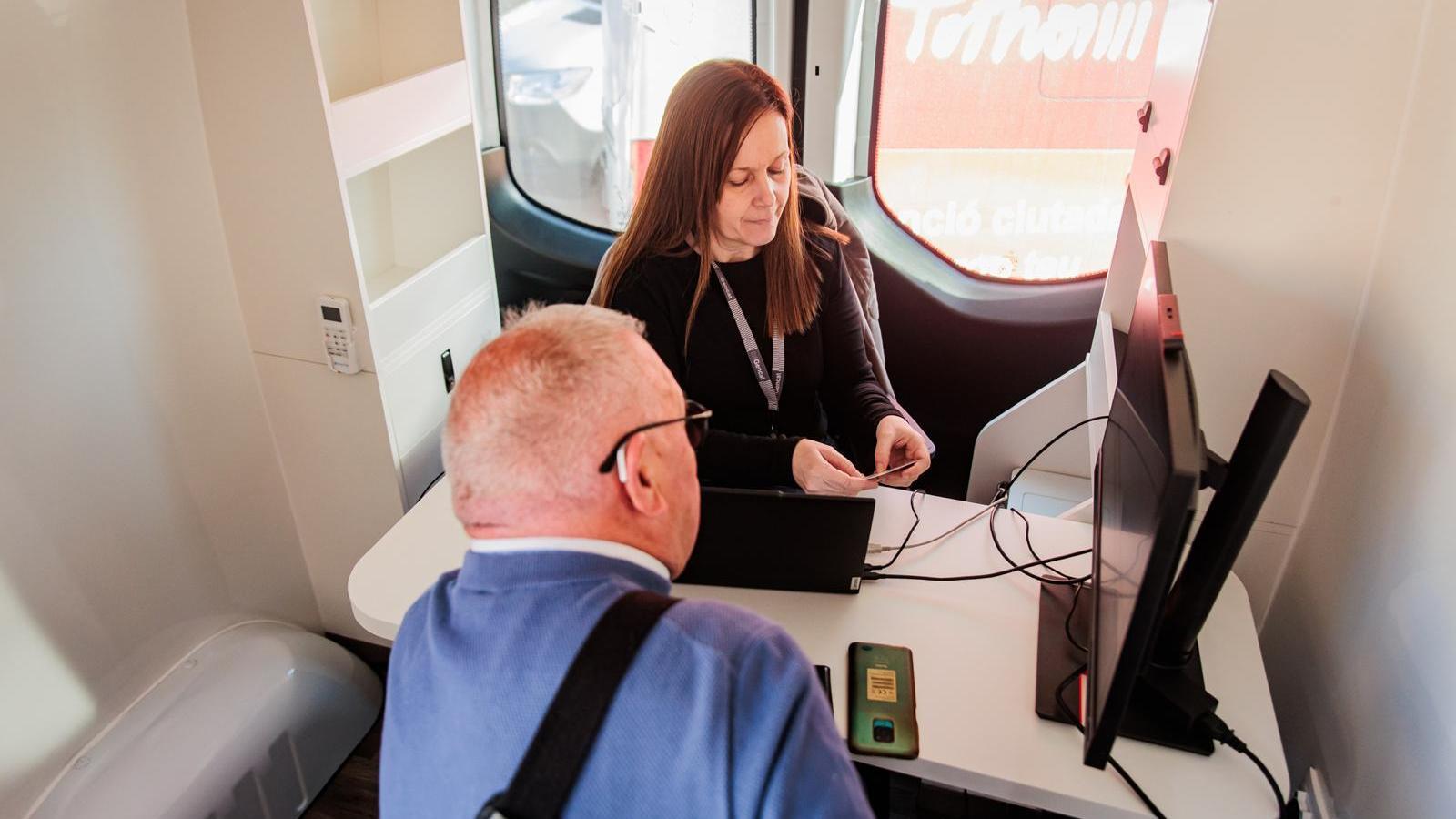
In parallel, five vans have been traveling since April to over 200 rural municipalities. They are distributed in five territorial routes – center, northeast, northwest, southeast, and southwest – to bring procedures such as idCAT Mòbil or dependency recognition to the main town square. The service has accumulated 1,181 attendances, with the southwest route being the most active (382), followed by the northeast (319), the southeast (186), the center (166), and the northwest (128). 98% of users declare themselves satisfied or very satisfied with the assistance received.
The Minister of the Presidency, Albert Dalmau, argues that the objective is to "prevent bureaucracy or the digital sphere itself from contributing to generating a distance between citizens and their institutions." The minister argues that citizens should not always have to travel to Barcelona to carry out a procedure, which is why the Government combines the opening of face-to-face offices in all the vegueries – soon in Sabadell and El Penedès – with mobile and digital assistance. Dalmau assures that, for the moment, the priority is to consolidate the current five routes before expanding them, depending on the demand detected in each municipality: there are localities with waiting lists and others where it is necessary to "stimulate demand." The pending challenge is to match, in both channels, the range of procedures that are already offered at a face-to-face OAC.
