Half a million foreigners can vote but they don't know it
Bureaucracy prevents them in practice
-
CAT -
CAST
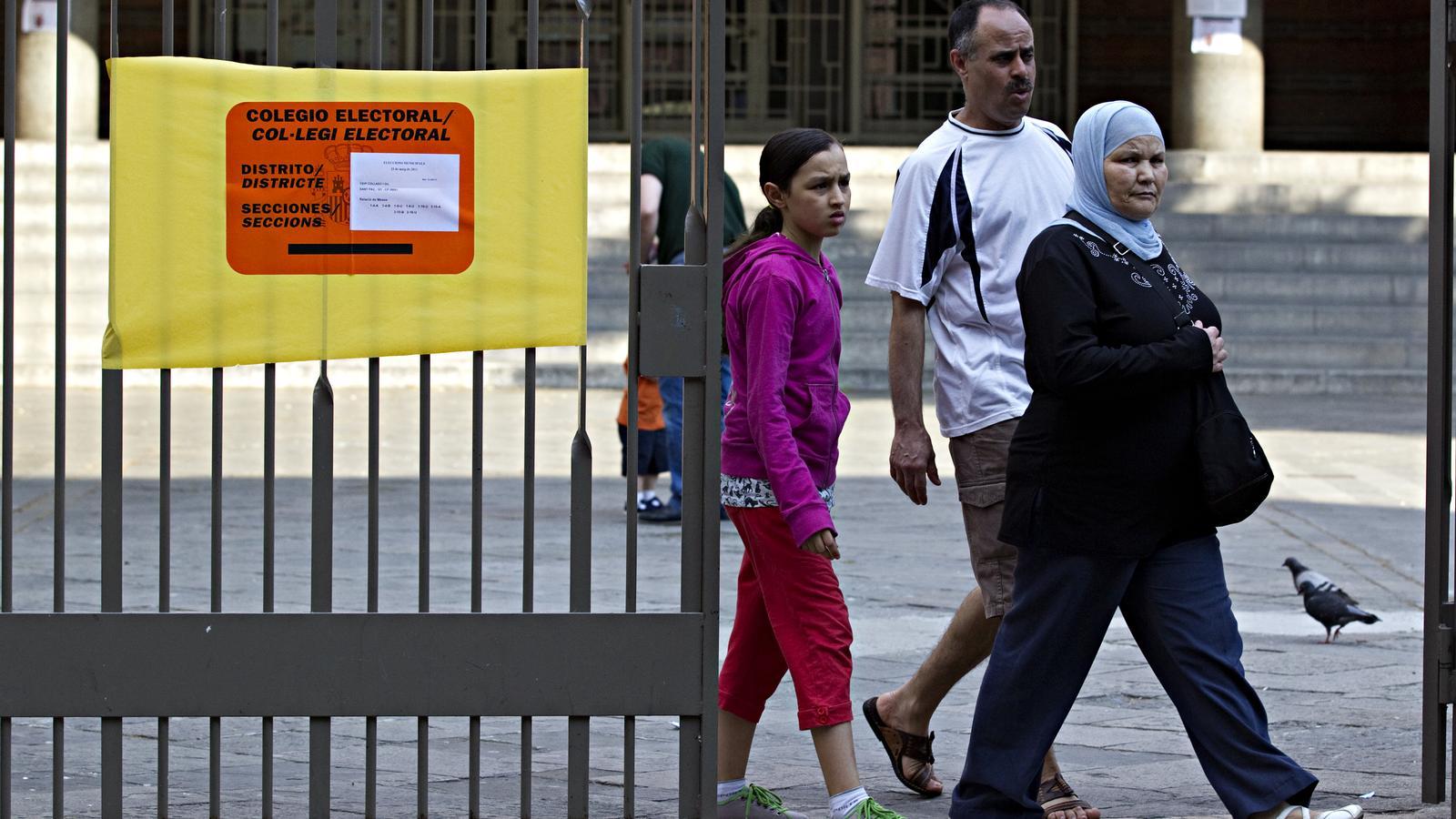
BarcelonaIn Catalonia, there are 508,000 people who, by law, have the exact same right as any neighbor to vote in municipal elections, but who next year will not be able to do so. The reason is not political but bureaucratic. This is how CIEMEN has explained it in a new report, The voting right of immigrants in Catalonia, coordinated by Gemma Pinyol-Jiménez with the Centre for Demographic Studies and the support of the Directorate General for Migration and Refugees, based on data from the Annual Population Census of 2025. These are 275,249 people with European nationality and 233,163 from countries with a reciprocity agreement with the Spanish state (the majority Latin Americans, such as Colombia and Peru).
The legal framework already allows them to vote: the Constitution reserves the foreign vote for community members and citizens from thirteen countries with a reciprocity agreement, signed mostly during the 2000s. But exercising this right requires prior registration in the electoral roll of foreigners, and here lies the real obstacle. Unlike the community register, which is permanent, that of countries with an agreement is deleted and must be redone for each electoral call: it is not enough to register once.
The calendar does not help either: registration must be done months before knowing which candidates will run and when the elections will exactly be, "at a time when nobody is talking" about the electoral process, explained Gemma Pinyol. When the campaign starts and people begin to pay attention, the registration deadline has already passed. Furthermore, there is widespread ignorance: many people with the right to vote are not aware of it, because there is no mechanism that actively communicates it to them when they register or carry out other municipal procedures.
Who are they and where are they?
By absolute volume, Barcelona concentrates the bulk of potential foreign voters: 180,263 people, 13.9% of its census. It is followed by l'Hospitalet de Llobregat, Sabadell, Tarragona, and Badalona. But the map changes when you look at the percentage: the weight is more decisive in small municipalities with very marked economic profiles. In Guissona (31.6%), due to the agri-food industry and the weight of the Romanian population; in Castelló d'Empúries (28%), with a tourist and French profile; or in Alcarràs (24.6%), linked to intensive agriculture. Each municipality, the report notes, has a different migratory profile and therefore would require different intervention strategies.
There are also municipalities where a good part of the adult foreign population has no legal possibility to vote, simply because they come from countries without a reciprocity agreement. One example is Salt, with 34.7% of the adult population – especially of Sub-Saharan and Moroccan origin. To change this, new bilateral agreements would need to be signed – a political route – or, as CIEMEN already proposed in 2024, replace the reciprocity criterion with that of residency, which would require a constitutional reform.
Proposals, without touching the law
For those who already have the recognized right, the report proposes measures applicable under current legislation, without waiting for any reform: automatic registration linked to the municipal register, positive administrative silence, active information in the registry offices and citizen services, and notifications from the town halls before each electoral process. CIEMEN proposes to try it first in pilot municipalities of small or medium size, where intervention is easier to manage, before an eventual extension to the whole territory.
