Esquerra goes to exam this autumn
The forgiveness of the FLA and the transfer of the R1 of Rodalies are the two priorities

-
CAT -
CAST
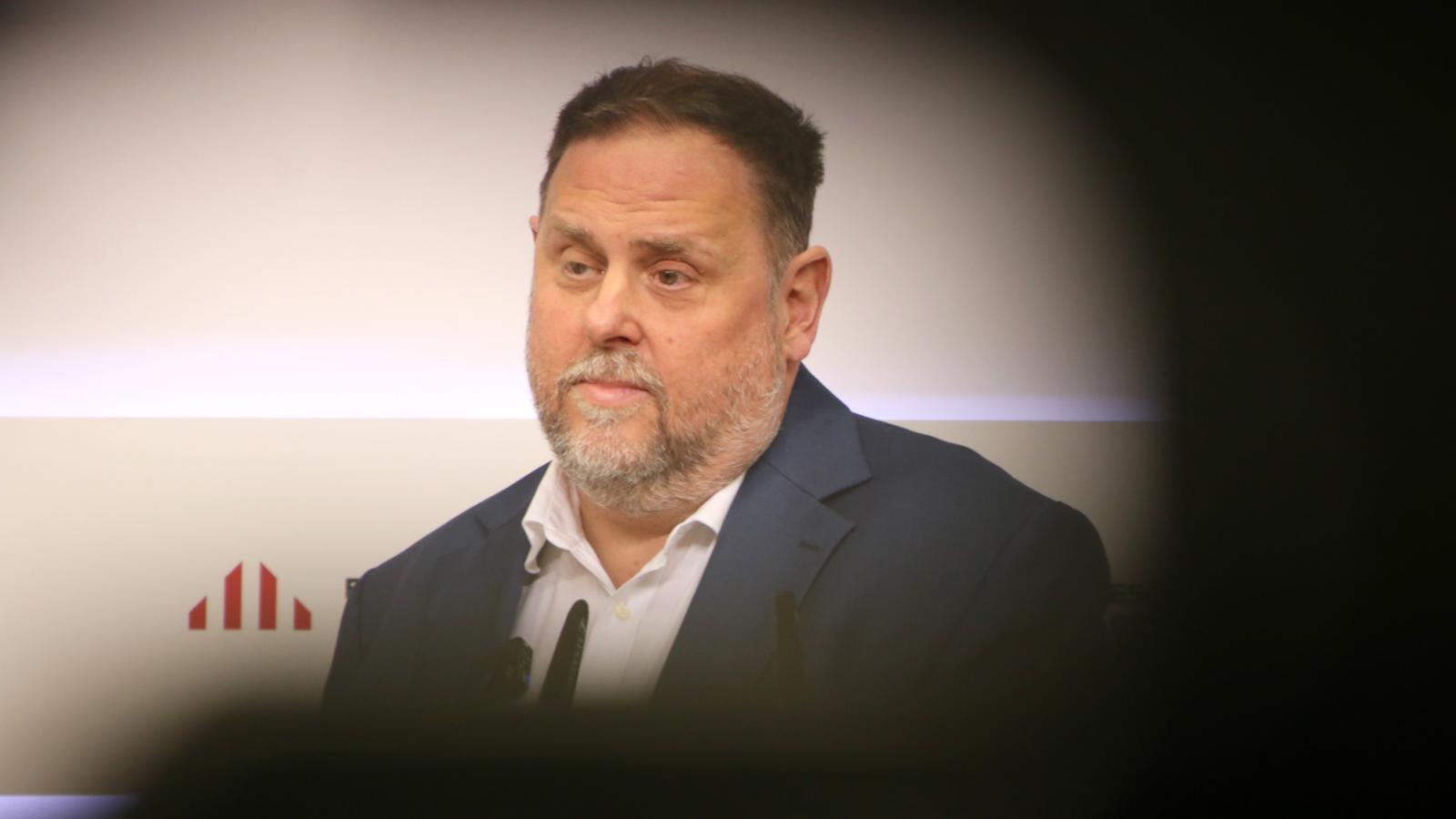
BarcelonaImmersed in pragmatism and a negotiating strategy, Esquerra went on vacation shoring up the governability of Salvador Illa after approving the Government's first budgets and thus giving oxygen to the legislature. Oriol Junqueras' party has long maintained that its goal is to be "useful" to Catalonia and that the negotiating strategy, that of trying to wrest sovereignty gains from the State, is the one they consider optimal. For this reason, this autumn is especially key for the republicans, because they have several commitments on the table that the Spanish government must fulfill before the next general elections (whether they are brought forward or not). We are talking, for example, about the forgiveness of part of the Autonomous Liquidity Fund (FLA) debt and also the new financing model. "We have no problem acknowledging that we will negotiate until the very last moment," point out republican sources.
Two years ago, Esquerra decided to invest Salvador Illa as president of the Generalitat after agreeing with the socialists on a new financing system for Catalonia. That pact now reaches the decisive phase,the moment in which it must be submitted to the validation of Congress. However, the new model only has the support of the Canary Islands, and it also does not have enough followers among the parliamentary groups of the lower house. Junts, key for the new model to move forward, does not endorse it either because it considers it insufficient. "We have never stopped talking to Junts," said the general secretary of ERC, Elisenda Alamany, on Monday in a press conference. For the moment, however, the Junts members maintain their no.
Beyond the financing system, however, the republicans hope to take home two trumps this start of the term: the forgiveness of part of the FLA debt –Junts is willing to endorse it–, and the transfer of the first Rodalies line to the Generalitat, the R1 –although this transfer should have already materialized a few months ago–. In addition, the republicans aspire to begin to concretize a transfer that they wrested from the Spanish government in the negotiation of the Generalitat's budgets: the management of the Zona Franca Consortium. The statutes are ready, according to consulted sources, and this transfer could reach Congress in the coming weeks.
In parallel, there is still another important open folder for ERC: the amnesty. The judiciary maintains Oriol Junqueras' disqualification, but the party hopes that, after the ruling of the Court of Justice of the European Union (CJEU), the Supreme Court will apply the law to him. The goal of the republican leadership and Junqueras himself is for him to be a candidate in the next Catalan elections to leave behind, once and for all, the repression derived from 1-O. On the Spanish government's table, there is also the pardon request that an individual made for Junqueras and the rest of the former leaders of the 'Procés' who are still disqualified.
Election year
All in all, as Catalonia and the State head towards an election year. Esquerra is already preparing all its municipal machinery for the elections next May, in which one of the main challenges will be to maintain the mayoralties it currently holds and try to add even more. However, like most pro-independence parties, it will also have to grapple with the rise of the far-right Aliança Catalana that all the polls predict. This will surely be the main challenge. For this reason, the party has for months been holding an internal debate on how to confront their ideas, especially on the issue of migration. A thorny issue that has sparked debate –not without tensions– within Esquerra. Oriol Junqueras has openly rejected moving towards a Catalonia of 10 million people if the country does not first prepare the infrastructure and services to absorb this demographic increase. A discourse that contrasts with that of left-wing parties such as the PSC or Comuns themselves, and which has not pleased part of the party's critical sector.
One of the municipalities where the far-right has numbers to grow is Girona. And there, Esquerra still does not have a candidate. Marc Puigtió resigned this summer after audio recordings were made public in which he claimed he wanted to get rid of the local leadership and the current councilors. Puigtió had been preparing for at least a year to be the Republican mayoral candidate and had the trust of Oriol Junqueras; therefore, his departure was a blow to the party, which has not yet found a replacement for him.
This is not the only problem the Republicans will have to address in the coming months. In Congress, the party has yet to extinguish the fire that has been burning for months. Gabriel Rufián's relationship with the rest of the group's deputies has not improved, and the Republican spokesperson maintains his commitment to a common left-wing front for the next general elections, which Oriol Junqueras' leadership rejects. In fact, the Republican leadership maintains that Rufián continues to be their choice to be the candidate for the state elections. The coming months will also be key to seeing if this scenario is feasible.
