Brussels will send 114.7 million euros to Spain to deal with the Ceuta crisis
The EU will also make operational support reach the two autonomous cities

-
CAT -
CAST
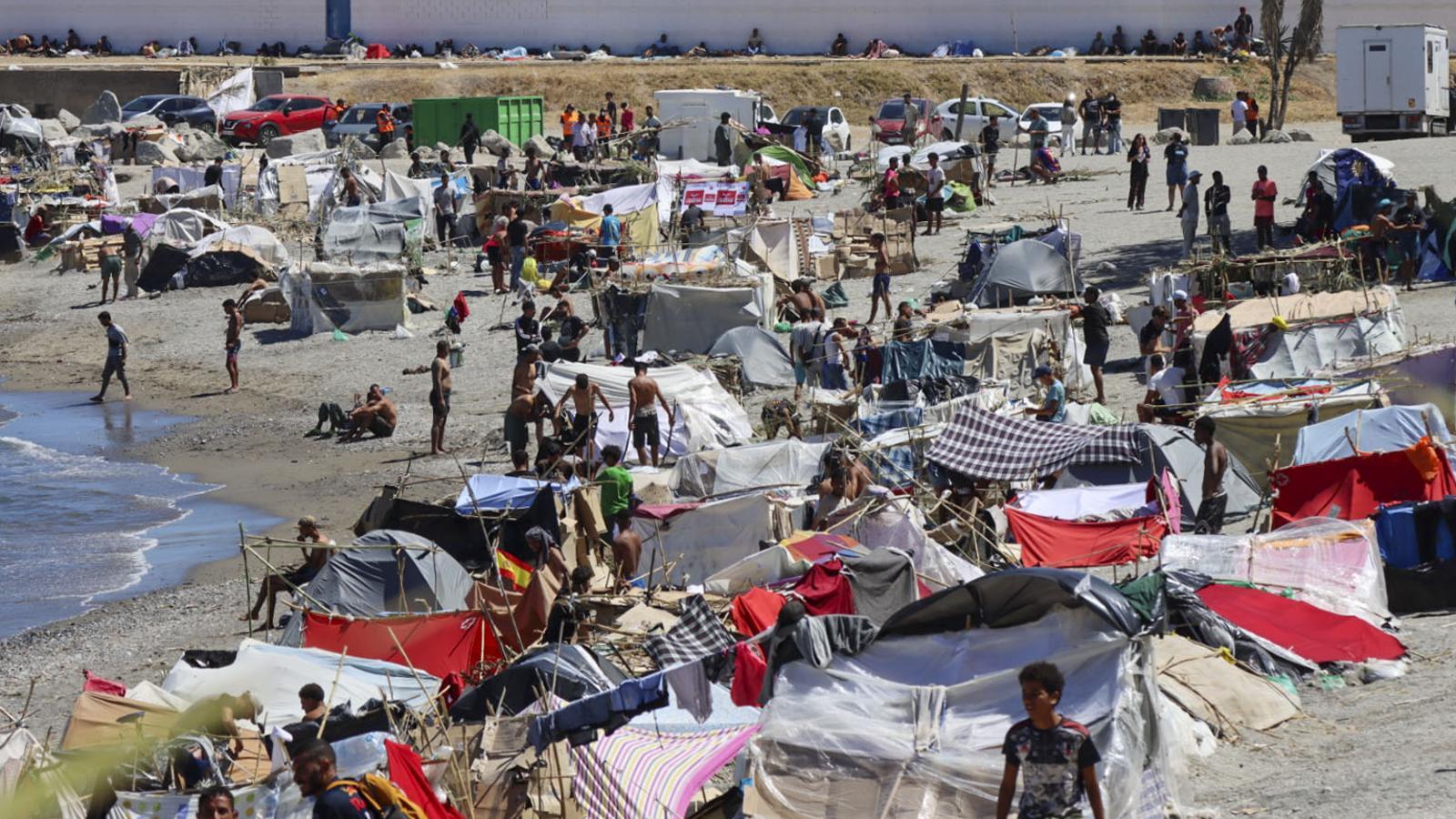
BrusselsThe European Commission has announced that it will send Spain 114.7 million euros in emergency assistance to help manage the situation in Ceuta, after the mass entry of immigrants at the end of July. Brussels has also coordinated the deployment of key agencies such as Frontex, Europol, and the European Union Agency for Asylum (EUAA) in the two autonomous cities, Ceuta and Melilla.
The action on the ground by these organizations responds to the request for operational support made by Spain on August 25 to strengthen control and management of the situation at the border. Brussels states that it has handled the request in permanent coordination with the Spanish executive. Specifically, the funding comes from the Asylum, Migration and Integration Fund (82.7 M€) and the Border Management and Visa Instrument (32 M€).
The funds will be used to improve border surveillance with "thermal cameras and observation technology" and "floating buoy systems and underwater drones." They will also be used for the deployment of "additional personnel and equipment," according to the European Commission in a statement. All of this will serve to set up "facilities for migrant screening," as well as to support the return of people who are still illegally in Ceuta. Furthermore, the EU is committed to supporting reception capacity in Ceuta, also for unaccompanied minors. Once the grant agreement between the European executive and the Spanish one is signed, the Commission has 30 days to pay up to 80% of the granted amount. This emergency funding is applied retroactively – through what the EU calls "pre-financing" – to cover all expenses generated since the first day of the crisis.
Diplomatic action
The disbursement of the funds is part of an attempt by Spanish leaders to highlight the crisis situation at the Spanish borders with Africa. The Minister of Foreign Affairs, José Manuel Albares, traveled to Brussels this week to meet with four commissioners, including the Commissioner for Home Affairs and Migration, Magnus Brunner, and the EU's top diplomat, Kaja Kallas. The message he conveyed to them is that "the southern borders of Europe are as important as those of eastern Europe," as he stated this Wednesday before the press. He also proposed exploring the permanent presence of Frontex, the European agency that manages borders, in Ceuta and Melilla.
Albares coincided in the community capital with the president of Ceuta, Juan Jesús Vivas, although the two leaders were unable to meet "due to scheduling issues." The Ceutan leader denounced this Tuesday that his city has become "a pressure cooker" and demanded more firmness from the community institutions regarding relations with Morocco. “You cannot maintain a policy of cooperation if borders are not respected,” he claimed.
