Barcelona continues to resist Junqueras: the who's who of ERC's battle in the capital
Ricard Farin, the face of the officialist candidacy, and Rosa Suriñach, of the critics, will face each other in the primaries on April 17

-
CAT -
CAST
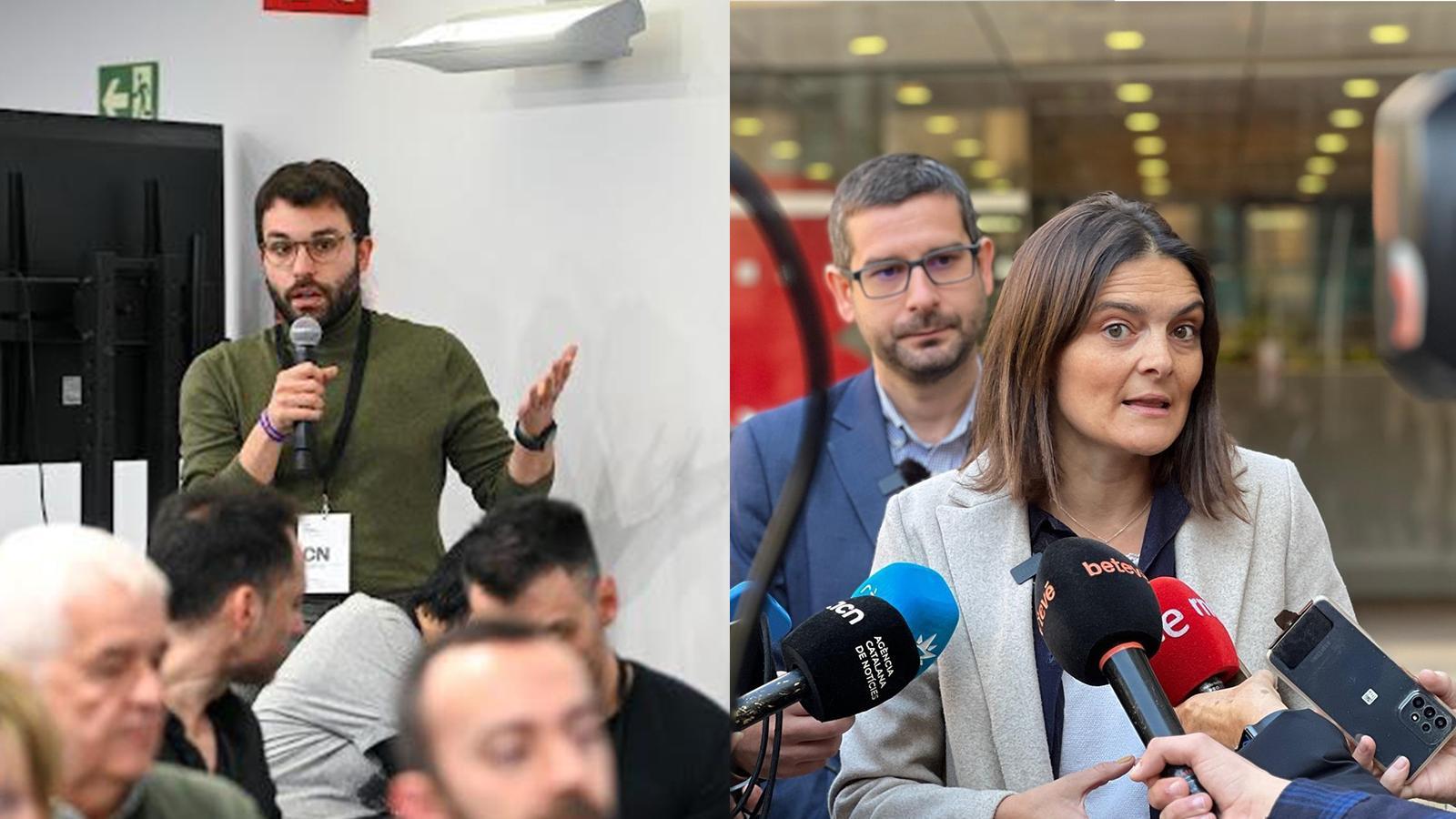
BarcelonaNot even a year after ERC elected Creu Camacho as president of the Barcelona federation, the party will once again fight for the throne on April 17 and after an internal rebellion that was seen as a new challenge to Oriol Junqueras's leadership. If last April the officialist list headed by Eva Baró faced off against the list of the critics, led by Creu Camacho; this time the factions are the same, but with changed leadership. Rosa Suriñach, a councilwoman in Barcelona City Council, will be the face of the critics, while the officialists will have Ricard Farin, president of the ERC branch in Horta-Guinardó, as their visible representative. Both candidacies have already presented the minimum required endorsements: Suriñach's campaign stated last week that they had presented "more than double" the 46 required (5% of Barcelona's membership), while Farin's presented "more than triple". And as has happened in recent years, historical figures of the party in the Catalan capital have positioned themselves around each candidacy to bolster each of the projects. Who is who in each candidacy?
After more than half of the executive resigned en bloc – including Suriñach herself – in protest against the line adopted by the still president of the federation, Creu Camacho – with whom they had shared a candidacy in last year's primaries – the critics began to have covert discussions to present an alternative to lead the federation. Finally, Rosa Suriñach took the step and is the one who put a face to the project. She convened the membership for a meeting a few weeks ago, attended by a hundred people, and they agreed to form a candidacy, which they presented a few days ago under the name Construyamos Esquerra Barcelona.
Accompanying Suriñach as number two is Nil Font, another of the resigned members; as well as the former Secretary General of the Presidency of Pere Aragonès' Government, Nuria Cuenca; the congresswoman Pilar Vallugera, and the current senator Joan Queralt, among others. This candidacy has also received support from the councilman in Barcelona's city council Jordi Castellana; Robert Fabregat, who presided over the Barcelona federation during the years of the Procés; and historically opposing figures such as former Secretary General of Social Rights Oriol Amorós and former Minister of Foreign Affairs Alfred Bosch.
The officialist candidacy headed by Ricard Farin presented itself to the membership through a letter on March 9. Farin is accompanied by Núria Clotet, current coordinator of the municipal group in the Barcelona City Council and who, in the early days, had worked alongside Alfred Bosch. The officialists presented their entire candidacy a few days ago under the name Activem Barcelona. Among the names it includes is that of Montse Benedí, as a candidate to chair the Assembly and who shared a candidacy with Eva Baró. In fact, although she is not part of it, the federation's former president supports Farin. On the list there are people who were in his candidacy, and members of Camacho's executive who stayed after the rebellion also support it.
Figures such as the former leader of ERC in Barcelona, Patrícia Gomà; the current spokesperson for the Republicans in the Parlament, Ester Capella; and ERC deputy Joan Ignasi Elena also support this list. All of them were at the presentation event of the candidacy last week. The national leadership has decided not to officially position itself for any candidacy, nor will the general secretary of ERC and candidate for the next municipal elections, Elisenda Alamany. However, it is no secret that the republican leadership supported Camacho when the critics left the Barcelona executive and attacked that rebellion.
The projects of Suriñach and Farin
The two candidacies defend overcoming the division that has marked the party in recent months and historically. But beyond this, Suriñach's list focuses on the fact that the membership has an active role in decision-making and that the federation sets the party's strategy in Barcelona. In other words, that the municipal group responds to what the affiliates decide. Farin's project defends "coordination and not confrontation" between the party and the municipal group, but also with the national leadership. They also bet on "building a future and exciting project to reclaim our Barcelona" – a thesis that Alamany also defends.
In the background of all this, another power struggle between the national leadership and the critics re-emerges, although in Barcelona the national-scale logic does not operate exactly the same way – the president of the federation also has a seat in ERC's leadership–. While Suriñach's project defends autonomy for the Barcelona federation, the officialists reject that it be "used as a counter-power of anything or anyone, neither of the national leadership nor of the recently elected candidate [Elisenda Alamany]".
