The Pyrenean cheese dairy that has received more than a hundred messages from candidates who want to keep the brand and the herd
It's Serrat Gros, it's located in Josa de Cadí, and it's surprised by the good reception that the news of its passing has had

-
CAT -
CAST
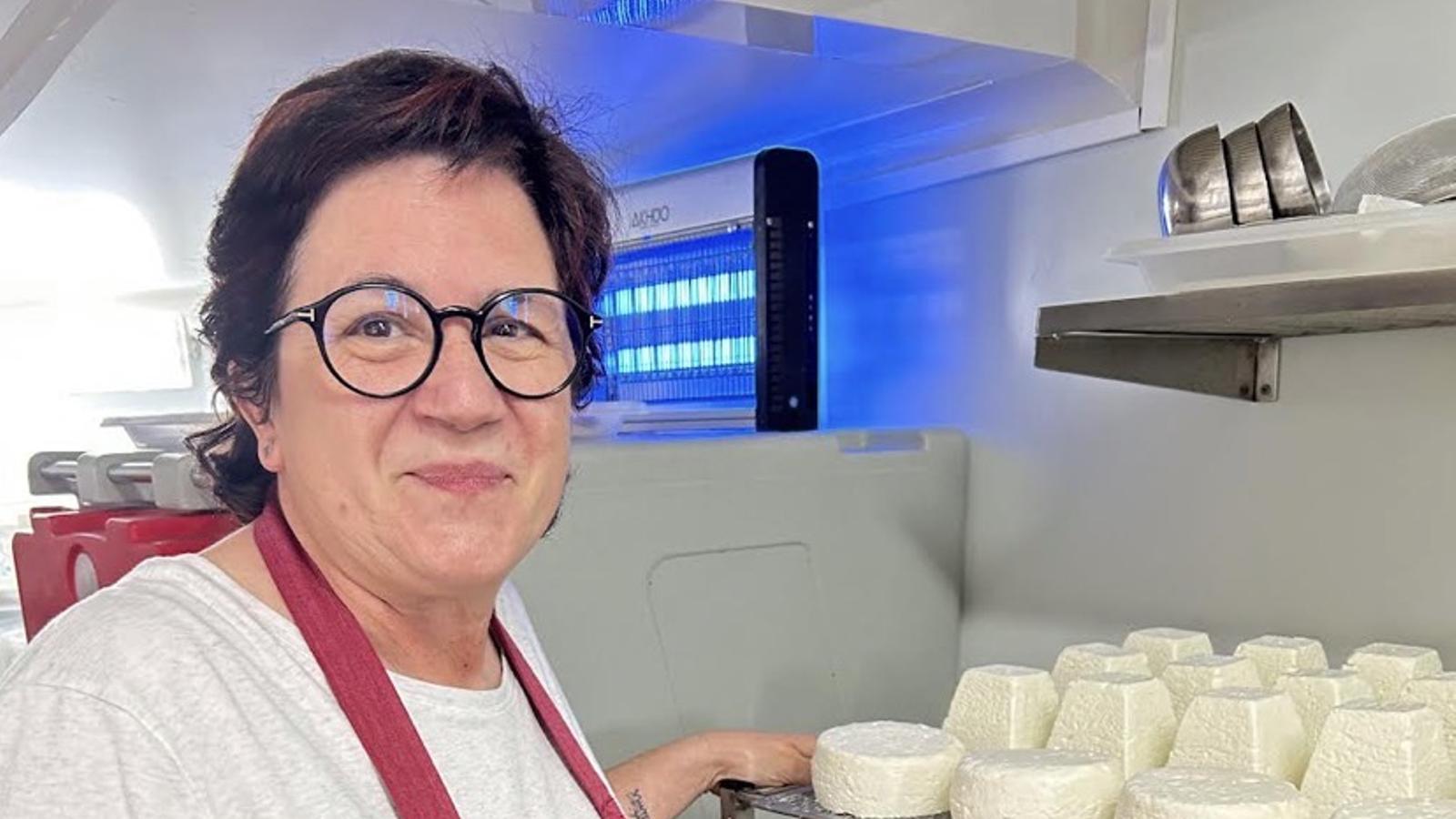
Josa del CadíIt's Friday morning, and at the Serrat Gros cheese shop, in Josa de Cadí, there's a group of hikers tasting the five cheeses made by Mercè Lagrava (Barcelona, 1963) and Raül Alcaraz (Equatorial Guinea, 1962). “We always recommend everyone to taste the cheeses before buying them. Besides, we know that getting here isn't easy, so we also put a jug of rosé wine from La Seu d’Urgell on the table,” says Mercè. She's happy, has an affable character, and says that both she and her partner are very surprised by the welcome the news of the transfer has received, which they made public at the end of July. “In a month we've received 125 emails, and also quite a few messages on our Instagram account. We've replied to everyone, and given them more information so they can look at it carefully before continuing with the interviews,” she comments.

Mercè and Raül want to retire in two years, but they want to leave everything well tied up. They have a herd of 90 goats, for which they have affection, because they end up knowing their character, and they know that taking care of the herd and making cheese are not simple tasks. There is a saying in the rural world that says that to live in the rural world you have to have lived in it. They are contrary to it, because they lived and worked in Barcelona and left everything to go and live there. It's been 21 years since all this, and they think that the change of life they wanted to make has been worth it. “The former owner of the Serrat Gros brand transferred it to us just as we want to do it, with training included,” explains Mercè, and emphasizes that training in herd management and production is basic. “We had also done it on our own, but the one who transferred the brand to us, Eulàlia, did it for us, and we think it was decisive”.
A whole house and ninety goats
The Josa de Cadí cheese dairy is an entire village house, where they have the workshop and the aging cellar. Their work begins every day at five in the morning, when they take the goats to graze within a three-kilometer radius of Josa. “Now it’s Raül who takes them to graze.” Then the day continues with two milkings, one in the morning and one at night. They take that milk to the workshop, where they first cool it and then add rennet, so it stops being liquid. And immediately after, the cheeses are made. On an August day, they make thirty at once, which they will let mature according to the type. They are always all goat's milk. They make the Serrat Gros, the round one, perhaps the best known; and two that are pyramid-shaped, the Cadinell (the name of a mountain that is an appendix of the Cadí mountain range) and the Pebrat (because it has pepper). The other two cheeses are one matured with olive oil and a tupí, with anise, which couldn't be missing in the Pyrenees. With pasteurized milk, they make mató, yogurts, and also milk to take away, which must be ordered in advance. “We find that people ask us for milk because they are intolerant to cow's milk, but they can drink goat's milk,” says Mercè. As she explains this, a family enters the cheese dairy shop, and they ask her if, before closing, she can show their eldest son how they make cheese. They have just made the Cadinell, and the son wants to know why the cheese that bears the same name as the mountain is pyramid-shaped. We all go together to the workshop, and the cheesemaker shows them the molds, the vats with goat's milk and rennet, and also the shelves where the cheeses they have made today are. “At 21 years old, the relationship with clients is close; we have long-time clients who come to Josa specifically to buy from us.”

I ask Mercè about the earrings she's wearing, two silver goats, and she tells me she bought them at a jeweler's in Pallars that makes nature-inspired shapes. “Goats are very important to us, because that’s where everything begins.” In fact, they have the reproduction cycle well understood. “To have milk, we have to make the goats have kids; we know that gestation is five months, so we calculate it with the introduction of the male to impregnate them.” They give birth at the end of February and then for nine months they will have milk, because that’s how long they can breastfeed them. Until the end of November they will have to milk them twice a day and make cheeses daily, so that the following year everything starts again in February. “With our cheese shop, three incomes come out, because it’s the two of us and a worker,” says Mercè.
With the information that has been sent to the candidates, some have already withdrawn their application. “In our work, we have moments of rest, but that’s it: moments of rest.” Mercè says this because the flock has to be taken out to pasture daily. Despite this, for cheesemakers, their work is their way of life. It’s what has always been said, that if your job is your passion, it’s like you’re not working. This is probably what Mercè and Raül have done in these 21 years. Together they have networked, with clients and with other artisans, because the cheese shop also sells honey, chocolate, infusions, drinks, and illustrations from other towns. They are great hosts of the region, so from Serrat Gros you can leave with cheeses, a chocolate, a sausage, and an illustration of the trementinaires by an artist named Guspiretes. And to all this is added the good regard they have in the village. The day we interviewed them, some neighbors were buying food for an outdoor dinner: they stocked up on a bit of everything. At the Josa restaurant, Ca l’Amador, the meat from the kids and the cheeses can also be tasted both on the tasting menu and à la carte. It’s the squaring of the circle of the cheese business, because they sell the male kids as meat.
To finish, Mercè explains that she wants to retire at 65. She has two years left. She will have work to achieve it. For now, it seems she is very much on the right track. “I know the two sons don’t want to do it, because they would have already told me,” says Mercè, who comments that the sons stayed to study in Barcelona when their parents went to Josa with the goats. “They have always been coming, and they know the work, but they have other paths”.
