Dolly Parton, when bad taste becomes power

-
CAT -
CAST
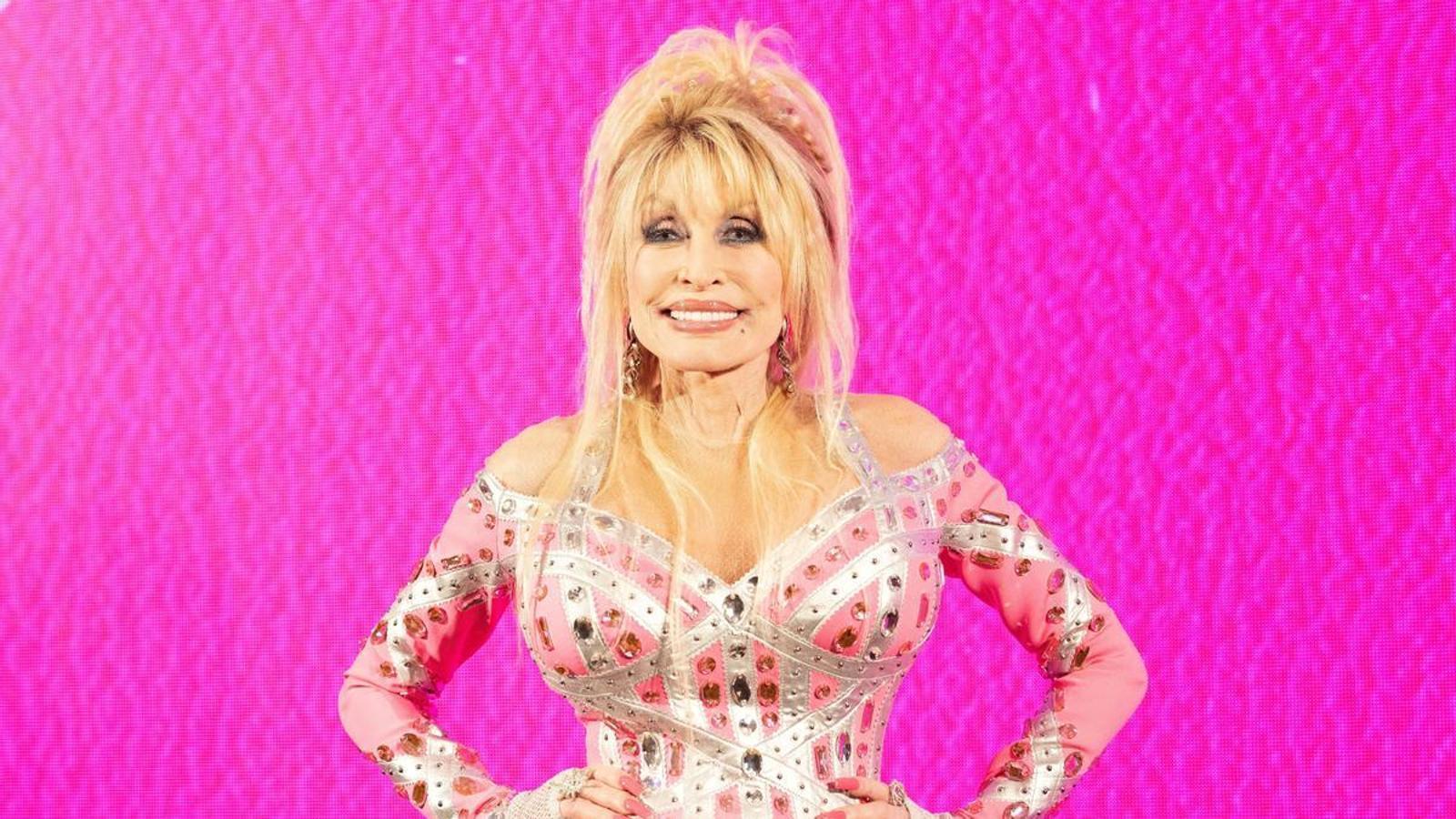
When we think of Dolly Parton, who died Tuesday at 80 from cancer, we think of mythical songs like Jolene and I will always love you, but also her spectacular looks. And it is that Parton was not only an extraordinary musician, but a pop icon who consciously built her own image until it became an inseparable part of her work. An aesthetic that cannot be fully understood without taking into account the context in which she moved: that of country.
American masculinity is largely built on the foundational myth of the cowboy: rough, solitary, tough, gruff; a figure for whom women often appeared as a complement to be conquered or protected, which reinforced his own virility. As a reflection of this imaginary, country music has also been an eminently masculine world in which, although women have always had their space, it has too often been considered secondary. Parton not only managed to be taken into account, but also ended up becoming one of the genre's great ambassadors, speaking of issues that seem as unmasculine as motherhood, emotional dependence, and divorce.
Before her, country music had featured excellent singers like Patsy Montana, Kitty Wells, Patsy Cline, and Loretta Lynn, who sported outfits ranging from a feminine adaptation of the cowboy suit to the aesthetic of a well-groomed rural woman. Parton, on the other hand, quickly understood the importance of creating a powerful aesthetic that would distinguish her and give her visibility, and she made her body a true spectacle, relying precisely on that identity destined to be secondary in that world: the feminine. Hourglass silhouette, prominent breasts, false nails, platinum blonde hair, stiletto heels... In her, the world of country – boots, fringes, cowboy hats – remained present, but subjected to a hyperbolized femininity. Traits that are often read as synonyms of weakness and male dependence but which, in Parton, became signs of strength, considering that she not only managed to be a renowned singer but also a composer and an independent businesswoman. While part of the feminism of the time questioned the signs of normative femininity, Parton managed to walk this tightrope with the sure step of a tightrope walker: she exploited the traditional codes of femininity to the point of exaggeration without being reduced to the condition of a mere sex symbol.

The class struggle
Another essential element of Parton was the class struggle, present in a good part of her songs. In Coat of many colors she explains how, as a child, her mother sewed her a multicolored coat from numerous scraps. Dolly left behind the shame associated with the poverty she suffered to turn it into pride and identity. A trait that led her to clearly challenge the idea of "good taste", which has often been built precisely from privilege, through a deliberately kitsch and excessive aestheticism. Sequins, fringes, rhinestones, puffed wigs, shiny satins... And all tinged with that excess that privileged classes may consider baroque or vulgar, typical of those who do not master the codes of bourgeois savoir-faire. And if the taste of the elites is often characterized by the restraint and discretion of silent luxury, Parton responded with a phrase that perfectly summarizes her attitude: “To look so cheap it costs a lot of money”.
And perhaps this is precisely the secret of Dolly Parton: having been able to turn what could have been weaknesses into strengths to enhance. And, following the saying “if you want soup, two cups”, she made almost parodic femininity and country hillbilly style two traits that, loaded with identity pride, became an inseparable part of her image and musical career. She brought the female presence in country music to a new dimension.
