At least 180 dead and 1400 missing due to a great flood between Nepal and Tibet
Among the people who have not yet been located there are four citizens with Spanish nationality, according to the Ministry of Foreign Affairs
-
CAT -
CAST
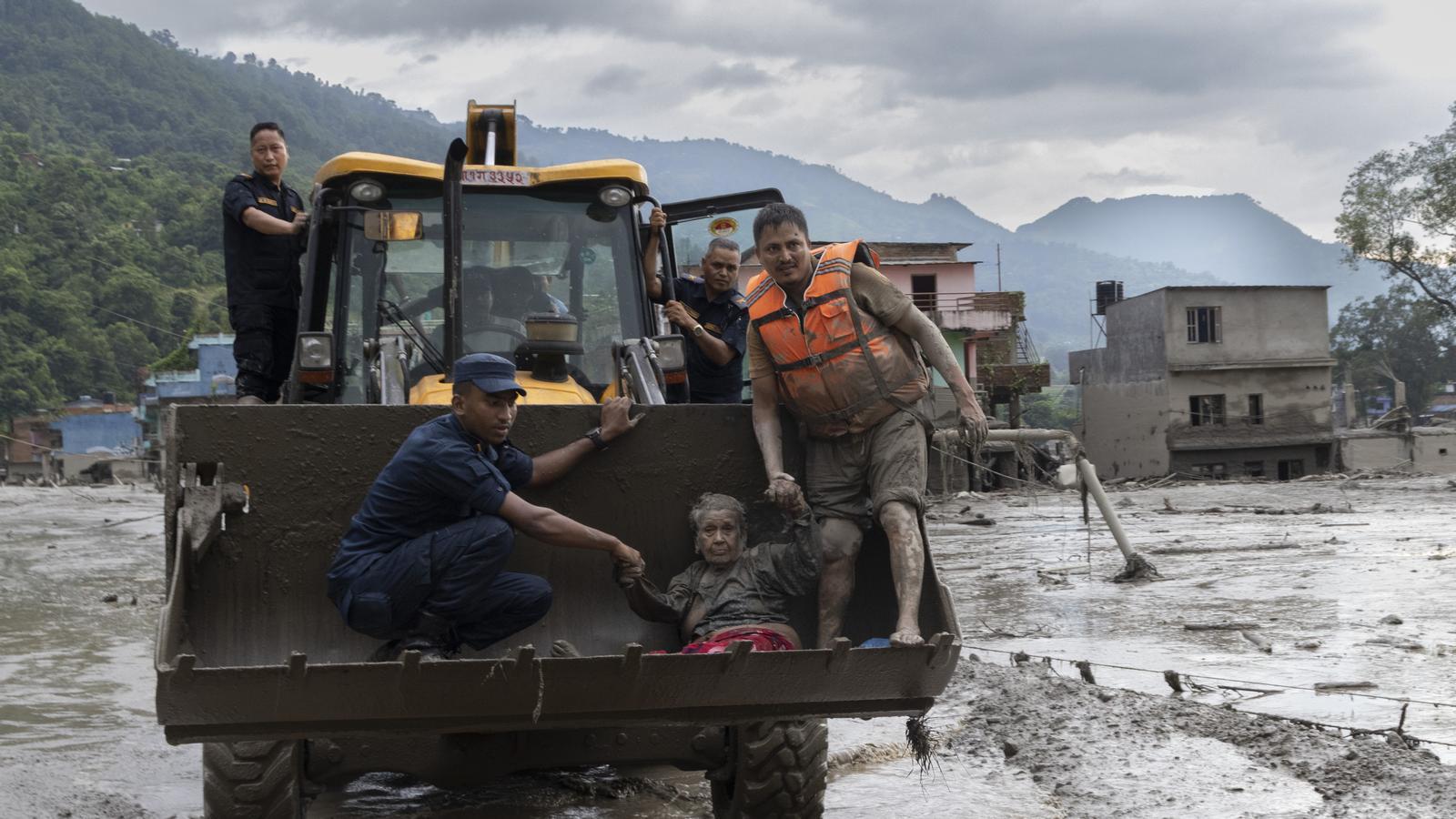
BarcelonaA devastating flood hit several border regions between Nepal and Tibet in the Himalayas this Wednesday. Nepali authorities currently report 177 deaths and at least 826 missing, while Chinese authorities in Tibet have reported a toll of 3 deaths and 558 missing due to the impact on the other side of the border, in the Gyirong region. The surge has swept away entire villages and destroyed about twenty bridges, roads, dams, and other infrastructure. Rescue operations are still ongoing at this time.
Among the 1500 total missing, there are at least 600 tourists who have disappeared in Nepalese territory. Among them are four Spaniards whom the Ministry of Foreign Affairs has not been able to locate as of yet. To find them, Minister Albares has called on all citizens of the State who know someone in the area and has asked them to contact the consulate. Among the missing foreigners are also 177 Indians, 63 Americans, 34 Australians, 33 Britons, and 25 Canadians. These are the nationalities with the most victims on a long list that also includes, among others, seven Ukrainians, four Germans, three French, two Irish, two Dutch, and two Russians. In addition, there are 44 members of the Nepalese army, 41 members of the security forces, and 60 workers from various hydroelectric projects. Regarding the 558 people missing in Chinese territory, 260 are national tourists, and the nationality of the rest is unknown.
Although the causes of the catastrophe have not yet been determined, indications point to an earthquake. The German Centre for Geosciences Research detected a magnitude 4.4 earthquake about seven minutes before the landslide is believed to have occurred. The main hypothesis put forward by the Nepalese government is that the detachment of ice and rocks caused by the earthquake blocked the passage of the Bhote Koshi river until the growth of the flow caused it to overflow. In contrast, a subsequent analysis by the United States Geological Survey stated that the seismic waves had been caused by the landslide and not the other way around.

If you want to investigate the graph in more detail, open the high-resolution version in another tabThe affected area is one of the main land crossings between Nepal and Tibet, through which many vehicles carrying goods across the region and also tourists travel. In fact, a very frequented route for pilgrims and tourists traveling to Tibet on the way to Kailash Manasarovar passes through here, a pilgrimage journey to a sacred mountain for Hindus, Buddhists, and Jains. Most of the missing tourists had undertaken this path, which is very busy at this time of year, according to the director of the company Touch Kailash Travels.
The government of Nepal has declared the affected areas a disaster zone for three months and has ordered the mobilization of military and private helicopters for rescue operations. The flood has damaged at least 80 passable bridges and nearly 40 kilometers of roads, in addition to various energy infrastructures such as hydroelectric power plants in the area.
Difficulty in assessing the damage
The main road connecting the area with the capital of Nepal, Kathmandu, has been affected and is cut off in several sections. Early reports suggest that between 30 and 40 drivers and dozens of police officers are also missing, but the figures have not yet been verified. Meanwhile, authorities are asking residents to stay away from riverbeds and be prepared to be evacuated due to the possibility of new floods.

So far, 123 people have been rescued, 29 of them foreigners but of origin yet to be specified. According to the spokesman for the Nepalese army, Rajaram Basnet, six helicopters from the armed forces and eight operated by private companies are working on search and rescue efforts. "It is difficult to assess the damage at this moment, but it is possible that both the damage and the number of victims will be considerable," he warned. Access to the area is complicated, and in several places helicopters have difficulty operating.
On the Tibetan side of the border, the directives from Chinese President Xi Jinping himself highlight the seriousness of the events. According to the official Xihua agency – which limits itself to speaking of "serious victims" without providing a toll – Xi has ordered that all necessary efforts be deployed to search for and rescue the missing people among the debris of the landslide. The Chinese leader recalled that China is in a "critical" period of floods and that regions must activate all necessary preventive measures.
Several countries have rushed to help with the disaster. India – which has more than 170 citizens missing – has sent 10 tons of "Humanitarian Assistance and Disaster Relief and essential medicines," according to the head of Indian diplomacy, S. Jaishankar. For its part, the European Union has activated its satellite surveillance system, Copernicus, to "help map the affected areas in Nepal and support relief operations," as announced by the President of the European Commission, Ursula von der Leyen, on X. "We are ready to provide additional European assistance," the message added. The Red Cross and Red Crescent have also released over one million euros in emergency funds to respond to the crisis.
